Monday, July 10, 2006

An Unwanted Journey: Day 0230 - Commencing Chemo Cycle 3


I enjoy the last few days of a chemotherapy cycle - most side effects are either minimal or gone.

This weekend, for instance, my family and I were able to drive north to a family reunion. That's over 2 hours driving either way, plus the reunion itself - add another 5 hours. But I made it with only a 20-minute nap at the home of our host. More importantly, I was able to drink the refreshingly cold drinks, eat most of the food offered, and otherwise enjoy the event as if I wasn't being treated for cancer.

This week, the cycle begins again. Today, it's blood work and another consultation with a medical oncologist to see how I'm doing and what the blood tests report about my overall health.

I've found that most medical oncologists don't automatically provide details about the blood work. You have to ask specifically and assertively for each measure. Even then, the doctors appear curious that a patient would have an interest in things like white blood count, hemoglobin, platelets, absolute neutraphil count, and neutraphils. True, I might be in a minority, but I'll bet there are a lot of people being treated who would find the overall trends of those measures of at least passing interest.

In my own case, the blood counts tell a story which is sometimes at odd with my overall sense of well being. If I look at the trends from January 9th (when my combination chemoradiation therapy began) to today, the story is very clear. I am far less robust and far more vulnerable to infection than when I began.

This was brought home to me in the last chemotherapy session when I was able to compare my counts with a person in a nearby recliner receiving her first treatment. Even though she was a good 20 years my senior, her white blood cell count, hemoglobin, etc was far better than my own.

I realize that the medical oncologist will declare a treatment holiday if my counts get too low. Since I haven't had any holiday, they must all be high enough. Still, those low values are something of which I must remain conscious, especially when I want to be with crowds celebrating something like, oh, say, the World Cup win by Italy. Now that kind of decision would be foolhardy.

****

I've just returned from my consultation with yet another medical oncologist. My counts are all better this week! In fact, I'm doing so well that the oncologist doesn't think I need to see her again for another month.

On the other hand, as I described the neuropathy (tingling in the finger tips and sensitivity to cold) and fatigue I experienced after the last treatment, she indicated that I'm a textbook case. What's worse is that these two side effects are cumulative throughout the entire chemotherapy treatment cycle. The neuropathy is even worse. It tends to hang on for weeks, sometimes months, after treatment is finished.

She also indicated that as the fatigue and neuropathy accumulate, we may need to reduce dosages. For this we just wait and see. In the meantime, I should just continue doing what I'm doing, making sure that I have at least 2 or 3 days after each treatment cycle to do nothing except sleep, nap, and take it easy. I think I can do that!
Powered By Qumana

Friday, July 07, 2006

An Unwanted Journey: Day 0227 - Treatment Photos

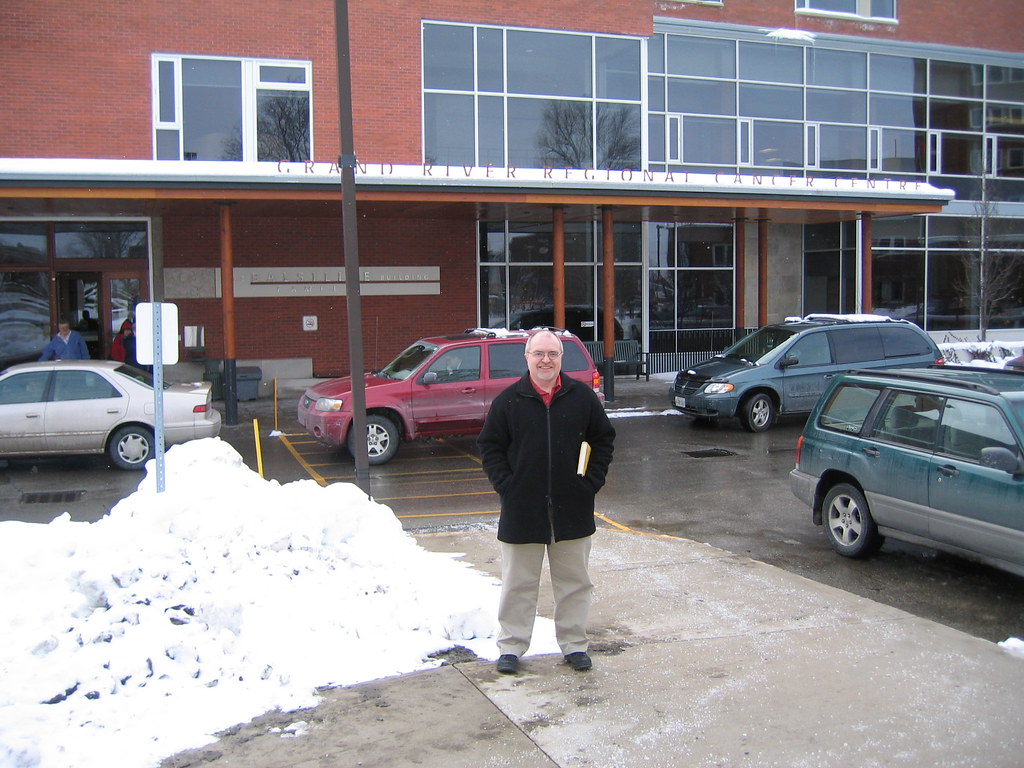
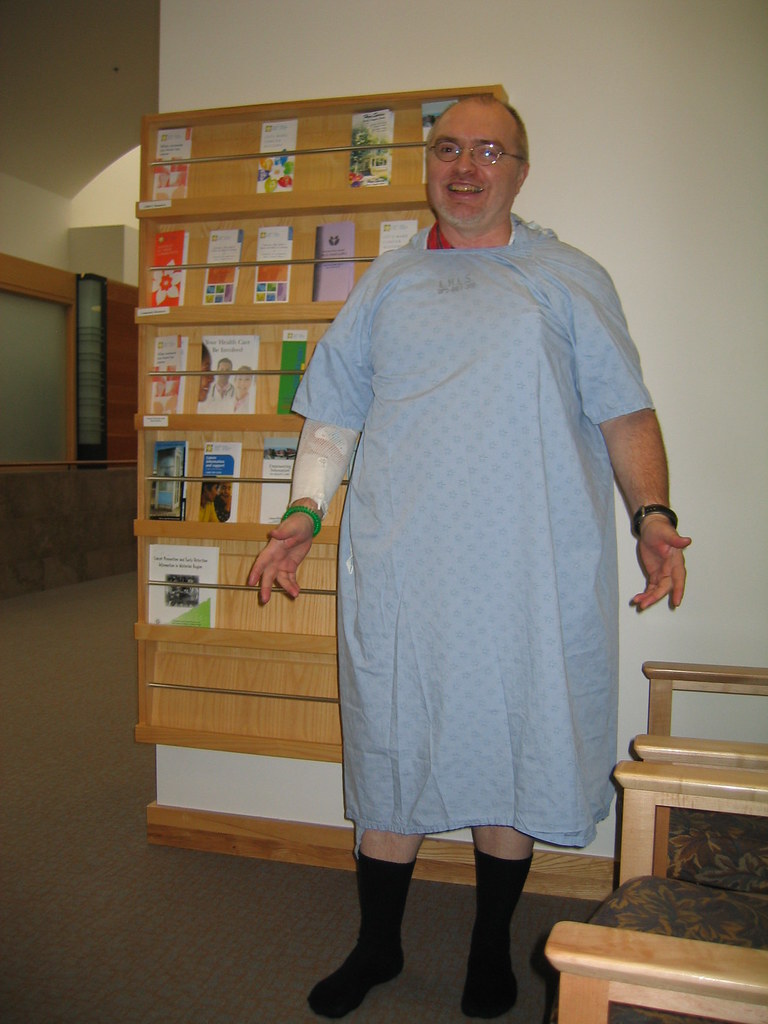
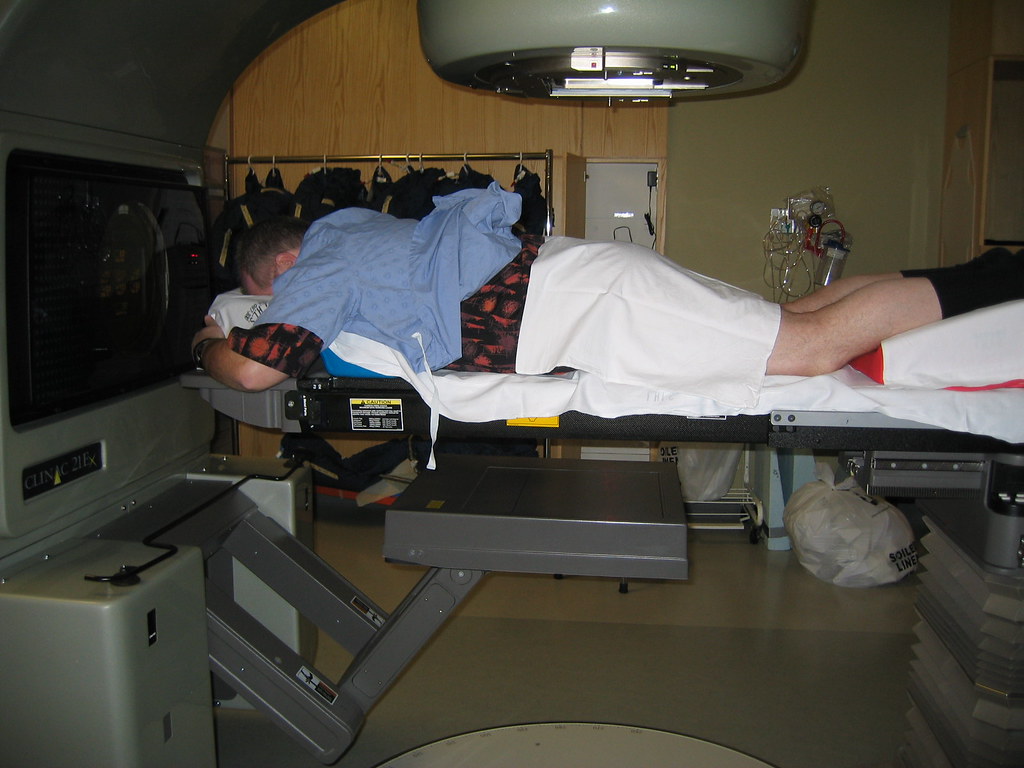
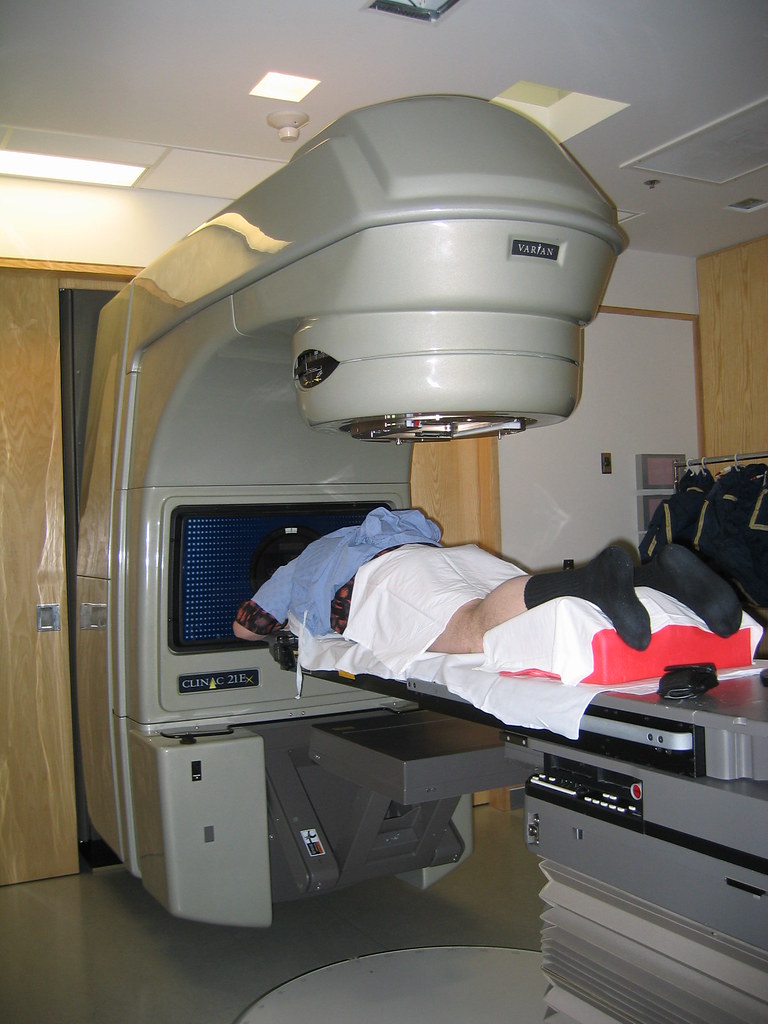
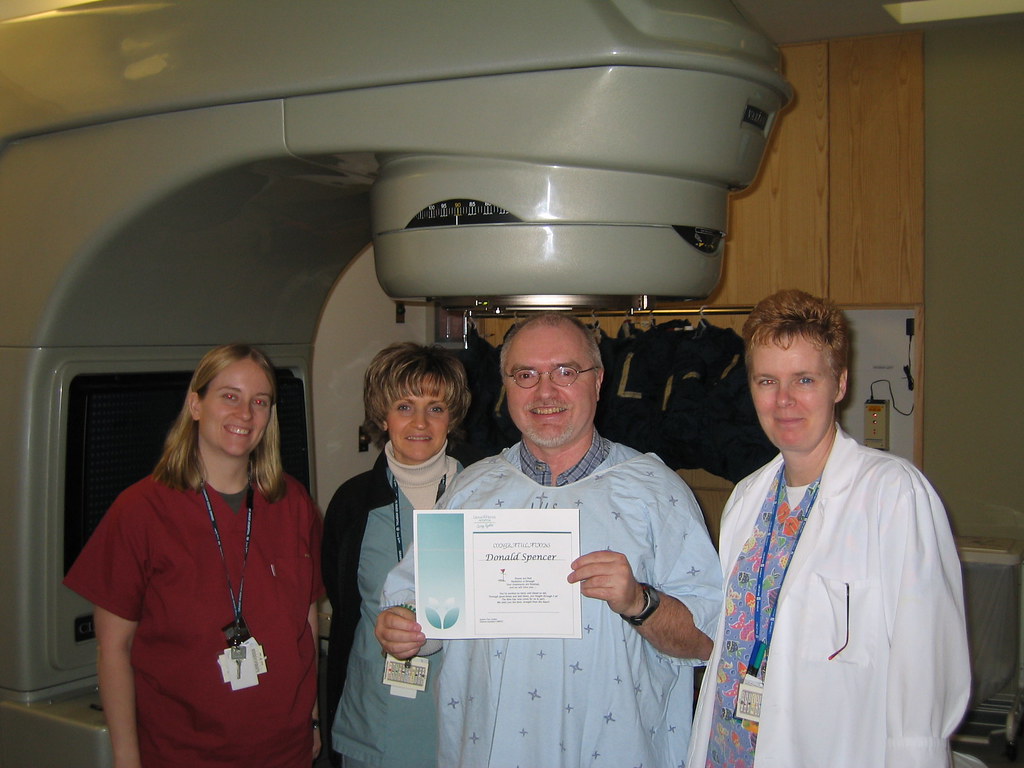
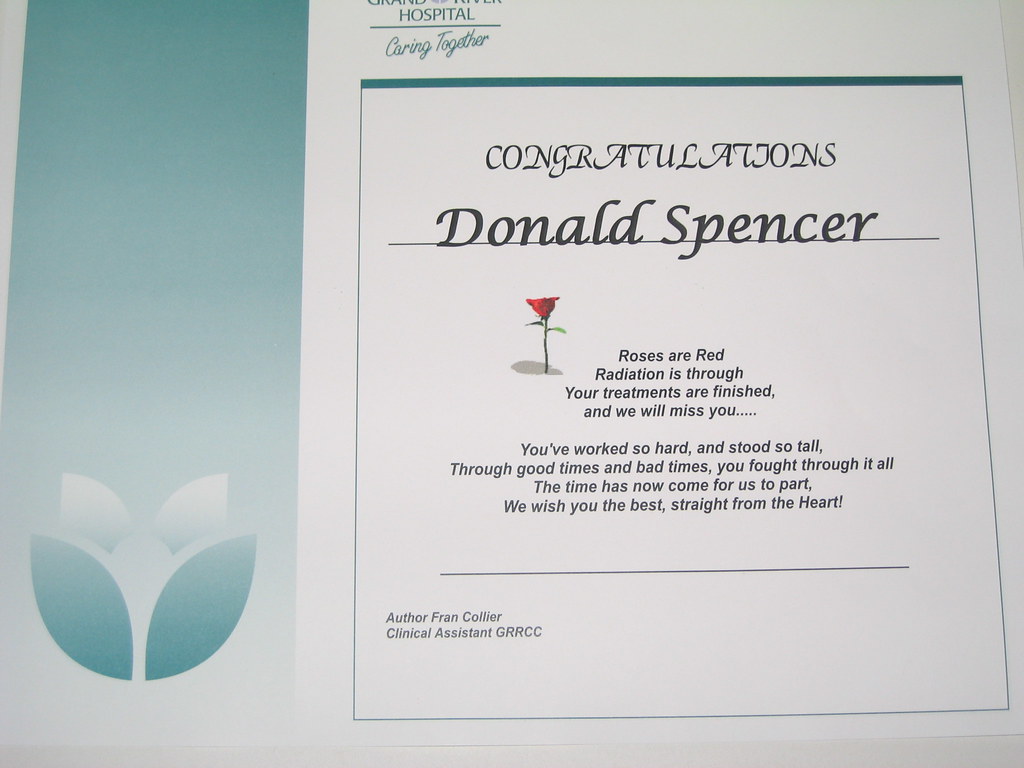
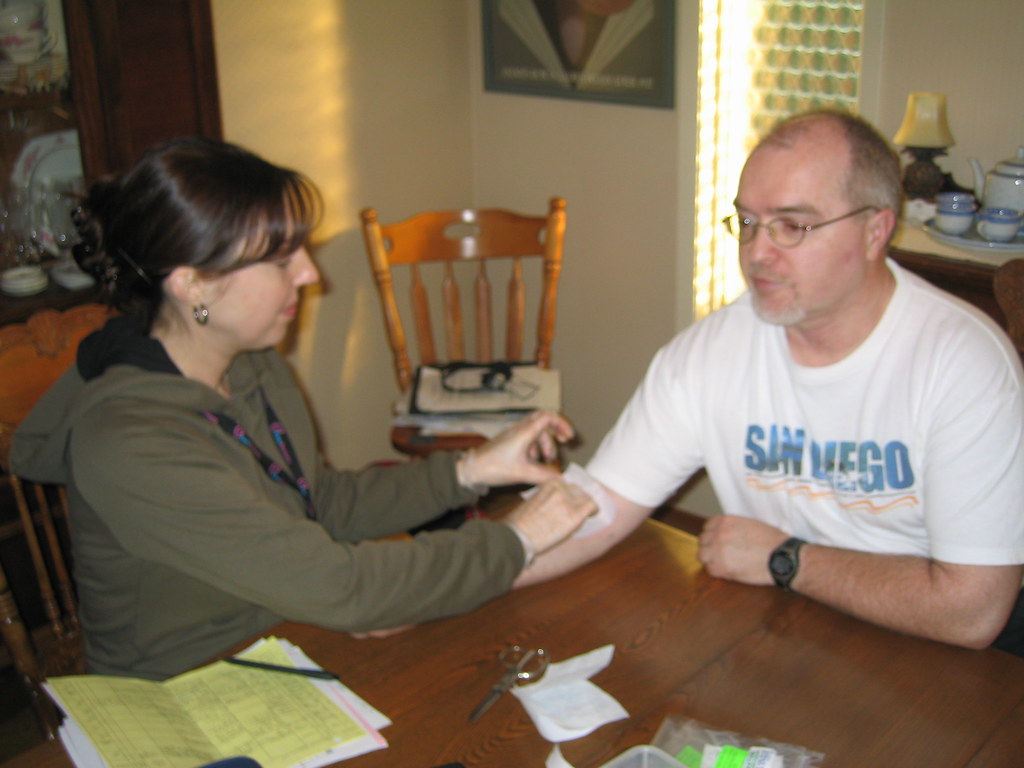
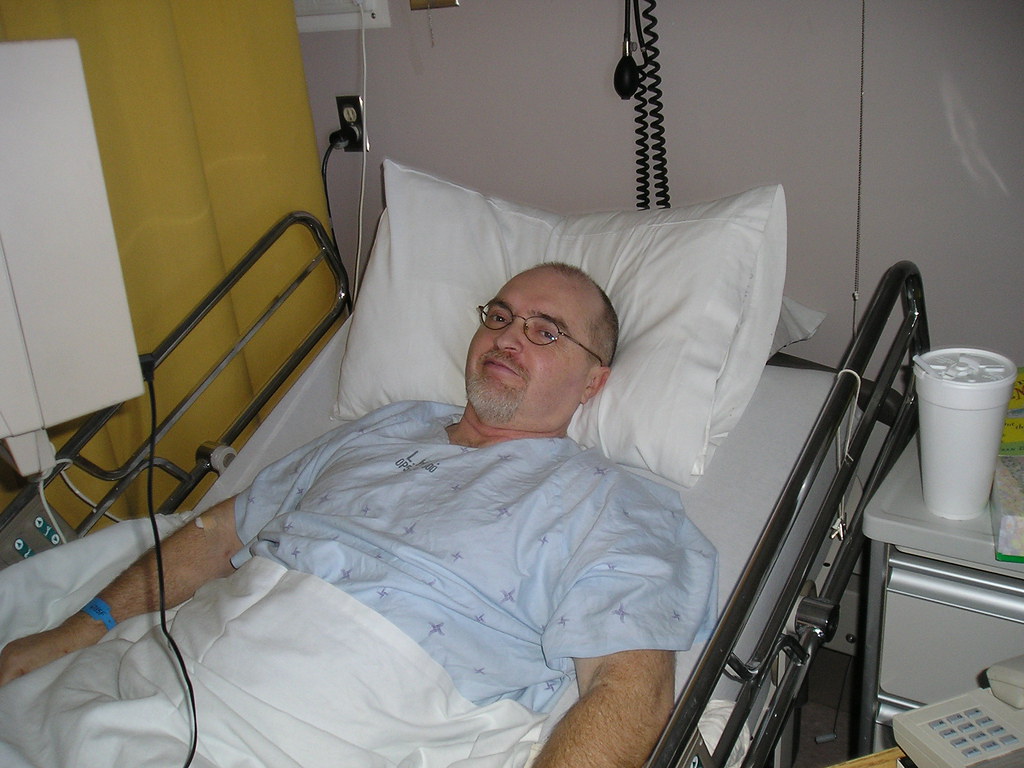
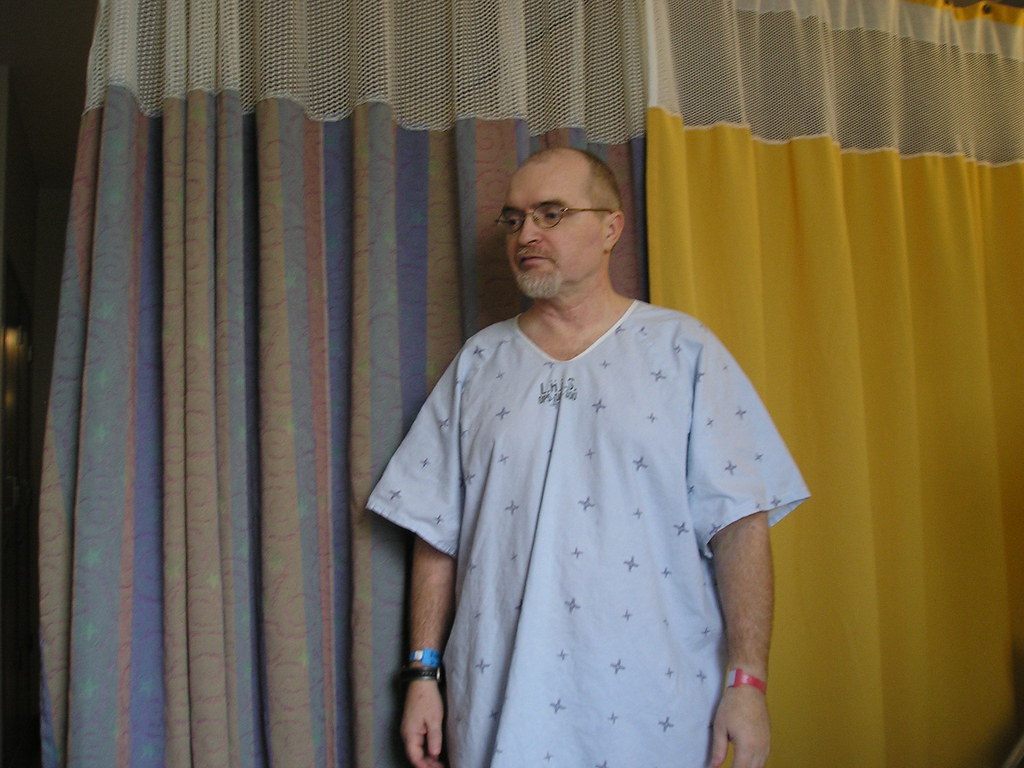
Below are a few photographs of stages of my cancer treatment. There are three stages - radiation, surgery, and chemotherapy. If you would like to see a few comments on each photograph, then simply click on the photo and you will be taken to Flickr, the host for this set of photographs. Each photograph has a title which indicates the date and subject, as well as a comment describing the context for the picture.

20060209Don_GRRCCRadiationDay


20060209DonRadiationGown

20060214DonRadiation01

20060214DonRadiation02

20060216DonRadiationTechs

20060916RadiationGraduation

20060217LashaCCACDon01

20060429DonGRH

20060505DonLeavingGRH

Thursday, July 06, 2006

An Unwanted Journey: Day 0226 - Leroy's Courage


"It takes courage to get through life. The courage of doctors and nurses who can work magic with their hands, the courage of those keeping a lonely vigil at the bedside of a loved one. The courage of the ill, fighting with everything they have, not just to cheat death, but to live."

- Leroy Sievers, My Cancer, Commentary: Funny the Things You Think About (February 16, 2006)

I've started subscribing to RSS feeds from my fellow travelers. The quotation above is from the very first entry I collected in my Newsgator for Outlook newly created folder, Cancer Blogs. If this commentary from Leroy is an indication of what I've been missing by avoiding blogs from other cancer fighters, then I can hardly wait to see what's in store.

Leroy talks about courage, about fighting, about cancer touching each and every one of us whether or not we have been diagnosed with cancer, about bearing the burdens thrust upon us by life, and how we are only given what we can truly bear.

Even more importantly, Leroy reminds us that the courage we discover inside ourselves as we deal with our own diagnosis must never eclipse the recognition of the courage of others affected by our personal battle.

This, too, is probably one of my blinds spots. Consumed by my own pain, weakness, insecurity, uncertainty and doubt, it has been all too easy to forget what this diagnosis has done to so many others who care for me. My wife, my sons, my mother and father, my brothers and sister, my aunts and uncles, my friends, and even my acquaintances - my diagnosis has required that they too face their own mortality. It has required that they reconsider life's priorities - either that or collapse into ignorance and neglect. It has required that they think, at least once in a while, about loss and fear, about guilt and blame, and the frailty of the human condition.

Then there are the doctors, nurses, hospital workers, patients and all others involved in the health care system. They have had to muster courage when dealing with me. One nurse especially comes to mind. I'll never forget her kindness and calm demeanour when I panicked in the hospital the day when I "bled out" while on blood thinners. Never having experienced anything like that before, I was almost out of control in fear. She helped me clean up, get back to bed, calm down and realize that what I had just experienced was something they could handle and that even I could face with more courage than I had thus far demonstrated.

So, Leroy, thank you for reminding me about courage - my own and that of those who care for me.

And finally, farewell to Hilde, who, after 10 years of facing cancer down with a courage I can only hope to emulate, said a final goodbye to her family and friends last Thursday.

Powered By Qumana
Wednesday, July 05, 2006

An Unwanted Journey: Day 0225 - Fellow Travellers


One resource I haven't availed myself of yet is other cancer patient blogs. As I near the end of my treatment, I hope to change this, to become less concerned with my own journey and more aware of how I share a path with many others.

Thus far, I have focused on how cancer has threatened me personally, how it has dealt me a body blow (literally), and yet coincidentally opened up vistas of meaning and hope that I never would have anticipated. While it is true that blogging about my battle with cancer has given me the chance to communicate with many people with whom I never otherwise would have had extensive conversations, I have been negligent in returning the favour. Gradually, I will remedy that.

Here are just a few fellow travellers with much wisdom to share:

Chronicles of a Cancer Survivor: David J. Hahn, pianist and cancer blogger. David, I wish I could join you on those bicycle journeys. But rectal cancer means bicycling is just about the most uncomfortable of exercise options available to me. Keep goin' rookie.

My Private Casbah: Bint Alshamsa, a gifted writer, biology student, and survivor extraordinaire. Not all her entries relate to cancer, but those that do are well worth the effort of finding and consuming.

My Cancer: Leroy Sievers, a commentator with NPR and podcaster with many awards to his credit, including 12 Emmys.

truesurvivor: Katie Paine, a serial entrepreneur, someone Shel Israel mentioned to me (Shel is a co-author of Naked Conversations). Katie, thanks for visiting An Unwanted Journey. I hope to order Sweet Scoops yogurt as soon as possible. Chemotherapy has left me unable to eat ice cream, so I'm hoping your recommendation fills the gap nicely.

And finally, from the treatment side,

The Cheerful Oncologist: Craig Hildreth, M.D., medical oncologist and someone who knows that Sibelius rocks.

Visit these folks, share a comment with them, and be enriched.

Speaking of being enriched, I can't emphasize enough just how much blogging has enriched my own life. It has also allowed me to peek in on others. My niece is a perfect example. Her blog has opened her life to her family and friends. She shares random and not-so-random thoughts about parenting, about the joys of reading, the world of writing and the visual arts, and she's not a bad photographer too! Check her out at http://www.edeva.ca.
Powered By Qumana

Tuesday, July 04, 2006

An Unwanted Journey: Day 0223 - Frequent Fatigue


Fatigue has been the side-effect of note since my second chemotherapy treatment last Wednesday. No serious nausea, just naps, lots and lots of naps. Oh, yeah. And the sensitivity to cold, tingling sensations in the fingertips, constriction of the mouth and throat when exposed to cold food - all that too.

I'm not really complaining - OK, just a bit. It's better than vomiting, to be sure. But last time, after the first chemotherapy treatment, I had one day of slight nausea on the Saturday. This time, it's Tuesday morning, and I've been sleeping since Saturday...on and off, to be sure, but the naps are so frequent as to become a source of some good-natured teasing at home. "Where's Dad?" "Check the recliner...check the bedroom."

I also miss my ice cream. Yesterday, it was hot and humid. For the first time in three days, I actually ventured outdoors to take my wife and youngest son to Dairy Queen. I ordered a Blizzard and then remembered that my sensitivity to cold food might still be affecting me. Sure enough, the first taste elicited that familiar and unpleasant tingling sensation in the mouth and throat. But I was determined to enjoy an ice cream treat. It took about 45 minutes of gingerly tasting and letting the thing melt, but eventually I got through it. Afterwards, I realized that there wasn't much enjoyment to be had, just stubborn determination.

This week, after having been so pleased with putting in more hours for my place of employment, I may find myself backsliding a bit simply because of fatigue levels. FIFA semi-finals will have absolutely nothing to do with it! Nor will Wimbleton, nor the Tour de France! But I'll do what I can. At the very least, I feel as though I'm back in the saddle somewhat, even though my ass hurts.
Powered By Qumana

Thursday, June 29, 2006

An Unwanted Journey: Day 0218 - Chemotherapy Continues


I continue to feel better daily. I am working more hours telecommuting and being on-site at my place of employment. Even more importantly, I have the sensation that my mental acuity is good and my ability to contribute is excellent. Still, my blood counts tells a sobering story.

This week I had my second chemotherapy treatment, so it was natural for me to be curious about my blood counts. Hemoglobin, platelets, white blood count, and absolute neutraphil counts were all disappointing. Which means no matter how well I might be feeling these days, I am vulnerable to infection, more so now that at any other point in my treatment during 2006.

Yesterday I made a foolhardy decision to test one of the predictable side effects of the oxaliplatin treatment, namely sensitivity to cold. I took a bite of an ice cream sandwich and immediately sensed a constriction of the throat as well as unpleasant tingling sensations throughout the mouth. Even a drink of cold water brought on the same sensations.

The same happened today after purchasing a bottle of water. Sips would initiate that same sensation. But, in addition, I began suffering neuropathy side effects, especially tingling in the finger tips. Even pushing numbers on a telephone keypad would result in low-level pain. But it wasn't too bad and I was able to catch up on all my business voice mail messages while on-site at work in the morning. I just had to let the water warm up before consuming it.

These are all lessons in managing side effects, lessons which again bring home the truism that my body is like most others. I am subject to basic biological processes well documented and predictable, so that no matter how unique I might feel, I will react like most others to the drugs I am consuming.

Saturday is the day I believe the nausea side effects will hit me. But I'm prepared now and feeling quite optimistic.

Powered By Qumana

Saturday, June 24, 2006

An Unwanted Journey: Day 0213 - Signature Strengths


When dealing with a diagnosis of cancer, there can be little doubt that boosting one's self-esteem, sense of control, and overall optimism are useful objectives, whether or not those cognitive adaptations are positively distorted or not. Sure, there are occasions when the distortion might be counter-productive, such as when the patient decides that further medical interventions are not warranted simply because of a high level of optimism about overall outcomes. But generally speaking, having positive emotions about one's current and future health (distorted or not) is worthwhile.

But in addition to positive feelings or emotions, Martin Seligman argues that overall happiness or well-being can be the product of character strengths and personality traits. Specifically, the benefits arise from living the virtuous life, despite the ongoing battle with cancer or other chronic disease.

Each of us, he argues, have a set of signature strengths, which are ubiquitous in all human cultures and periods. By exercising these strengths daily, we become more virtuous. By becoming more virtuous, our overall well-being is enhanced.

Here's an example. Very, very early this morning, as I waited for my eldest son to get home from a party with friends, I took the AuthenticHappiness.org site's VIA Strength test in order to discover my personal signature strengths and the virtues they support. The results, in descending order, were as follows (strength followed by the virtue it supports):

1. Love of learning (wisdom and knowledge)
2. Creativity, ingenuity, and originality (wisdom and knowledge)
3. Bravery and valor (courage)
4. Citizenship, teamwork, and loyalty (justice)
5. Curiosity and interest in the world (wisdom and knowledge)

The VIA stands for values in action. Whatever the accuracy of the test, I sense a resonance with the results. Exercising these strengths on a daily basis should help me live a more virtuous life, something which doesn't guarantee experiencing positive emotions. Instead, it puts me into a state in which emotions are largely irrelevant. Time disappears as I get lost in the flow.

Thus far, I've only taken the test. Now my goal is to see what really happens with daily exercise of my signature strengths. Will I see results that improve my odds in battling cancer? I don't know, but obviously, it cannot hurt.
Powered By Qumana

Thursday, June 22, 2006

An Unwanted Journey: Day 0211 - Cognitive Adaptation


May we continue reflecting on optimism and cancer for just a little longer?

It wouldn't take a genius to infer that I like to read thematically, picking up one book or article and then searching for similar material to corroborate or challenge the thesis of the original. I also like to "write down" my thoughts in a blog format (or other) while they are current, not just to communicate with others, but to organize and articulate my own germinating thoughts arising from the seeds of my reading.

And so it is with optimism and cancer. I am still reading Seligman's Authentic Happiness, but I am concurrently reading another book by another psychologist, Daniel Gilbert, on happiness called Stumbling on Happiness. The latter made reference to an essay, a copy of which I found online, called Cognitive adaptation: a comparision of cancer patients and healthy references.

The theory of cognitive adaptation suggests that people hold unrealistic positive views of themselves in order to feel better about themselves. For cancer patients, diagnosis threatens optimism, control, and self-esteem. And the sun rises in the east and sets in the west - somewhat obvious, right?

But what is not so intuitive is that cancer patients, when compared with a healthy control group, hold distorted views as positive as those in the control group along all three dimensions (optimism, control, self-esteem). Even when facts intrude to challenge (side effects continuing, for instance), positive cognitive adaptations continue for cancer patients.

The study took a longitudinal approach (examining all three variables over time using specific assessment points). At each assessment, cancer patients had significantly higher optimism and self-esteem than the healthy control group. Control did not differ significantly between both groups.

So what does this mean? For one thing, I am not alone. We cancer patients, it seems, tend to use both our diagnosis and treatment as a lever to ratchet up our overall sense of optimism and self-esteem not just over time but above and beyond the levels of the general population.

How can that be? One possibility is that we tend to compare ourselves with those even less fortunate than we are. One other possibility is that the studies of cancer patients thus far have only included patients with a relatively good prognosis and did not extend in time beyond three months after the end of treatment. Yet another is that we don't yet know whether all cancer patients cognitively adapt (depending on tumour site, stage, etc). Perhaps it is only specific types of cancer and stages that result in so positive adaptations.
Powered By Qumana

Tuesday, June 20, 2006

An Unwanted Journey: Day 0209 - Optimism and Feeling Down


Is it OK if I feel sorry for myself once in a while?

This morning, I got up early to drive my son to work for 6:00 am (he really doesn't like going to work so early) and quickly realized that my sleep had been so disruptive that I already felt exhausted. My bottom was sore from all the bowel movements in the middle of the night and I was moving about like I was a centenarian.

My wife asked how I was feeling. At the time, I was thinking about the gratitude project, realizing I had forgotton to make the diary entry for the day before. I admitted I was feeling down, but then challenged myself saying, "I really have so much to be thankful for." But as I did so, I felt tears of self-pity rolling down my cheeks.

Those moments don't occur as much these days, but I'd be a liar if I didn't admit that sometimes I am just tired of being tired and sick of being sick. As it is, today hasn't been half bad. I got a good start on handling the 1800 corporate email messages waiting for me (I have approval now to put in a few hours of telecommuting for work). I was able to respond to a few of those messages and begin thinking about corporate IT priorities again.

Today I also completed the optimism test at the http://www.authentichappiness.org site. The results were interesting.

Optimistic people tend to think good events will be permanent. In that area, I'm average. Optimistic people also tend to believe bad events are not permanent, but temporary. In that area, I am very optimistic. Optimistic people believe good events are pervasive throughout all areas in their lives. On that scale, I am moderately pessimistic. Optimistic people believe bad events are not pervasive throughout other areas in their lives. On that scale, I am moderately optimistic. And finally, optimistic people are hopeful in general. Here I am clearly average.

I don't know whether those results make me an optimist or a pessimist, but it is probably not as important to answer that question as it is to realize how I think about permanence and pervasiveness.

Perhaps taking the test answers my question above. Yes, it is OK to feel sorry for myself occasionally. Hey, it's going to happen whether I want it to or not! But I already know that those feelings won't last. On the other hand, my realism (I prefer calling it that rather than pessimism) about the permanence of good events is very useful for me as an IT manager, as a father of teenage boys, as a software application developer - this may be a very useful feature of my personality. We'll see.

So today I have felt both sorry for myself and pleased with myself. Not a bad day, I guess.

Powered By Qumana
Sunday, June 18, 2006

An Unwanted Journey: Day 0207 - Nausea


Saturday saw my first experience with chemotherapy-induced nausea. It wasn't too bad and I took my anti-nausea drugs as recommended. But, it did lay me low enough that I had to sleep almost all day and night. I also had no appetite whatsoever, something reflected on the scales this morning.

Thank goodness for the US Open and the FIFA world cup games. When I was awake, I could catch a little from my vantage point in the recliner in the family room. Unfortunately, I was too tired to catch the 4-0 romp of the Edmonton Oilers over the Caroline Hurricane at night. There really is so little on TV that I am grateful for the sporting events.

Today is Father's Day and I am feeling much better. The heat and humidity are tough, though. My wife and I went for an abbreviated walk this afternoon, but I was amazed at how little resilience I had after a day of resting. It will take time for me to build up a reservoir of strength and endurance.
Powered By Qumana

Friday, June 16, 2006

An Unwanted Journey: Day 0205 - Gratitude Project


A dear and long-time friend called today just to see how I was doing. We talked about my progress in recovering from post-operative complications, about beginning my chemotherapy, about diet and nutrition (John, you're a veritable alternative pharmacist!), and even a bit about emotional health, optimism, etc.

We are also planning some outings together for hikes along the Bruce Trail. I had to explain that walking is just about all I can do for physical exercise during the next few months. But there are areas on the Bruce Trail that are easier than others, so we'll start easy and see what we can do about more challenging trails after I've completed chemotherapy.

I told John about my most recent reading material. I downloaded Martin Seligman's Authentic Happiness and have visited his University of Pennsylvania's Positive Psychology web site several times.

Tonight I was reading his chapter on Satisfaction about the Past. One of the exercises he recommends for those challenged with negative thoughts about their past is a 20-day diary in which you look back over the past 24 hours and list 5 things about your life for which you are grateful. The trick is to take 2 online tests first and then repeat those same tests at the end of the 20 days. The itemizing of things for which one is grateful doesn't take very long, so he has found that many people continue to do the exercise long after the 20 days has expired.

I did the Satisfaction with Life Scale test and the General Happiness Scale test and recorded my results (you need to register on the site to keep an online record of your results, complete with statistics showing breakdowns by gender, age, education level, occupation, and geography).

I then completed the gratitude exercise. Even a single diary entry was instructive. It was so easy to find 5 things for which I am grateful. But the interesting thing is that I don't generally focus on such things during a typical day. Part of that may be because I have felt somewhat betrayed by my illness for the past few months. That's natural, but it is more likely that I have a typically negative way of thinking about past experiences that prejudices deriving positive emotions from those reflections.

Seligman himself tends to inhabit the pessimistic half of the scale, but he employs his own exercises to push his thinking towards more optimistic and rewarding emotions. The gratitude exercise is a simple, effective way to begin re-evaluating and actually creating positive emotions from past life experiences.

One of the things I most appreciate about Seligman's writing is that he doesn't just offer simple self-help exercises and pop-psychology maxims. He places his recommendations within the context of solid research and historical context.

For instance, in the chapter I was reading tonight, he examined the influence of Darwin, Marx, and Freud as well as the Freudian, behaviourist and cognitive psychology movements in which his positive psychology research is situated. When I have those larger contextual outlines in place, I am far more likely to be movitated to involve myself in the exercises recommended. But it also helps to have friends like John who remind me that there is more to battling cancer that treatment, food, and exercise. How we think matters too.
Powered By Qumana

Thursday, June 15, 2006

An Unwanted Journey: Day 0204 - Chemotherapy Underway


Wednesday, I spent most of the day at the chemotherapy suite at the Grand River Regional Cancer Centre with my wife and a variety of nurses, pharmacists and dieticians. In addition, a friendly orderly kept my up to date on the FIFA World Cup scores as I sat in the recliner receiving my various infusions. Thanks, Dave!

Nothing stands still in the world of chemotherapy. Although my itinerary didn't have a reference to this appointment, the oncology team has added a new infusion of magnesium sulphate and calcium gluconate before the infusion of cancer drugs. This infusion lasts for about an hour and is simply a quick way of getting those minerals into the body. My magnesium and calcium blood levels were good anyway, but the infusion is preventative.

Evidently, researchers have discovered that those minerals enhance the action of drugs like oxaliplatin and 5-fluorouracil in binding with target cancer cells (assuming there are any left in my body - I have to hope that micrometastases don't exist and that everything we're doing right now is strictly speaking unnecessary). Specifically, the minerals help prevent oxaliplatin-related peripheral neuropathy, a side effect which causes tingling sensations in the extremities, including sensitivity to cold and muscle weakness. The effect is cumulative with the FOLFOX protocol, meaning it will get worse during the 8 weeks I receive treatment. Untreated, I could expect problems that could make keyboard use difficult at best. As it is, I have been advised to avoid opening and removing cold items from the refrigerator on the day of treatment. So much for the ice cream sandwich!

After that infusion we started a 2-hour infusion of leucovorin (actually a folic acid vitamin supplement) and oxaliplatin. Prior to doing so, I had to take preventative anti-nausea medication (more on this later in this post) - 3 x 8 mg tablets of zofran and 1 x 4mg tablet of dexamethasone.

Shortly afterwards, as my wife and I sat in the chemotherapy suite, a pharmacist came to talk to us about the treatment protocol, about possible drug interactions, about the anti-nausea medications, and - the big one - possible side effects of both the anti-nausea medications and the chemo drugs. After the 2-hour infusion, another nurse changed the PICC line dressing, implemented a push injection through the PICC line of 5-FU and then connected me to the baby bottle of 5-FU which I will carry with me for the next 46 hours. A CCAC nurse will then visit me at home to disconnect the bottle (I'll be responsible for returning the bottle to the GRRCC chemotherapy suite for proper disposal since it is a biohazard).

One interesting aspect of the 5-FU infusion is that I will be getting exactly the same dosage as I did when I had that drug in Stage 1 when it acted as a radiation sensitizer. But instead of getting that dosage in 2 stages over 2 weeks, the dosage is collapsed and accelerated from 2 weeks to 2 days. No wonder the cancer centre staff are so diligent about educating patients on possible side effects!

One advantage of being under the care of CCAC nurses is that medication prescribed by the oncologists is completely covered by the CCAC during the time period in which they provide home care. We discovered today with the Zofran just how much of an economic advantage that is (we had already seen a tremendous advantage with Flomax and Pariet). Four pills cost over $90!

The anti-nause (anti-emetics) medication has a very specific and detailed schedule. The pharmacist at the GRRCC explained it all to my wife and me and provided us with a colour-coded calendar showing precisely when and how many tablets I have to take. Thank goodness I have a pocket PC, alarms on my watch, and a good notebook computer to help me remember all the medications and how and when the drugs should be administered.

I know. Too much detail in this post. But perhaps someone else undergoing chemotherapy for colorectal cancer can benefit from the information. In addition, I can always come back for reference purposes.
Powered By Qumana

Tuesday, June 13, 2006

An Unwanted Journey: Day 0202 - PICC Reminders


It's disconcerting to realize how poor my memory can be. Despite having 5 1/2 weeks with a PICC line in January and February for the neoadjuvant combination chemoradiation therapy (Stage 1), I had completely forgotten the limitations it imposes on one's lifestyle. No weight training; no lifting or stretching of any significant proportions; no aerobics; very limited household and outdoor activities; no swimming. And this time, I have to manage 4 months instead of 5 1/2 weeks.

I had also conveniently forgotten how careful my family will have to be. More handwashing, more sanitizing of surfaces in the kitchen and washrooms, daily use of antimicrobial soaps when I have to flush the PICC line, regular use of anti-nausea medications (different ones depending on whether I am going to the cancer centre for an infusion or merely at home or work), scheduling of activities according to when CCAC nurses need to change my dressing or disconnect the 5-FU bottle.

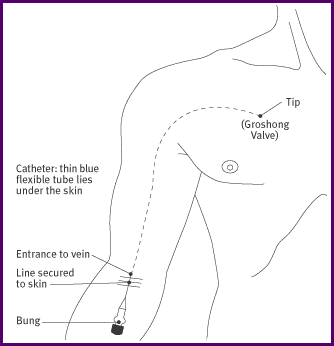
But the nurses have reminded me of all that information. Even more immediately, there is the PICC line itself, the soreness in my left arm, the "sock" covering the line like some kind of weird fashion statement, and soon the bottle of 5-FU that I'll carry with me for 46 hours every 2 weeks...all that screams "Don't forget that your life is still anything but normal!"

Still, like they say, every day above ground is a good day! If I can get out walking further and faster every day, while minimizing side effects, my fitness (what's left of it!) shouldn't deteriorate any further. And there is the whole emotional/social/spiritual side to train and develop. Not to mention work. I really hope I can start back part-time within a couple of weeks, gradually working up to a full-time return while still on chemo.

First, though, there is tomorrow and my first ever FOLFOX treatment, the first of 8 treatments, once every 2 weeks. My wife will join me for the afternoon at the cancer centre so we both can receive the pharmacy training and see exactly how it's to be done.

I need to remind myself of many things it seems, the good, the bad, the eternal, and the annoying.

Powered By Qumana

Monday, June 12, 2006

An Unwanted Journey: Day 0201 - Ready for Stage Three


My health is improving.

Even though my surgeon would still like to see the number of bowel movements decrease (as would I), he has approved proceeding with chemotherapy. So, this week I will be getting my PICC line in place for the next 4 months and will have my first infusion of 5-fluorouracil, leucovorin, and oxaliplatin . By next weekend, I should have first-hand experience of any side effects to be expected with my new regimen.

Today (Monday), I met with yet another medical oncologist for an assessment before beginning chemotherapy. For me it was another exercise in rehearsing my treatment story for someone unfamiliar with the details. It was also exposure to yet another "bedside" manner from both the oncologist and the nurse.

Unfortunately, neither one left me feeling particularly enthusiastic about the course of chemotherapy. Because I am well beyond the recommended 6 weeks from surgery to commencement of chemotherapy, the oncologist informed me that there is statistically little to recommend taking the therapy at all. If I had started "on time", the therapy's influence on a cure would only have been 10-15% anyway, but since I am beyond 10 weeks, we should realistically cut even that low rate in half.

Naturally, I asked whether it is even worthwhile to bother since the costs of treatment seem to outweigh the potential benefit. Since the course of therapy was recommended by another oncologist, the "substitute" oncologist suggested that we should go ahead, despite the statistically low rate of return.

Then, after the oncologist had left, the nurse decided to tell me that patients who have experienced gastrointestinal tract cancers should really think of their disease as chronic. In other words, I guess, don't expect a once-and-for-all cure! Why tell me something like that just before I'm about to embark on a course of chemotherapy? Beats me!

Still, I shall continue. Tuesday, I get my PICC line inserted. Wednesday, we start treatment. Four months later, I'm done therapy. That will leave me about 2 months before I celebrate the 1st anniversary of the diagnosis.

Powered By Qumana

Wednesday, June 07, 2006

An Unwanted Journey: Day 0196 - Urology Blessing


I had my consultation with the urologist today. He was very pleased with my progress, so pleased, in fact, that we don't have to see one another for another 6 months. This means I no longer need to measure urine output (hurrah!), I don't have to consider any further self catheterizations (unless the same obstructions occur during chemotherapy), and I can assume I have regained full neurological control of the bladder.

I will probably continue to have interrupted sleep patterns at night, however. He explained that the volume of urinary output after midnight until early morning is owing to a systemic issue. The body is emptying extra fluid from body tissues, far more than can be accounted for in fluid intake during those same hours. Because I am sick, this systemic response is even more pronounced. There won't be any relief, though, except with the passage of time. But of course chemotherapy could throw a wrench into the recovery process. Still, in his opinion, I am doing well and can expect to improve even further.

So, all that remains now is to see the surgeon again tomorrow, review how my bowel is responding to the regimen I am following, and from that determine whether or not I can begin chemotherapy next week. I am not anxious to have my body assaulted yet one more time, but it has to be done, and I would like to get it over with as soon as possible.

I also picked up the forms and physicians's reports from my general practitioner today to support my weekly indemnity payments. Reading through those reports from the cardiac care specialist and my medical oncologist was sobering. I have undoubtedly been very sick over the past couple of months. There are unanswered questions about how some of the problems I've encountered developed. But whatever the questions and uncertainties, the body has a marvellous healing potential. Despite everything, I am getting stronger and becoming more capable each day. Not strong enough or energetic enough yet to do work, but getting closer to that goal.

Powered By Qumana

Sunday, June 04, 2006

An Unwanted Journey: Day 0193 - Occupational Therapy


The CCAC nurse arranged for me to meet with an occupational therapist this week. The OT, in turn, reviewed my situation and made some suggestions for devices to ease my life. By Friday, I had those devices and was experimenting with them. There was a gell pack to put on top of a toilet seat which works extremely well. There was a toilet seat insert which adds height and comfort. It too works well. Finally, there as a wheelchair cushion which contours itself to your bottom. This hasn't been as useful, but I'll still experiment with it.

The OT was also useful in suggesting a variety of devices to assist in sleeping and in bathing. I'll wait until I have the PICC line in place before investigating those devices any further.

My wife and I were both amazed at how many resources are available when you have appropriate connections like the CCAC nurse.

I'm making slow progress on other fronts too. Yesterday I was able to walk around the block by myself and without my walking cane and was able to do so in 6 minutes faster time than in earlier walks. I'm also sleeping in a regular bed at night even though I still find myself waking every hour or so to visit the washroom. Unfortunately, in using the bed these days, I am getting tired during the NBA playoff games earlier and missing at least the second half. But I find I can usually predict the outcome from watching the first half, not always, but most of the time.

I'm driving the car more frequently these days too.

Clearly, though, I'm not doing a lot of in-depth reflection and research about cancer these days. My energies have been devoted to coping. That may come, but for now I'm content to merely feeling less discomfort and having slightly more energy for daily activities.

Powered By Qumana
Wednesday, May 31, 2006

An Unwanted Journey: Day 0189 - Cost of Chemotherapy


A good friend has been corresponding with me recently about the costs of cancer therapy (to be fair, he was more interested in whether I should ask the oncologists at the cancer centre about some of the newer drug therapies available). I haven't paid much attention to costs of my treatment yet. Suffice to say, OHIP pays for most of the procedures, hospitalization, etc. It doesn't pay for oxaliplatin, but a federal program has agreed to pay 100% of those costs for my treatment.

But since his email I have read a few abstracts about oxaliplatin treatment costs in the United States and Great Britain. One USA Today article (the one my friend forwarded to my attention) compares 8-week treatment costs for some of the standard and newer drug therapies:

5-FU(fluorouracil and leucovorin): $63 USD
Irinotecan: $9,497 USD
Oxaliplatin (with fluorouracil and leucovorin): $11,889 USD
Bevacizumab: (with fluorouracil, leucovorin and irinotecan): $ $21,399 USD
Cetuximab (with irinotecan): $30,790 USD

Sometime soon, I'll collate some of the costs just for my personal interest, costs like 28 days in hospital, the low anterior resection, radiation treatment, CT scans, MRIs, ultrasounds, lung scans, etc. Without even doing the research, it's quite obvious to me that I have become very expensive to the people of Ontario in the past few months. Don't get me wrong; I'm worth it, but it is humbling nonetheless to realize what the treatments are worth.

This week, I've had an additional CAT scan at the hospital, met with the surgeon for a followup consultation, and I will be meeting with an occupational therapist tomorrow. It's turning out to be a good week.

Powered By Qumana
Sunday, May 28, 2006

An Unwanted Journey: Day 0186 - Lifelines


When I meet acquaintances these days who have been unaware of my battle with cancer over the past six months, I find myself describing that period of time as the most difficult, the hardest challenge of my entire life. True enough. But what sometimes doesn't get said is that it has also been a period of rediscovery of the lifelines which make my life worthwhile.

In the past few days alone, for instance, I have been on the receiving end of gestures of kindness from family and friends that remind me I am loved. That doesn't mean I feel worthy. It just means that my life is only sensible as part of a web of relationships.

My parents, for instance, have been phenomenal, helping me in a variety of ways, the most important of which is simply listening to my concerns, offering advice, and visiting me when the can. Friends have brought plants, CDs, books, and dropped by the house for quick visits just to let me know they care and want to stay up to date on my recovery. My wife and sons continue to make daily life bearable. In fact, my wife has been at my side, preparing meals, checking on my condition, reviewing medical appointments and confirming medication for over 2 months now without complaint. My sons help with many household tasks that would otherwise be my responsibility. They also continue with their own lives, doing exactly what teenage boys should be doing at this time in their lives. I think they implicitly understand that I wouldn't have it otherwise. If they stopped their normal activities just to be at my beck and call 24x7, it would bother me.

I was able to go to the early service at church today, re-establishing another set of lifelines. Just to sing some hymns, shake hands and embrace friends, take the eucharist alongside my fellow parishioners, and talk briefly to as many as possible after the service - it was worth the discomfort and weariness I had for the rest of the morning.

Now, this coming week, I must get ready for my wife returning to work. This means I'll have to start preparing some of my meals and otherwise taking care of myself. Don't get me wrong. I am pleased my wife will be able to see colleagues and do her work again. I am also pleased that I am well enough to start taking care of myself to some extent. It means that, as long as chemotherapy doesn't lay me low, I may be able to anticipate doing useful work again. I don't yet know when that will happen, but at least it is now in the field of possibilities. Work, of course, is yet another lifeline.

Powered By Qumana

Thursday, May 25, 2006

An Unwanted Journey: Day 0183 - Incredible Shrinking Man


My medical oncologist is now off on paternity leave (congratulations!), so I am faced with doing a lot of explaining of my treatment history with the replacement oncologists over the next few months. Yesterday, after a wait of about 90 minutes, I had my first opportunity to do so. The result was a delay in the commencement of my chemotherapy until June 14th, primarily because of concerns about stabilizing my weight, my bowels and bladder.

Unfortunately, my weight continues to decline. Yesterday, I actually had an upset stomach which left me declining food. On the scales this morning, I had lost another 2 pounds. That kind of weight loss does a lot to explain my lack of energy, my light headedness, and my inability to recover more rapidly from the surgical complications I experienced.

The good news is that my upset stomach seems to have disappeared as of this morning. But I still find it difficult to eat as much as is necessary to stabilize my weight. Never had that problem before! I now weigh what I did when my wife and I first moved to the Waterloo Region back in 1977! Not that I would advise this method of weight loss for anyone.

Powered By Qumana

Sunday, May 21, 2006

An Unwanted Journey: Day 0179 - Some Relief


After consulting with the surgeon, I am happy to say that he doesn't think there is anything seriously wrong internally which could be held responsible for the pain I have been experiencing. Instead, he has taken me off my pain medications and started me on topical creams and non-prescription products geared towards slowing down the bowels (Imodium and Metamucil).

It seems to be working, although like everything else I've experienced recently, the progress is very slow. Yesterday, for example, on my birthday, I was able to nap for slightly longer periods of time and to go for a ride in the car with my family without being in pain. Today, I was able to sit in a rocking chair for a quarter of a game 7 eastern conference basketball game. This may sound like a very minor accomplishment, but being able to sit is critical to my recovery. If I am to get back into part-time work again soon, then I will have to be able to sit at a desk for at least an hour or so at a time.

We will continue with our experiments with this new protocol (adjusting dosages) for two weeks from the day I met with the surgeon. If we are successful, then we will have quieted down the bowels and established a baseline of expectations about how I should be feeling and how frequently l defecate and void the bladder.

My medical oncologist wants to get the chemotherapy started as soon as possible. I heard from the Oncology Access Assistance Program indicating that my application had been received and my request for funding accepted. This means that as soon as my medical and surgical oncologists can agree about a start date, everything is set to begin the chemotherapy stage of my cancer treatment.

In any case, it feels like we are making some progress after the many complications following surgery. I'm beginning to sense a shift in direction in my overall recovery. Maybe that's just the optimism of celebrating my 53rd birthday yesterday, but optimism is what I need most right now.

Powered By Qumana

Tuesday, May 16, 2006

An Unwanted Journey: Day 0174 - Pain and Diagnosis


I find myself in an awkward position these days. I am suffering pain that I truly believe is hindering my efforts at recovering from surgery and subsequent complications. On the one hand, I'd like to be able to assign responsibility for diagnosing the problem and fixing it to a suitable medical authority. On the other hand, I recognize the complexities and timing of presenting symptoms have everything to do with diagnosis and treatment.

Some of the medical personnel (not to mention family and friends) I'm talking to in the past few days have voiced their own frustration. In doing so, they seem to imply that somebody isn't doing their job. That's not my take on things right now. Talk to me in another week; if I'm not making progress on diagnosis and treatment of my pain, then I'll very likely be willing to assign blame. But I fully expect that we will make good progress this next week in figuring out what's going on, where it's occurring, and what to do to deal with the symptoms.

But I'm going for the cure here, as the medical oncologist put it so succinctly yesterday in our consultation. I'm not interested in wasting energy and effort on anything which doesn't directly contribute to a cure. I owe it to myself. I owe it to my family and friends. And I owe it to the entire Ontario medical system. I hope my blog entries reflect that attitude.

I want my attitude to be one of gathering and sharing appropriate information about rectal cancer and its treatment. I want it to be one of cooperation with the entire medical team who are committing themselves to help me achieve a cure. I want it to be one of fairness and objectivity. I want it to be life enhancing.

Powered By Qumana

Monday, May 15, 2006

An Unwanted Journey: Day 0173 - Chemo Consultation


After a week at home working on recovering bladder function, my wife and I headed back to the Grand River Regional Cancer Centre for consultations about the next stage in my battle against rectal cancer - the chemotherapy cleanup stage. The point of this stage is to find and destroy any remaining cancer cells still lurking about, especially since the tumour pathology report confirmed that there had been some lymph node involvement in one to three nodes.

The medical oncologist was in for a surprise today. I was the first rectal cancer patient at the centre who cannot remain in a seated position for any serious length of time. I had the blood work done in the lab and then requested a bed to wait for the next 90 minutes. Sitting down in the waiting area in the chairs provided would simply have been agony. The bed alternative made the wait acceptable.

We agreed that pain management is a serious issue and that we shouldn't begin the recommended chemo treatment this week until we have a plan to manage the pain. Even more importantly, we need to know where the pain is coming from. I will be seeing the surgical oncologist this week to see about a CAT scan and another possible scope examination to see if there is any serious source for the pain; the most serious would be an abcess in the colon or rectum.

Assuming we make progress on pain management and there isn't anything seriously wrong internally, then by about May 26th, we should be ready to start chemo.

The recommended therapy is different from what I anticipated. It goes under the generic name FOLFOX. It will be a cycle of 14 days for 4 months and will require another PICC line inserted. The drugs include leucovorin, 5-fluorouracil, and oxaliplatin. Every 2 weeks, I'll spend four hours the first day in the chemotherapy suite infusing the leucovorin and oxaliplatin. At the end of that 4 hours, the PICC line will be hooked up to the 5-fluorouracil for 46 hours. On the 3rd day, a CCAC nurse will disconnect the 5-FU. Then, every day during the next 2 weeks, I will flush the PICC line myself (after being trained to do so, much like the self-catheterization).

Side effects will be cumulative during the entire cycle, but there may not be much nausea. A more likely side effect will be sensitivity to anything cold to the touch. But, if I've learned anything about side effects thus far, it is to be prepared according to what the literature suggests, and then wait-and-see.

One of the oddest things about this next stage is that oxaliplatin isn't covered by provincial drug plans. This means that my wife and I must fill in an application form to the federal oncology access assistance program about our finances. That agency then determines what level of funding they will provide. Then, the GRRCC will provide us with the oxaliplatin free of charge and we will ensure any federal reimbursement for the drugs goes back to the GRRCC. Ridiculous, but necessary, given the state of provincial coverage of drugs used elsewhere in the world as standard treatment. Oxaliplatin would certainly qualify as a standard treatment. Too bad OHIP doesn't think I'm deserving of coverage for a treatment that could save my life!

So, the next stage is just around the corner. There will be more tests, scopes, medications, and disruption of ordinary life.

Powered By Qumana

Sunday, May 07, 2006

An Unwanted Journey: Day 0165 - Healing at Home

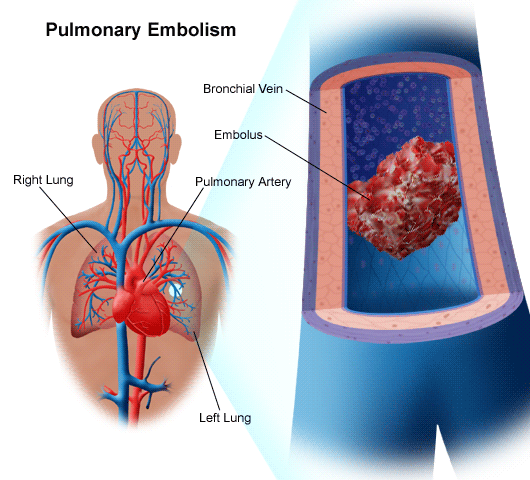
Since March 28th, I have spent 31 days hospitalized, under 3 separate admissions, the last of which was for 18 days and by far the most serious in terms of potential harmful consequences. The pulmonary embolii meant I could have died, suddenly.

But the cardiac care specialist who coordinated my last stay in hospital had me discharged on Friday, May 5th. Since then, I have been engaged in the very important and physically and emotionally draining business of healing.

This time, I have home care nurses visiting me regularly and monitoring my vitals. They have also been involved in educating me about intermittent cathaterization. Although it is definitely an unpleasant experience to self-catheterize, it means I can be at home with my family, eating home-cooked food, listening to music and watching NBA playoff action, and discovering patterns of pain management more readily than would be the case in a hospital room.

Given all the complications I have experienced, I have wondered whether this blog may unnecessarily frighten others about to embark on a similar treatment protocol. But this is reality, for me at least, and I do believe it is better to be informed of all possibilities than to encounter some situations for which you are totally unprepared.

My job, as the home care nurse explained so simply this morning, is to eat, rest, and allow the body to heal, something which, given the complications I've experienced, requires a lot of calories and a lot of time, a positive attitude, and a willingness to set aside expectations for the rate of recovery both I and others have had beforehand. Right now, I figure I'm about 3 weeks behind my preliminary expectations as I was released for the first time from hospital after surgery. Doing useful work for my employer will simply have to wait until I can do useful work for myself first, things like walking, going to the washroom, showering, sitting down for more than 1 minute, and being awake for over an hour at a time.

It's a beautiful Sunday here in Kitchener, Ontario. I can enjoy the view through the patio doors and watch my family outside doing things which seem like remote possibilities for me right now - pulling dandelions, mowing the lawn, and trimming the weeds from the patio. Unfortunately, writing this blog entry is the most ambitious task I can consider.

I will recover and I will regain optimism slowly.

Powered By Quman

Sunday, April 30, 2006

An Unwanted Journey: Day 0158 - More Morphine Please


Two steps forward, several steps backward...and then there's the option of doing nothing but lying flat on your back enduring pain worse than at any other time since surgery. On the day of surgery, nurses introduced me to the pain scale - 0 meant no pain, 10 meant the worst possible pain imaginable.

During the first 8 days of recovery from surgery, it was generally at a 2, sometimes creeping up to to 4. But I had my morphine-based self-administered pain pump which allowed me to function most of the time at a level 2.

With the advent of far more serious bladder cramps Friday than I had ever experienced before, we were in new territory. Friday night was absolutely the worst pain-filled night I have yet experienced, with bladder spasm induced pain spiking easily to 5 and settling most of the time at 3 or 4.

Then came the sub-cutaneous morphine. That would settle things down for about an hour, then the pain would reassert itself (2 mg of morphine). By the time morning came around, I was becoming quite adamant about seeing a urologist and finding some other approach to pain management for what looked to be just a terrible weekend.

We finally settled on both sub-cutaneous needle injections of morphine and needle-stick IV administered morphine, received an order for higher dosages, doubled the buscapan muscle relaxant (so-called antispasmodic), and kept the extra strength Tylenol coming every 4 hours. That made life bearable once again. But there will be no consultation with a urologist until Monday.

Doctors wanted to use suppositories, but I vetoed that based on the low anterior resection and my surgeon's unequivocal comment to me not to use them under any circumstances. Too bad they are the best way to relieve pain of bladder spasms!

I saw my family physician on Saturday, had more college visitors and family visitors, and even have managed to gently walk the medical ward hall circuit once each day. But the price of doing so is a spike in bladder spasms immediately afterwards.

I can see hope though. It's like a piece of fruit hanging on the edge of a branch in a tree just too tall for me to reach out and pick it. Emotionally, I am feeling the affects of not having any semblance of control in my life while being hospitalized this third time. But it's best for me and my family for me to be exactly where I am until I have recovered fully enough not to be a complete burden on my wife and sons.

Tomorrow, I'll have another lung scan to see how the PEs (pulmonary embolii) are doing. I may have the catheter removed in order to test my ability to void on my own. If both are positive, then a discharge in the near future seems possible.

Powered By Qumana

Thursday, April 27, 2006

An Unwanted Journey: Day 0155 - IVC Deployed


The process was painless and relatively straightforward for the patient. I was taken to a unit called interventional radiology, put on a stretcher in what appeared to be a standard operating room but with more high-tech X-ray imaging machinery.

Nursing staff gathered tools and apparatus, cleaned the groin area where the catheter would be inserted and basically explained how the procedure would work once the radiologist arrived.

When he did arrive, he further explained what would happen and corrected a mistaken apprehension I had about where the filter would actually be deployed. It did not go to the heart, but was placed in the inferior vena cava, a major vein leading from the legs towards the heart. The groin was used to find a point of entrance, contrast die then injected (all after local freezing) to map out the vascular territory on the screen, followed by another catheter being used to push the device into the inferior vena cava, a balloon inflated to open the filter's wiremesh-like structure, the balloon deflated, and the catherers removed.

The IVC filter is now located just slightly below my kidneys in the inferior vena cava. Any deep vein thrombosis with a thrown clot should now be caught in the filter and eventually dissipated mechanically.

I recovered first in the recovery room for an hour, keeping my legs completely still, followed by another 4-hour recovery in my medical ward bed. Finally, in the late evening, I was able to get out of bed and test the closure point for bleeding by using the washroom with assistance of a nurse. I went to the washroom again on my own a couple more time during the night, and all appears to be healing well.

I need a couple days of monitoring my vital signs, eating and drinking normally, and perhaps beginning to move slowely by foot with some assistance. Today or Friday, my family physician is going to visit as well as other family and friends.

This sounds to me like hopeful news! Friends from WWITPRO dropped by a lovely card and flowers. Friends from work have sent cards. Marg tells me I'm looking good and gives me a confirmatory big kiss before leaving after each visit. My sons are starting to joke around with me again, so I suspect something positive is happening.

When I do go home, I fully intend to remain catheterized for a while. I only what one issue at a time to be of concern. I can always schedule out-patient consultation with the urologist about either self-catheterization or intermittment catheterization. After arriving home, I will need 2-3 weeks of recovery before starting the process of consultations with the surgical oncologist or the systemic oncologist or even consider chemotherapy.

I know for a long time, I won't be taking anything health related for granted.


Powered By Qumana

Tuesday, April 25, 2006

An Unwanted Journey: Day 0153 - Vena Cava Filters

I totally panicked today.

This morning as I got out of bed to go to the bathroom, I bled out all over the bed, the floor and eventually the toilet. Even though I understood theoretically that the blood thinners could cause rectal bleeding, nothing like this has ever happened to me before and I completely stressed out.

The nursing staff cleaned up, took me immediately off the heparin, and then started a reversal process using a protamine IV to reverse the thinning effects of the heparin. They took me off all foods and liquids just in case we could schedule an appointment with a radiologist to implant something called a vena cava filter.

This device is meant precisely for patients like me who have had complications with bleeding from blood thinners but who are still in mortal danger of a pulmonary embolism which could rupture a pulmonary artery and cause death. As it turned out, the radiology department couldn't fit me in today, so it looks like tomorrow morning is when the procedure will be done.

The vena cava filter is inserted in a major vein, directed to the heart by x-rays and the skills of the radiologist, and is then deployed in that part of the heart most susceptible to a clot. The filter is like a wire mesh in which regular blood passes through unimpeded but in which clots are caught and prevented from passing through to the lungs.Even with the device, there is no guarantee that the patient will not suffer a fatal pulmonary embolism. But, if all goes well, the device will assist in my recovery from the deep vein thrombosis which is causing my most serious complication to date.

I'm afraid. But I am in the right place should further complications arise. Maybe tomorrow, I'll have better news about making progress on the road to recovery. I truly hope so.
Powered By Qumana

Saturday, April 22, 2006

An Unwanted Journey: Day 0150 - Serious Complications


This entry will be short.

First, thanks to Ian for filling in for me when the most I could do was breathe. Second, thanks for family and friends for visiting and taking care of me as I suffered through more complications arising from surgery.

My brother died of a massive coronary almost four years ago. It now appears that was almost my fate. Tuesday morning, I collapsed at home. After being admitted first to emergency, then to the cardiac care unit, and just today into a standard medical ward, I have run through many tests.

The most important was the lung scan which shows multiple clots (pulmonary embolisms). The next most important was the ultrasound showing possible renal failure and bladder spasms.

What evidently happened was that a clot travelled to my heart, broke up in the heart and then shot out multiple minor clots to the lungs. This elevated by pulse rate and left me short of breath and in danger of a heart attack similar to what killed my brother.

I am now on heparin to thin the blood and dissipate the clots. But I have also had to catheterize again (removing 2-3 litres of urine and blood each day). In addition, I am starting an antibiotic to fight an infection which is probably in the bladder. I still can't move much at all. In fact, I am most comfortable when I don't move at all, simply letting sleep and drugs work their wonders.

I have had a blood tranfusion, iron pills, multivitamins, aspirin, pentaloc (for the bloody ulcer), Tylenol to fight the fever, etc. I've almost lost track of everything I take.

One good thing is that I have regained a minimal appetite, colour in the cheeks, and some coherency in speech again. My haemoglobin levels are rebounding and I do not have the C-Difficile infection that the intensivist first thought might be the case. The precaution was to put me into contact isolation in the cardiac care unit. This meant everyone who came into my room had to gown and wear gloves. Now that the infection has been ruled out, we're back to monitoring the blood thinners and emptying the bladder through the catheter.

I don't know when I'll be home again. I also don't know when I'll be able to walk further than a few feet to the washroom. Maybe soon. Early next week, there will be further tests, including more ultrasounds and lung scans to see the effect of the treatment. In the meantime, I'm just doing what I'm told to do, eating when I can, resting as much as possible, and dreaming of being at home with my family again.

Powered By Qumana

Thursday, April 20, 2006

An Unwanted Journey: Day 0147 - Readmittance


As many of you have noticed, Don has been absent from this blog for the past few days. He was readmitted back into the hospital on Tuesday the 18th. I had another early day at work, so I did not find out about this most recent set of complications until later in the day. Don had been feeling weak and lightheaded throughout the morning, and took a spill on one of his many trips to the bathroom. Don wasn’t hurt, but the lightheadedness continued, so he was taken into the emergency room.

They ran another battery of tests on Don including ultrasounds, lung scans, and blood tests. The doctor believes that most of his symptoms are related to dehydration and anemia, caused by the surgery. He is getting a blood transfusion as I type this, and this will hopefully improve his condition. Don will be seeing a cardiologist and a urologist to have a look at some irregularities in his heart rate and bladder, which all could have been related to surgery.

Ian

Sunday, April 16, 2006

An Unwanted Journey: Day 0143 - Surviving


I can't believe how difficult this week has been! The loss of blood has been the single biggest setback I've encountered. I understand gastric ulcers are not uncommon when one has compromised the immune system through radiation and chemotherapy and then traumatized it with surgery. But I felt so good after surgery that the complication really threw me completely out of kilter.

When I first arrived home after surgery, I was walking around the block. Right now, I can barely walk to the washroom. That, too, is something that is difficult to handle. Urinating is almost more difficult than bowel movements, mainly because of the bearing down that I have to do to accomplish the task. Everything right now zaps my energy and leaves me feeling on the verge of passing out. I am definitely not used to this!

But things will get better. My haemoglobin levels fell dramatically as I was vomiting blood, but they remained steady enough for my surgeon to give me approval to be released again last Wednesday. Because I am not getting my blood work done daily anymore, I can't tell how well they are rebounding except for the colour in my face and my daily energy levels. It feels like things are improving, but I still don't want to eat or move about much.

When I arrived home, I discovered that the power adapter on my notebook computer had died. It will be another couple days before a replacement arrives. Not that it matters much. Since my readmittance to hospital and second discharge, the last thing I want to do is look at the computer. It just takes far too much energy.

Thanks to all the continuing well wishers. I will become more coherent and capable as I recover, but it will take more time than I ever would have anticipated with this ulcer complication.

My wife and children have been attending to my needs. A very good friend has made regular (and short) visits to my bedside and then to my home to offer words of encouragement. Thanks, John.

I am obviously losing weight, so don't be too surprised if you eventually see someone a little less than you would otherwise recognize. This might be a good thing!

Anyway, doing this has tired me out completely. I'll write again when I can.

Sunday, April 09, 2006

An Unwanted Journey: Day 0136 - Setback


After yet another long day in the local bakery, I returned home to find out about an unwanted setback in Don’s Unwanted Journey. He had had a very difficult day, since he had not been able to keep any food down. My mom informed me that after a very long day of sickness, she was taking him back to the emergency room for what would become yet another stay at the hospital.

When my parents did not return before midnight, I drifted off to sleep. I was awakened bright and early by a call from my boss, and after debating the merits of going in early; I left my room to look for Don. Bedroom? No. Family room? No. Bathroom? No. My Mom informed me that Don had been re-admitted into the hospital. The on-call doctor told Don that he might have a stress ulcer from the rigors of surgery.

The surgical oncologist will be seeing him tomorrow for a more specific diagnosis. He may be in the hospital for a few days, but it should not be too long. We hope to have him home soon, with a new bottle of pills to handle this hurdle in his Unwanted Journey.

Ian

Friday, April 07, 2006

An Unwanted Journey: Day 0134 - BM


Those two letters could stand for a variety of things. In my case, and for my experiences in the past 24 hours, they stand for Bowel Movement, Bad Medicine, and possibly Better Management.

Bowel Movement
Eating solid foods again is a blessing, but waiting for the resected bowels to pass the waste of that new food made me a little apprehensive, so much so that I called the surgeon's office to see how long I should wait before becoming concerned.

Sure enough, 2-3 hours after the phone call, I began passing stool, something which may not be a big deal to most people, but to someone just out of hospital after a resection, this was incredibly good news.

The problem was that it continued, just about every hour, eventually becoming little more than gas and liquid. By then, I was feeling sick.

Bad Medicine
I had been prescribed Tylenol 2 (laced with codeine, a narcotic, and caffeine) orally for post-operative pain relief. It was only Friday morning, after suffering all night, that my wife figured out that I was having a bad reaction to the pain killer. Not only was it doing nothing to relieve the lower back pain, but I was experiencing nervousness, accelerated respiration, inability to sleep, and eventually stomach upset.

After stopping the medication, things got progressively better. Still, the set back cost me another day of nothing but trying to sleep and sip a few liquids. I could eat nothing more than apple sauce and some toast and jam. I slept and slept.

Better Management
The experience has made me realize again how medication can be the source of trouble and not always the cure one hopes for. For now, I'll stick with regular Tylenol, plenty of rest, and hope to regain an appetite. Managing my recovery may be a little more complicated than I anticipated.

Powered By Qumana

Thursday, April 06, 2006

An Unwanted Journey: Day 0133 - Home


It's the sweetest thing I know of, just spending time with you.
It's the little things that make a house a home.
Like a fire softly burning and supper on the stove.
And the light in your eyes that makes me warm.
John Denver, Back Home Again
Yeah, a tad heavy on the syrupy sentimentality. But I sure do appreciate being home again after being discharged from Grand River Hospital yesterday morning. I walked to the car unaided and was able to climb into the seat without help, but I did avail myself of a pillow to protect my incision area from the seat belt. Every little pot hole reminded me that although I was on my way home, it would be a long time before my abdomen feels normal.

Before leaving the surgical ward yesterday, my student nurse, who was with me through the surgery itself and for two days after, wondered if she could remove the staples. It was her first time, and I was apprehensive, but she did a good job removing all 35 metal staples and putting on the temporary clear tape to protect the incision.

When we arrived home, we bundled up and went for a very slow walk to one corner and then another of our street, me dipping my toes into the pavement of the side streets and commenting, "One small step for man, one giant leap for a recovering patient." That was enough exertion, but it felt good to be outside breathing the crisp April air.

Most of the rest of the day was devoted to experimentation. It's amazing how much we take for granted in our daily lives about getting into and out of chairs, lying down in bed, going to the bathroom, climbing and descending the stairs, putting on shoes and socks...all the minutiae which is the background music of our lives. When you cannot take all those things for granted, then you have to experiment and find ways to help yourself or acknowledge help offered from others.

I am healing well. In fact, there is no need for me to have any home care. I can start showering, albeit carefully, eating high fibre foods and doing whatever will assist with the healing process. Just being here at home makes that process so much more attractive.

Powered By Qumana

Tuesday, April 04, 2006

An Unwanted Journey: Day 0131 - Milestones


Life is a series of milestones while recovering from surgery.

The first, and by far the most exciting for me, was temporarily waking up in the recovery room after the operation, asking questions of the student nurse assigned to me from Conestoga College, and then drifting back to sleep while they transferred me to the surgical ward. Knowing that you are alive, albeit almost immobile, and being awake to see my wife and son right after surgery was one of the most euphoric experiences I've had this past week.

Then I had to move on to other less sensational markers of progress along the road to recovery. In the ward, I realized that of all the tubes and devices associated with lower bowel surgery, I was without a nasogastric tube and a drainage tube from the incision. This meant there would be two fewer things to monitor.

But I did have an intravenous line delivering the standard saline solution along with Zantac (prevents reflux of the stomach acids during healing). On the same IV pole was another device for controlling pain medication (dilaudid) through a PCA. Not to mention the urinary catheter and its attendant bags for voiding fluid waste.

Over the next few days, I measured my progress through four things. One was the number of loops of the surgical ward I could walk during the day while holding onto the IV pole. These I gradually increased, proud that there was something under my control that helped my recovery. The second was the gradual decrease in the use of the pain medication until I was taken off the PCA pump and put on ordinary Tylenol oral tablets. The third was the introduction of clear fluids, then other fluids, then finally light, solid food. Finally, getting rid of the urinary catheter and IV itself was definitely life enhancing.

All the way along, there were minor victories and frustrations. My emotions were all over the map (as I've already indicated). At times I was elated. Other times, all the nurses and associated medical practitioners irritated and frustrated me - different stories from different folks. Then there was getting used to feelings of pain-medication induced highs and depression like I haven't experienced in many, many years.

Even when all the tubes and devices were gone, and I was eating solid food, the victories seemed compromised by increased pain from abdominal gas, going to the bathroom and passing only blood and gas, finding it impossible to be comfortable in bed, not sleeping, being awoken my nurses for vitals, blood samples, and oral pain medication. Nothing seemed to be a straight-forward victory or defeat. They were unceremoniously mixed together.

Not only were visits from family and friends a welcome relief, I looked forward to the short, 2-3 minute visit from the surgeon each day. His visits were my red-letter markers for progress during 8 days of hospitalization.

But I'm alive! I am being discharged! My wife and children love me! I have good friends. My medical team is doing their best, and I strongly believe we're moving in the right direction.

Stick with me. This unwanted journey is nowhere near complete, but we've turned some corners and achieved some important milestones along the way.

Powered By Qumana

Saturday, April 01, 2006

An Unwanted Journey: Day 0128 - Mood Shifting


I guess it was, if not inevitable, highly likely. But I still feel like a schmuck. I lost it with the person who least deserves it. My wife and youngest son came by in the evening for what was my wife's third visit of the day. But by the time they arrived, I was ready to vent. I apologized before the visit was over, but she still didn't deserve it. And today, even though Health TV says to expect mood shifts, I still think I could have toned it down.

Friday was called Day 3 in the Colon/Bowel Surgery milestones chart the nursing staff use to orient themselves to typical things to be done for patients as they recover. The milestones are averages of what patients experience and when they experience it. I've been progressing faster than average, so I think part of the problem for the day was my increasingly high expectation levels for myself. Walking the surgical ward loops, for example - Surgery Day, 3 loops; Day 1, 5 loops; Day 2, 6 loops, Day 3, 8 loops, (so far today, Saturday, 11 loops).

Lack of sleep was another problem. Thursday night, I was unable to get any decent sleep from the noise of the ward, constant interruptions and general discomfort. It catches up with you.

Then there were a lot of visitors. It really was great to see so many people, but I had to start asking friends and family to leave.

Then there was the apparently good news that a semi-private room was ready for me. Unfortunately, that meant a lot of unanticipated work for me, given the lack of sleep, visitors, and walking I'd already done. In addition, the nursing staff didn't seem too interested in setting up my room so I could use the computer, the TV, or even gain access to the call button. By the time my wife arrived, I was in a foul mood.

Saturday promises to be much better. I had a good sleep, my surgeon has authorized me to take some food for the first time since Sunday, and my catheter will be scheduled for removal for Sunday. And my son will have a lengthy visit with me this evening so we can watch two Final Four basketball games together with a head phones splitter device. I'll also have more visitors, but I'll be quick to suggest they stay only as long as works for me.

Powered By Qumana