Tuesday, October 30, 2007

An Unwanted Journey: Day 0705 - Job search, the next big obstacle

Life is full of irony.

On Sunday, I wrote about one of the best series on television these days, Californication, and reflected on the nature of good writing, blogging or otherwise. Imagine my surprise yesterday when following an interesting Google Alert which led me to the stupid cancer blog to be greeted by the image of one of the characters of the TV series, Evan Handler (Charlie), an actor probably better known for his role on "Sex and the City".


Prior to following the link and the subsequent permalink to the Jobs section of The New York Times to an article titled "For Cancer Survivors, a Job Hunt Can Be the Next Big Obstacle", I'd had no idea that Evan Handler was a leukemia survivor or that his illness has caused him career difficulties (his autobiographical Time On Fire: My Comedy of Terrors documents his battle with cancer and the effect his cancer had on his career).


Sure, it had occurred to me that other cancer survivors wondered what long-term impact their illness had on their careers, but I honestly hadn't spent much time pondering all the implications for my own career. Immediately after returning to work following my own treatment, it became apparent that things had changed, but I was happy simply to be working again. It seemed self-indulgent for me to attribute a sense of diminishing career opportunities to my battle with cancer.


Then, three weeks after getting my discharge papers from my medical oncologist at the Grand River Regional Cancer Centre, I became another statistic of "downsizing" in the Canadian manufacturing sector, just about the only sector in Canada assured of producing layoffs in an otherwise prosperous economy (see Warren Lovely's interesting article Canada: America's Dance Partner No More in the CIBC World Markets newsletter article for 15-Oct-2007).


Those "self-indulgent" thoughts boomeranged right back at me.


It seems I'm not alone. There are as many as 10 million cancer survivors in the United States, many of whom have had their careers interrupted (see I'm Too Young For This! Cancer Foundation For Young Adults for just one example of burgeoning self-help initiatives) and now actively wondering what comes next in their career path.


Most companies are doing the right thing. Certainly any company that I would want to work for would have a standard of compassion and a strong realization that survivors can be among the best human resource investments they might ever make. Now, though, I need to concentrate almost exclusively on getting from here to there.


Last night, we held our first IT Careers Night at the Waterloo Wellington IT Professionals user group. We held a guided discussion about the job market, certification, career paths, resume writing, and recruiting. We didn't discuss bouncing back from a battle with cancer. But it certainly occurred to me that such a topic was a pertinent aspect of any reflection on an unwanted journey, be it a journey with cancer or career interruption.

Sunday, October 28, 2007

The Write Stuff - Californication

If you've ever watched Californication, you've probably heard references to how blogging is not really writing at all. Hank Moody, the character played by David Duchovny, is stuck. He has writer's block, has succumbed to the "California" lifestyle, screwed up his relationships, and taken on a paying gig doing a blog, rather than following his true muse of novel writing.

In an interview about the series on ShowTime, Duchovny explains why he did the pilot, "I really liked the writing." In that same interview, in explaining Hank Moody's problem, Duchovny says that Hank has "fallen into blogging", a kind of "instant gratification and publishing" - a clear sentiment reflecting the angst of his on-screen character who too believes blogging isn't really writing at all.


Hank is a "walking id", someone who "cannot lie", but always "speaks the truth", no matter how socially inappropriate.


There is one scene from the season finale which "showcases" this character flaw iconically. Hank appears in the room where his former girlfriend Karen waits in the wedding dress she has chosen for her forthcoming marriage to her new, stable and prosperous boyfriend, Bill. Hank, in top form and true to his "I-cannot-tell-a-lie" character says, "Wow...you look incredible...except for the makeup which is a little hookerish...if that's what you're going for, is it?"


She responds anxiously about why it took him so long to arrive and wondering where their daughter is. That is followed by an agitated monologue about how nothing turned out the way it was supposed to. Hank then answers, "All those things that weren't supposed to happen...they happened. What happens next is up to you."


I think Duchovny is right. The show has great writing.


I think Hank and Duchovny are wrong. Blogging isn't just about instant gratification and publishing. At it's best, it's about accepting who we are, rehearsing all the things that weren't supposed to happen, but happened anyway, and then - here's the crucial aspect - deciding what happens next. Like real life and like Hank himself, it's about being a "walking id", telling the truth, no matter what the consequences.


The hard part - deciding what happens next - isn't just a question of freedom and willpower, about merely surmounting difficulties, about courageously scaling the mountain. It's also about determining what cannot happen next, about putting the id on a leash, no matter how short, no matter how fragile.


That's where blogging and the write stuff become identical.

Saturday, October 27, 2007

An Unwanted Journey: Day 0702 - Good, Good, Good

The unbridled optimism didn't last, of course. The very next day after blogging about the unexpected persistence of optimism, I felt what, in retrospect, was an inevitable mood of uncertainty. Nonetheless, those temporarily meandering moods, those unwelcome reality checks, don't last long.

It helps, of course, to hear from my family physician that my cholesterol levels are down from my last appointment in the spring, that I'm looking good with my weight loss, and that he gave me a discount on photocopying the voluminous medical reports in my cancer treatment file. It helps, too, to splurge on some some new clothes, to have a new cell phone, and to be eagerly waiting for my new portable Dell workstation to arrive. It helps as well to have so many people offering well wishes, providing references, and getting me in contact with tangible opportunities. All these things help.


It helps to be productive with not only the job search, but with the Waterloo Wellington IT Professionals user group, and with contributions to other IT-related endeavors (see my recent technical blog entry). And it really helps to be drawing ever closer to the second anniversary of my initial diagnosis of cancer with a clean bill of health and no evidence of disease!


As my beloved Toronto Raptors announcer, Chuck Swirsky, would say, "It's all good. It's all good."

Thursday, October 18, 2007

An Unwanted Journey: Day 0693 - One Week In, One Week Away


I'm still one week away from my first consultation with my family physician to review my blood tests, the first meeting after my second release from the regional cancer centre. I know. It's getting a little complicated talking about firsts, seconds, follow ups, and what are increasingly standard medical precautions.


That's very good news. Even with occasional hard-to-take evenings, concerns about my health are receding. I'm losing weight and getting my BMI values back closer to where they should be. Cancer, after all, isn't the only health issue I should be considering. But I'm feeling full of energy and vitality these days. In other words, my health is good.


So, even after one week into my job transition status, and one week away from my consultation with my doctor, I'm feeling confident about everything. The optimism of the first few hours after my termination notice owing to downsizing in the company where I was employed has continued unabated. Sure, I've had some sleepless nights, but it's not from worry so much as excitement about prospects, about the search, about evaluating where I want to go next, about how my social capital will play out in the next few weeks or so, about life in general.


I really don't know if this is normal or not. It's been so long since I've done an active job search that I'm not sure whether my optimism is warranted. But hey, even if it isn't, at least I'm enjoying the ride. The confidence has to make a difference as I get closer to interview situations.


But there's another possibility. Maybe it's experience and the equanimity of my truly unwanted journey coming into play. Once you've stared cancer in the face and survived the encounter, other set backs seem trivial in comparison.


Other people - friends, family, and colleagues - are reflecting the same confidence I feel. That helps too.


In fact, another of the life lessons I've learned is playing out in this new situation; namely, what you put out there comes right back at you. As I wrote to a friend today, life's ups and downs can be spun just like anything else. It's funny actually. I choose to spin my current situation in a very positive light, and surprise, surprise, that's exactly how others are spinning it back.

Friday, October 12, 2007

An Unwanted Journey: Day 0687 - It Rains, It Pours

Today has been interesting!

Yesterday, just one day after having my blood chemistry taken since being discharged from the Grand River Regional Cancer Centre, my employment was terminated owing to downsizing. Today, as a result, was the first day in another kind of unwanted journey, a journey of job transitions. But, like I said to family members, "I've had much worse news than this."


Oddly enough, this feeling of calm and cautious optimism lasted from the time of my meeting with my employer through last night and all day today. I don't think I'm compensating, but time will tell. I honestly think that if one has to be on the job market, now is the time.


Dealing with cancer has taught me some important lessons, perhaps chief among them being that it is best to deal with life's contingencies one day at a time, hoping for the best and preparing for the worst. I know it sounds trite and obvious, but true nonetheless.


So, why the allusion to raining and pouring? I guess it's a reference to the ambiguities of life. Bad weather is sometimes exactly what we need when we take a longer perspective on things. In my case, being forced to look for a different job may be exactly what I need in my life, a chance to move on and embrace new opportunities and possibilities.


Wish me luck!

Sunday, October 07, 2007

Mixed Member Proportional

How do you actually vote in provincial and federal elections in Canada? If you're anything like me, sometimes you vote for a person, sometimes for the party. But more often than not, I tend to vote strategically for the party that best represents my own views about current issues.

Now in Ontario we're facing a referendum on 10-Oct-2007 in which we can vote for one of two options:


  1. continue exclusively with first-past-the-post election results

  2. continue with first-past-the-post in local ridings as well as a vote for a party

The clear advantage of the mixed member proportional scheme recommended by the Citizens Assembly on Electoral Reform is this: all our votes for political parties will count, not just the ones for the party representative with the plurality of votes in your particular riding.


Here are some other reasons why MMP makes sense:


  • MMP has multiple-party support in this Ontario provincial election campaign.

  • most democracies modified exclusive FPTP over a century ago

  • all citizens are entitled to representation, not just those who voted for the representative with the highest number of votes

  • most votes cast in any election in Canada, federal or provincial, elect no representative

  • many majority governments are not truly results of majority popular voting (in the current provincial legislature, for example, the Liberals have 70% of the seats with only 46% of the popular vote)

  • legislatures do not yet have appropriate representation for women and visible minorities

  • without proportional representation, voters tend towards apathy and cynicism

What bothers me most about this referendum campaign in Ontario is that there is insufficient discussion of the issue. We read occasional newspaper articles, mainly from those opposed to MMP, but very few know why the Citizens Assembly presented MMP to the Ontario electorate - in fact, only 12% of the electorate knows anything about MMP at all.


Here's how the vote will work under MMP.

Saturday, October 06, 2007

An Unwanted Journey: Day 0681 - Two years, moment-by-moment

Two years ago today, I was in Toronto at a TechNet tour at Paramount theatre, learning a little about the forthcoming Windows Vista, the XBox 360, and Windows Mobile 5.0. Einsteinfest was also underway in Waterloo at the Perimeter Institute as an alternative to the annual Kitchener-Waterloo Oktoberfest. And I was waiting for an anticipated trip to San Diego followed later in the month by a colonoscopy.

It's amazing how much can change in a mere 730 days. Since then I've been diagnosed with rectal cancer, received radiation, undergone surgery, suffered through post-surgical complications, been treated with chemotherapy, lost 30 pounds, gained it back, and begun losing weight again; I've watched as my aunt lost a foot to melanoma, retired from co-founding a regional IT Pro user group, struggled back into full-time work and rejoined the IT Pro user group executive, written many, many blogs about cancer experience, and been discharged from care at the Grand River Regional Cancer Centre twice.


But here I am, alive, and celebrating Canadian Thanksgiving with my immediate family. I've had much to be grateful for in these two years, some of which is terribly obvious, some of which is the consequence of attitude adjustment and thereby less apparent. This long weekend provides me with an opportunity to reflect on the course of the past two years, lessons learned, and new directions available to me.


When I read my own posts for the past two years, I'm struck by the range of feelings and the contingent nature of conclusions I reached. One thing for sure, as I reread these entries, is that I realize I cannot take myself or my "conclusions" too seriously since they keep shifting. I look for directions and development, hoping to find maturation of thought and feeling, but often finding nothing more than someone buffeted by live's circumstances and doing his best to figure it all out. I find myself as an example that who we think we are is mainly ephemeral, a mist blown about like the fog of an early autumn morning.


True, there is something that is constant as well, patterns of temperament, habits of thought and behavior, and propensities for verbal descriptions. But the bottom line of the two-year review is that I am what I happen to be at a particular moment in time. Take it or leave it, what you get in this unwanted journey is me in the moment, nothing more, nothing less.


And for that, too, I am thankful. That changing me is just an accelerated version of what would otherwise been the case without cancer. Yes, I dearly wish things would have been better in a variety of ways for the past 730 days. But they have by no means been all bad. Even the worst of this experience with cancer has meant flashes of illumination and moments of discovery and realization. And at this particular moment, I feel optimistic about my health and my options for the future.


For instance, tomorrow we celebrate Thanksgiving Sunday by going as a family of four to Martini's Restaurant in Kitchener. I'll be eating something from the menu that is whole foods and plant-based while the others in my family will undoubtedly partake of the turkey, dressing, mashed potatoes and typical fare for the season. I'll look across the table and realize that I'm a rich man. I have a wife whom I love dearly and who loves me, two sons who have become smart and mature young men whom I also dearly love and who also love and respect me. We are very different people, different from who we were two years ago, different from each other in many significant ways, and different from who we will become. But this weekend, in this place, we're together, being thankful and enjoying the moment.

Tuesday, October 02, 2007

An Unwanted Journey: Day 0676 - Scientific Reductionism

"This gets to the heart of reductionism in science. As long as scientists study highly isolated chemicals and food components, and take the information out of context to make sweeping assumptions about complex diet and disease relationships, confusion will result. Misleading news headlines about this or that food chemical and this or that disease will be the norm. The more impressive message about the benefits of broad dietary change will be muted as long as we focus on relatively trivial details." - T. Colin Campbell, PhD, The China Study, p.286

I am a regular subscriber to Google Alerts using keywords like colorectal cancer, cancer + survivor, and Canada + cancer. Over the past year or so, I have received hundreds, perhaps thousands of news items publishing "this or that" scientific discovery about cancer drugs and treatment, about inspiring stories of survivors and patients, and about dietary and nutritional studies. In the past few weeks, especially, I have been reading about how fruits, vegetables, and dietary fibre probably don't help cancer survivors. Here is just one study published recently by the Journal of the American Medical Association (JAMA) which claims that breast cancer survivors and cancer recurrence aren't affected, at least in terms of statistical significance, by increasing intake of fruits and vegetables. Actually, this is one of the best that I've opened up and perused recently. Most of them merely regurgitate popular press summaries in which fruits, vegetables, and fiber are listed as having minimal impact on cancer recurrence.


These studies and publications are typical of the scientific reductionism which confuses everyone about the effects of broad dietary change. The Nurses' Health Study is perhaps the most well known, especially to those affected by breast cancer.


Here's the problem in a nutshell. When the general public reads studies and notices about "this or that" nutritional element, most of us are looking for a magic bullet. We want to know what to add to our existing, unchanged diet that will cure us or make us resistant to certain diseases. Most of these studies contradict one another, so we're left confused and frustrated. We're told that fat, for instance, increases the likelihood of contracting breast cancer. Then the next moment we're told that modifying dietary fat doesn't appreciably affect the onset of breast cancer. Who to believe and why?


The problem with the "magic bullet" inclined public and the "single dietary component" studies is that they both lead us away from the incontrovertible evidence linking diet and nutrition from cross-cultural and international studies, evidence that points to the "Western" diet as implicated in virtually all of our "Western" chronic diseases, cancer included.


In the JAMA study, for instance, we are never told that all of the women studied (as in the Nurses' Health Study) were carnivorous, high animal-protein, eaters. Adding a few fruits and vegetables to a diet already high in animal protein and refined carbohydrates might not make a big difference in cancer recurrence. But what we're not told is what would happen if we adopted a whole foods, plant-based diet as is the case in places like rural China.


Let's give cancer patients and survivors more credit. If I were to tell you that instead of looking for a magic bullet, what you needed to do was remove something from your lifestyle and diet, isn't it true that you might not like the message, but you'd be willing to give it a try, no matter how impractical it might seem to some people? If I told you that western chronic diseases can mostly be prevented and sometimes even reversed by becoming more active and eating a whole foods, plant-based diet, would you consider changing your lifestyle? I would!


It's time for a change, not just in the way studies are done and reported in the media, but in our expectations for a magical cure. If we've spent an entire lifetime getting to where we are with dietary excess and extravagance, then getting off the routine is undoubtedly more important than adding a few fruits and vegetables to an already poor diet.


I can do this, and I strongly suspect that many others affected by cancer can do this.

Tuesday, September 25, 2007

An Unwanted Journey: Day 0669 - Malignant Misinformation

Yesterday, I had the good fortune to participate in a conference call with other colorectal cancer advocates across Canada. I have agreed to participate in the Colorectal Cancer Association of Canada's Advocacy Network, a group of people almost all of whom have been or currently are colorectal cancer patients or survivors. The president of the CCAC hosted the call, Barry Stein, himself a survivor and very capable advocate on behalf of colorectal cancer patients.

It was gratifying to hear the voices of people I have read about, those who are battling their own way through treatment and advocating for themselves and others with their provincial governments. The primary goals of the Advocacy Network are to ensure appropriate screening programs and timely access to care.


I was also pleased to hear that another of the advocacy goals included something the CCAC calls Healthy Lifestyles. I had mentioned my concern that scientific evidence is accumulating rapidly about the role of nutrition in preventing and treating cancer. The CCAC had already taken some steps to make healthy living a pillar of their advocacy efforts, something I heartily applaud.


During my period of diagnosis, followed by treatment with radiation, surgery, and chemotherapy, I did a substantial amount of research into colorectal cancer, treatment protocols, and self-help options. If you have followed my blog, you may have noticed a thread of frustration with what I am now calling malignant misinformation about nutrition and cancer.


At almost every point when I turned to experts for advice about nutrition, I felt frustration and disappointment. This isn't meant as a criticism of individuals. In fact, the registered dieticians in the supportive care program at the Grand River Regional Cancer Centre were uniformly helpful and available. The reason for my frustration and disappointment was systemic. The system by which information about nutrition and cancer is conveyed to the general public in our society is itself sick. The sickness is subtle and pervasive and continues to grow like a malignancy.


How do I know this? I've suspected a problem for quite a long time, but until recently I couldn't articulate what it was. But then I purchased The China Study, the most comprehensive study of nutrition every conducted. Much of the author's lifetime in nutrition and cancer research has revolved around epidemiological and clinical studies of protein consumption, the signal conclusion of which is that high animal protein diets promote cancer and many other degenerative diseases.


But, as Dr. Campbell asks in the book, "Why haven't I heard of this?" The answer is not that scientists are cooking their data and being paid under the table to promote those with vested interests in an animal-based diet. Again, as Dr. Campbell says, "The situation is much worse. The entire system - government, science, industry and media - promotes profits over health, technology over food and confusion over clarity."


If he is correct in his analysis, not only of the data but of the health information systems, then I suspect cancer care advocacy is subject to the same systemic pressures and constraints. If so, I hope to help fix the problem, at least in my small corner of the world.

Sunday, September 23, 2007

An Unwanted Journey: Day 0667 - What I Need

This should be simple, right? Being a colorectal cancer survivor should mean that my needs are only slightly different than most people. After all, if there is no evidence of disease now, then the only differences of note between me and the "average" person will centre on what treatment has done to me.

Yes, but...what the "average" person needs is not as simple to determine as it might appear at first glance.


If you take evolution seriously (and I do), then what met the needs of homo sapiens for hundreds of thousands, perhaps even millions, of years has to be foundational for any meaningful discussion of what meets our needs today. Instead, what most of us hear is the latest pop health blurb on TV or radio or even a "Google Alert".


"Eat more fiber and you too can beat colorectal cancer." "Caffeine and vitamin D supplements will improve your odds in preventing cancer." "Add a little red wine to your diet." "Stop imbibing alcohol or you'll regret it!" "Take a colon cleanse now." "Yoga and meditation ease the stress implicated in cancer recurrence." "Just pray about it."


Blurbs - they're everywhere (even here). Not many of us have the time or the inclination to do the required research to sort out the blurb from the body of scientific evidence. But, perhaps all we need is to listen to what the body tells us. Granted, we'll have to listen closely, but surely it's within our grasp to just tune in to internal physical clues and signals and respond accordingly.


If you've been reading this blog since late November 2005, then you'll probably recognize the difficulty I've had in "tuning in". For what it's worth, my experience with cancer, treatment and recovery is teaching me a very difficult lesson; namely, it's not easy at all to figure out what to do to meet my own needs.


Why?


I'm deeply embedded in humanity's grandest and most ambivalent achievement. We in North America, born in the mid to late twentieth century, have unparalleled prosperity and technological resources at our disposal. And we have the "diseases of kings" to match our prosperity - cardiovascular disease, diabetes, obesity, drug addiction, and, of course, cancer.


There are so many good things that have resulted from this surge of science and technology, wealth and prosperity. But our losses are significant too. Perhaps the major loss is our recently acquired inability to determine what we need. We no longer know how much to eat, how much to sleep, how much to drink, or to some extent, how to get along with other people.


Our bodies are finely tuned instruments which have acquired natural capacities during the course of evolution for determining exactly the right amount of food required, exactly the right amount of sleep to get, how to cooperate with and respect other members of our species, and how to be happy. The only other species to have demonstrated the "diseases of kings" are those we have expressly put in laboratory experiments to see what we can do to disrupt their own evolutionary adaptive mechanisms. They too get fat, they ignore others, they become addicted, and they lose the ability to determine adequate amounts of sleep.


Overly protein- and calorie-rich foods and drinks, drugs, and alcohol have bypassed our own evolutionary adaptations. Light at all times of day and night have tricked us into a constant state of sleep deprivation. Instant gratification has fostered an unnatural selfishness and ignorance of the needs of others. So the current state of the "average" person is one with unparalleled wealth and apparently useless evolutionary adaptations to manage the side-effects of that wealth.


I am, like everyone else in the developed world, struggling to figure out what I need, what I truly need, struggling to find a balance lost and almost impossible to restore.


Still, I have hope that our science and technology and our will to survive will allow at least some of us to rediscover balance, to respect the wisdom of evolutionary adaptations in a "natural" environment, and to move beyond the "diseases of kings".

Wednesday, September 19, 2007

An Unwanted Journey: Day 0663 - Discharged! (again)

It's good news, even if I have heard it before. Today, my medical oncologist said that my recent CT scan and CEA blood test results were both normal. Last time after the official discharge, I got a call within a couple weeks indicating some concerns about ambiguous test results. Then I had another series of tests and follow ups at the regional cancer centre leading, after nine more months, to today's appointment.

I shook hands with my oncologist, received the discharge letter outlining how the follow up visits are scheduled with my family physician, paid for my parking, made a couple celebratory phone calls and sent off a few email messages, and now I'm ready to celebrate at a good vegetarian restaurant with my wife and son.


True, it's a little anticlimactic, but that's how it works anyway. This time, I feel slightly more secure since my overall health has improved significantly in the interim and each additional test has shown no evidence of disease.


As I wrote to some family members and friends, "today I am officially a survivor!"

Wednesday, September 12, 2007

An Unwanted Journey: Day 0655 - Subtraction

It's been a while since I last reflected on my unwanted journey in this blog. Since beginning my calorie-reduced diet on 20-August-2007, I've lost over 7 pounds and my BMI has been reduced by over a full point. Not spectacular, to be sure, but it's definitely in the right direction.

I've been feeling better too. For all my previous frustration in not discerning patterns of behavior that exacerbated the side-effects of medication and the after-effects of treatment, I am beginning to see correlations between how I feel and what I eat.


There's nothing very scientific about what I've discovered, but observations are a good start. For instance, beef seems to cause me digestive problems and to aggravate my bowels. So too does any large meal, especially those with high fat content.


Red wine may not be good for me either, but I'm willing to take the risk!


One of my friends gave me a memorable phrase which I now hear myself repeating occasionally during the day - "Hunger is my friend."


Seriously, though, it's very gratifying to finally find myself making discoveries that might improve my overall health and reduce the frequency of bowel movements. The lesson I'm learning is one of subtraction; specifically what can I remove from my diet or behavior to improve healing and recovery.


Surprisingly (or perhaps not), my recreational reading has reinforced this message of subtraction. I've recently read again two books which have complementary messages. The first is Daniel Gilbert's Stumbling on Happiness and the other is Douglas Lisle's and Alan Goldhamer's The Pleasure Trap, both of which explicitly deal with happiness as well as the problems of our psychological and biological makeup which contribute to counter-productive behavior.


It seems we are hard-wired to to expect that the solution to our problems is to add something, whether it is food, a pill, a lotion, whatever. We need to train ourselves to counteract instinctive urges to look for what's missing by thinking about what should be taken away. Given enough time, I hope to take this lesson of subtraction into other applications, but for now, the lesson is clear. Most of what afflicts me and so many others may well be resolved not by adding another medicine, but by subtracting dietary excess, animal protein, sodium, sugar, and refined carbohydrates. Reducing my BMI may be the single most effective treatment I can offer myself as I move forward in recovery.

Monday, September 03, 2007

An Unwanted Journey: Day 0646 - The Need for Advocacy Groups

I envy the work of the Lance Armstrong Foundation in the United States, especially the work the LAF does in lobbying federal politicians about the fight against cancer and the needs of cancer survivors (see the LIVESTRONG Presidential Cancer Forum as one example of the lobbying efforts).


Advocacy by the LAF is all about saving lives. And it's about visibility and holding politicians accountable for both policies and practice.


We have advocacy groups in Canada as well, just nothing as publicly visible as the LAF. We have, for instance, the Cancer Advocacy Coalition whose work is mainly about publishing assessments of the cancer system in Canada. Maybe it's just me, but as a cancer survivor I think we need something more like the LAF here, with rallies, political forums and other advocacy events; and the organization should be controlled by cancer patients and survivors first and foremost, not practitioners in the health system, nor necessarily funded by pharmaceutical and other medical for-profit companies (see the list of sponsors/partners for the Cancer Advocacy Coalition). True patient and survival advocacy also cannot be handed over to government funded agencies like Cancer Care Ontario.


Advocacy is about "getting the face" of those with power and influence, not those beholden to people holding the purse strings. It's about public image and branding. Here's one example.


Over 65 million of us now sport the yellow LIVESTRONG arm bands worldwide. I can't say how many of us in Canada wear the arm bands, but if you walk into our home, you'll see at least a couple of us wearing the arm band 24 hours a day and the rest wearing them occasionally. In fact, we even have a supply of the arm bands available should one snap from over use.


The arm bands are a generic and highly visible statement of advocacy and the personal impact of cancer on our lives. The Colorectal Cancer Association of Canada has a lapel pin that does something similar for those of us affected by colorectal cancer. But we still need a patient/survivor-driven advocacy organization in Canada similar to the LAF in the United States.


The LAF has no plans to establish a Canadian organizational equivalent, but who knows, if enough of us lobby the LAF, we just might be able to change their minds.


Imagine that we had an LAF Canada advocacy group ready and waiting for this year's Ontario provincial election campaign. One thing we could do is petition each and every candidate about the appalling lack of PET scans in the province (see the excellent article in the Ottawa Citizen - 'Draconian' policy stymies cancer patient by Joanne Laucius). This kind of advocacy doesn't just happen without patient pressure, without getting the attention of policy makers by making it an election issue.


It high time we had our own LAF Canada.

Sunday, September 02, 2007

A Video Tribute to Randy Spencer


On 4-Sep-2007, it will be the fifth anniversary of the death of my brother, Randy Spencer. He died far too young at age forty-five.

Randy was a self-made man, a loving husband, and a very proud father of two children. He continually surprised members of his extended family with his penchant for learning new things, setting goals, and then working until he had mastered the skills required.

One of the areas he excelled in was web development, especially the graphics required to set sites apart from the run of the mill. I would dearly have loved to have seen what he might have done during these past five years if he were still with us. Instead, we have some of his digital work which reminds us of his aptitude, his strength of character, and what might have been.

This video is a tribute to Randy with the graphics courtesy of his daughter.

Saturday, September 01, 2007

An Unwanted Journey: Day 0644: The Video

Another vanity video, this time a compilation of photographs and blog post images documenting my battle with colorectal cancer from April, 2005 to August, 2007.


This takes a lot of work, gathering images, figuring out exposure length for each shot, synchronizing music with video, adding titles and credits, editing and testing, followed by uploading and further processing. But there's nothing to tell a story quite like a video, even if all the images are still shots.

Wednesday, August 29, 2007

A Weekend on Taylor Island

Admittedly, this is an experiment with posting video to my personal blog. If anyone in my family objects, I'll be taking it down right away.

Our annual outing to Taylor Island is a highlight of the year for me. Not only is it an opportunity to relax in one of nature's most beautiful spots, it's even more a chance to visit with my own nuclear family members and our hosts. They are all truly wonderful people and I can't imagine my life without them!

Sunday, August 26, 2007

Apples, the Universe and All That


20070826Don2.jpg
Originally uploaded by rtfax
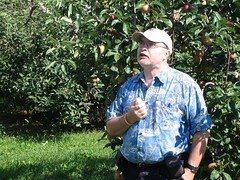
Yes, there is an airplane in the sky overhead, but wouldn't it be preferable to imagine that I am contemplating the nature of the universe, apple in hand. After all, it's a Gravenstein, the first of its variety for 2007. I'm surrounded by apple trees, with my wife and youngest son and I ponder...

Each year we make at least one trek, sometimes several, to an orchard a few miles south of Cambridge to harvest apples. This year is the earliest we have been to the orchard, picking Gravenstein and Paula Red. In a week or two, we'll be back for the next variety's ready for the pickin'.

They say an apple a day keeps the doctor away. I'm counting on it!

Kayaking early in the morning


IMG_0049
Originally uploaded by rtfax
Lake Muskoka early in the morning offers beauty, solitude, and opportunities for amateurs like me to paddle in the kayak without competition from motor boats and Sea-Doos. This small island is only one of literally thousands, some of which no doubt inspired the Group of 7.

The lake can become treacherous later on, but at this time of day, you might think it was something of your own creation. Moments like this are all I need to remind me of the beauty of nature during the rest of the year toiling away in an office.

Lake Muskoka, early morning


IMG_0018
Originally uploaded by rtfax
I love the early mornings on the lake. The water reflects both the sky and the shoreline. The loons call in the distance. I'm alone with nature, my thoughts, my camera, and an opportunity for silence and rejuvenation. It's magical.

Wednesday, August 22, 2007

An Unwanted Journey: Day 0634 - Body Mass Index

My family and I had a great long weekend in the Muskokas with family. But even there, I was constantly reminded of the after effects of colorectal cancer treatment. Coming home, I decided that it was time to take action to mitigate those annoying side effects.

I've decided to lose weight; more precisely to reduce my body mass index. I'll do this gradually by a simple technique that always seems to work for me when I am disciplined enough to do it - counting calories. This time, however, I have the benefit of using a Pocket PC with the necessary software constantly with me (My Personal Diet from VidaOne Inc). The software has a decent database that tracks health measures like body weight and body fat percentage, blood pressure, feelings, etc. It also has a place to record workouts and meals without having to write down everything and then later remember to do calorie, carbohydrate, protein, fat and other nutritional lookups later. This makes the likelihood of maintaining the regimen greater - convenience should never be underestimated in designing a routine.

I haven't done this before in my recovery period mainly for two reasons: 1) I didn't want to impose another set of restrictions on myself immediately following all the restrictions of my treatment period; 2) the research doesn't show any correlation between rectal cancer and BMI, although there does seem to be a clear correlation between colon cancer and BMI. Finally, more recently, the evidence that a prudent diet can cut one's risk for recurrence of generic colorectal cancer seems to mandate at least a diet of whole grains, fruits, vegetables, fish and chicken.

But now, no matter how equivocal the research may be, I want to reduce symptoms like the frequency of bowel movements and to simply feel more flexible, energetic, and lighter. By reducing my BMI over about 45 weeks, even if I don't reduce risk for recurrence, I'll feel better and I hope to have a better quality of life. Not to mention that I should look better in jeans!

Anyway, that's the plan. It will take a while to report on progress, as it will with my new yoga regimen.

Wednesday, August 15, 2007

An Unwanted Journey: Day 0627 - Prudence

A recent study has reported that a prudent diet can decrease substantially the chance of local recurrence of colorectal cancer. Researchers at Dana-Farber Cancer Institute in Boston and Harvard Medical School have demonstrated that a prudent diet of fruits and vegetables, whole grains, poultry and fish and which avoids red meat, refined grains, sweets, desserts and French fries is the way to go. Those who chose a more typical Western diet, when tracked over 5 years, had a recurrence rate 3 times higher than those enjoying a prudent diet.

An Unwanted Journey: Day 0627 - The Embarrassing Stuff

I've avoided some tough questions in my blog about rectal cancer. Hard to believe, you might say, if you've been with me since November 25th, 2005. After all, I've written about medical technology, about treatment, about emotional highs and lows, about research, about happiness and irritation, about medical mistakes, about organizations and other individuals, about books and articles, about diet and nutrition and exercise. True, but for some other things - some of the truly tough and often embarrassing things - I may only have made allusions or offered hints of troubles.

I guess that's natural enough. One always risks "over sharing" when talking about personal medical experiences. But then again, some of those who comment on my blog or email me or call me on the phone, do so because of my apparent honesty and forthrightness in describing my experiences. The casual visitor, some extended family members, friends, and acquaintances who come here are admittedly not particularly interested in some of the details of my experience. And rightly so. This is not easy stuff to write about and it's certainly not easy stuff to read.


If you're a casual visitor, then perhaps this post is not for you. If you've recently been diagnosed with rectal cancer and are considering your options for treatment, then stick with me.


Surgically, you have to think in terms of trade-offs. You can have a colostomy with a permanent stoma and a bag at your side for the rest of your life (an abdominoperineal resection, APR), or you can elect (some might say, if you're lucky) to have what is called a low anterior resection (LAR), an operation which is intended to preserve as much natural function as possible. What natural function? Sexual function, urinary function, and bowel function. I opted for the LAR and had the surgery performed on March 28th, 2006.


The whole point surgically of the LAR - apart from getting the tumor and mesorectum removed with a clear margin - is to save natural function. Not much of a choice, right? Maybe.


When I made my surgical treatment decision, the overwhelming motivation was simply survival, whatever the outcomes. Assuming survival, then my assumption was that an attempt to preserve natural function was better than a colostomy. Unfortunately, I cannot say that I thought much about functional impairments. It's embarrassing to talk about these things, but for anyone considering surgical treatment options, my advice is to try to think carefully about the implications. In fact, recent research has shown that patients have different approaches to the tradeoffs involved.


Sexual Function


My experience since surgery is simple. Sexual function is impaired. Decreased sexual interest, dry orgasms, and difficulty achieving orgasm are par for the course these days. There...I've said it. Now, I have to deal with it.


Urinary Function


The LAR (low anterior resection) is meant to preserve urinary function, although there is always the risk of impairment simply because of the proximity of nerves and muscles controlling sexual, urinary, and bowel function. My experience was not too bad. There was initial loss of urinary function, followed by painful bladder spasms, and then, after release from hospital, an extended period of self-catheterization and gradual recovery of function. Today, it's safe to say that not all function has returned fully, but a couple nightly trips to the washroom strictly to relieve my bladder isn't too high a price.


Bowel Function


Here's my biggest disappointment and frustration, even more than my concern about sexual function. Two words - fecal incontinence. Research has shown that a stoma affects quality of life only slightly. High anterior resections don't seem to affect quality of life at all. But, and here's the kicker, low anterior resections can vary dramatically in the effects on quality of life following surgery.


I don't know if my experience is typical or atypical. Instances of fecal incontinence have been relatively rare, but when it happens, it's awful. In fact, fear of fecal incontinence is so high for me that I am limiting some social contact, I am definitely limiting some forms of outdoor exercise, and am always "on the alert" about how close the nearest washroom is.


It's not just about embarrassment (although that is a huge concern for me); it's also about discomfort and lack of routine. I haven't figured out a diet yet that makes bowel movements and regularity more predictable. So the outcome is that I'm always on edge, often in relatively significant discomfort, and unhappy about the quality of my life.


Given the relatively low impact on quality of life with a colostomy, I sometimes wonder whether I should have chosen that route. Don't get me wrong, I'm really glad to be here and I'm very pleased with my medical care. I'm just not too pleased with quality of life issues these days.

Saturday, August 11, 2007

An Unwanted Journey: Day 0623 - Cancer and Yoga

Physical exercise is therapeutic. I guess there really isn't much doubt about the benefits of exercise for cancer patients and cancer survivors in general. The trick is in finding what works for the individual.


I remember as I read about Lance Armstrong's battle with testicular cancer being amazed at his tenacity and fierceness in being as active as possible during his treatment. Reading about what worked for him inspired me to try to be as physically fit as possible before my surgery near the end of March 2006. Unfortunately, the desire to be active didn't match what was possible as I embarked on my neoadjuvant combination chemoradiotherapy in January of 2006. The burning and pain, especially in the rectum and anus, made it almost impossible to continue with the training program I had started in December 2005 to get ready for my surgery.


Then, after surgery and the hospitalization for post-surgical complications, I started adjuvant chemotherapy and had difficulty sitting down much less embark on an exercise program. Still, I kept paying my monthly gym membership dues hoping that gradually I would feel good enough to start back up with resistance training and some aerobic conditioning.


But nothing worked. Even walking became difficult. It was a vicious cycle - not feeling well enough to exercise and then feeling worse because I didn't exercise. Then, the guilt on top of it all, realizing that despite my aches and pains, more physical activity would certainly help but not having the willpower to actually do it.


Finally, I canceled my membership at the gym. If I could barely make it to the washroom some days while at work; if I wasn't getting enough sleep anyway, why would I get up early to go to the gym and become frustrated with what I couldn't do; if I couldn't even bend down to pick up heavy objects without fear of further pain or even fecal incontinence from the pressure; what was the point in gym membership?


But I still had to do something. I had to find something that worked for me. So, I dusted off the DVD instructional videos for Total Yoga and the Yoga series, only once again to meet with further frustration. Not only was I incredibly stiff and inflexible, but the sun salutations in the flow series were almost as difficult as anything else I had tried to accomplish. I was, simply put, too out of shape to do even the foundation series.


So, I went back to the very basic beginners approach, using a DVD instructional video from Yoga Journal with the renowned Iyengar teacher, Patricia Walden. Her Yoga for Beginners is gentle enough that I have been successful in doing daily workouts. The video, plus a new yoga mat and yoga bricks from Gaiam, as well as the recently published Yoga as Medicine, and it appears that I'm set with an exercise routine that I can actually do without constant failure.


The chapter on cancer is based primarily on Jnani Chapman's work with a breast cancer patient, Erin Brand, in the San Francisco area. Her approach is extremely gentle and incorporates special breathing exercises, relatively simply poses, and meditation with guided imagery. The asanas illustrated in the chapter are meant only to be indicative of the general approach she takes with her patients. The book is authored by Timothy McCall, both an M.D. and the medical editor of Yoga Journal. As McCall writes, "Yoga is strong medicine but slow medicine." (p.45)


If he's right, and if one week of daily practice means anything, then this slow, gentle approach will certainly yield results, but those results may take quite a while.

Saturday, August 04, 2007

An Unwanted Journey: Day 0616 - HRT, Chemo, and Survival

There are few days that pass without news of research promising hope for colorectal cancer patients. Yesterday witnessed two announcements worth noting.

DO THE CHEMO!


The first might be considered obvious. Adjuvant chemotherapy for Stage II colorectal cancer patients improves survival rates; in other words, if you've been diagnosed with Stage II colorectal cancer and presumably already been treated surgically, the risk of local disease recurrence is lessened by post-surgical chemotherapy, probably following a typical regime of FOLFOX or FOLFIRI.


What is surprising, at least from my own experience with Stage III rectal cancer, is that 5-fluorouracil-based adjuvant chemotherapy isn't standard practice following surgery for Stage II colorectal cancer. An Australian 10-year study between 1993 and 2003 demonstrated a definite survival benefit of adjuvant chemotherapy.


My own experiences with adjuvant chemotherapy were not pleasant, although I was able to continue working some of the time during treatment. Towards the end of my cycle, my sick days grew in number significantly, making performance of my job responsibilities increasingly difficult.


But studies like this are comforting. Despite the treatment-induced illness, it's good to know that adjuvant chemotherapy has solid statistical evidence to warrant the side effects even if one has no evidence of disease following surgery.


HORMONES ARE KEY


The second interesting piece of news is even more suggestive of changing perspectives on the nature of colorectal cancer. Work by researchers at the Kimmel Cancer Center at Jefferson in Philadelphia suggests that colorectal cancer is not so much a genetic disease as an endocrine disease with a hormone solution.


The research indicates that the growth of intestinal tumors is regulated both by size and number by GCC, guanylyl cyclase C, a protein receptor on the epithelial cells of the gastorintestinal tract. Almost all colorectal cancer patients are afflicted by both carcinogenic agents and mutations in the APC gene regulated by the GCC protein.


I know, your eyes are now glazing over. But the point and the promise of this research is that hormone replacement therapy (specifically guanylin and uroguanylin) looks like it can be applied to both prevent and treat colorectal cancer.


IT'S YOUR LIFE


As they say at the Lance Armstrong Foundation, knowledge is power. I'm not saying that you have to read every research article published today. I'm not saying that you need to become an expert on leading-edge hormone replacement therapies. But if, like me, there are days when survival seems harder than it should be, remember the LAF Manifesto, become more knowledgeable, and inspire yourself. Here's a start - watch this video, an excellent counterpoint to the video referenced in my previous blog Never the Same.

Thursday, August 02, 2007

An Unwanted Journey: Day 0616 - Never the same

It brought me to tears, tears of empathy, tears of recognition, tears of sorrow and grief. I just watched a video entitled, "From Cancer Patient to Cancer Survivor: Lost in Transition" available on Google video here.

I've read stories from other survivors, and they are helpful (see, for instance, the collection of stories from the Lance Armstrong Foundation). I've browsed e-group discussion threads where people with similar side-effects and after-effects talk about their symptoms and problems. I've mentioned my continuing problems with oncologists and family physicians. But, unless you've been there, you'll never realize how depressed you can become, how utterly alone and lonely you feel at times, how changed you are. But in the video, you hear and see people talking like this:

"Once you've had cancer, you have cancer for a lifetime. So you learn to deal with it every day."

"I don't have the luxury of having an ache like everyone else."

"It's a long, long grief...you're not going back to your old life."

"Cancer survivors often have symptoms that go on for years...cancer is a chronic disease where the treatment may be over but the problems persist."

"I remember the day of my last treatment...I was so overtaken by grief...I felt like a warrior without a war...what about my feelings...what about my life?"

"...my sexuality has become an issue...I quite frankly wish we didn't have this problem, but we do."

"My neuropathy from the chemo, my colitis from the radiation...it goes on."

"The person who has experience a serious illness like cancer...has very special needs."

A survivorship care plan is one of the recommendations proposed in the report. Most of the information contained in the sample plan is comprised of medical details, all of which is helpful and absolutely necessary to feeling somewhat in control.

But the psycho-social and financial aspects of survivorship plans strike me as inadequate at best. Loss of work and income, loss of purpose, loss of social contact, loss of opportunities - it's truly tough. Yes, you can transform your life, and that is definitely the direction in which one's efforts and focus must be directed, but there's nothing easy. You'll never be the same.

Tuesday, July 31, 2007

An Unwanted Journey: Day 0614 - Medicare Plus, a Patient's Perspective

Earlier today, I mentioned the Globe and Mail's front-page article about the Canadian Medical Association's hope to spark a debate about the next generation of Medicare in Canada. This evening, I've been reading some of the publicly available material on the CMA's website that fleshes out exactly what the CMA hopes to do

The CMA calls it Medicare Plus. The policy statement was ratified by the Board of Directors in May 2007 and can be examined here. There are 3 key points in the policy statement:

  1. Medicare must be shored up to ensure timely delivery of services.
  2. Guarantees must be put in place for timely delivery of services.
  3. The spectrum of services needs to be expanded.

Essentially, the CMA is saying we need more doctors, nurses, and other health care professionals in the system. We need better health information technology, national care standards and wait times, a blend of public and private insurance options, a nationally funded pharmacare program for prescription drugs, and greater attention to long-term care for the elderly, especially as my generation ages.


One thing that impressed me was the policy principles upon which the CMA's recommendations are built - timely access, equity, choice, comprehensiveness, clinical autonomy, quality, professional responsibility, transparency, accountability, and efficiency. These are exactly the kind of values that need to be articulated and made the bedrock for further discussion.


The catch is political. Will governments support national standards when the delivery of health care is provincially controlled? Will governments consider a blend of public and private insurance and delivery options? Will governments pander to out-dated sacred cows instead of re-visiting 40-year-old ideals that don't make sense in today's world?


The CMA realizes that the public response will be key to political will. An Ipsos Reid poll of the public response has been tabulated and presented in a PowerPoint slide deck readily available on the CMA's website. The poll makes it clear that older Canadians, better educated Canadians, and women in particular support most of the CMA initiatives to improve Medicare in Canada. My hope is that health care institutions across Canada will promote the initiative, engage in dialogue with patients who use their services, and lobby provincial and national governments to take action. Legal challenges will continue one way or the other (Quebec, Alberta and Ontario), but it is far preferable that we all engage in this dialogue immediately instead of leaving decisions to the courts.

An Unwanted Journey: Day 0614 - Medicine, Money, and Mitt

Some days it seems like there isn't anything simple at all about living with cancer. Here are some examples from just one day.

Cancer survivors worry a lot. They worry about recurrence, they worry about long-term changes to their quality of life, they worry about other people with cancer, they worry about their families, they worry about their burden on whatever medical system is in place in their jurisdiction, they just plan worry.


Sometimes they worry about the treatment they have already received and whether it will or will not actually induce another form of cancer in the future.


What? Really, it's not just paranoia. One of my worries last year during radiation was the possibility of cancer induced by the radiation itself. Now, we have learned of a case of a rectal cancer patient treated with radiation who has developed prostatic sarcoma (cancer in the prostate) as a result of his treatment 4 years previously. So, not only do I need to worry about long-term radiation proctitis from my treatment, I can realistically worry about sarcoma. Not a pleasant thought.


A friend and I have been having an ongoing discussion about universal health care, prompted in part by Michael Moore's Sicko, but also in part by stories that have come to our attention about comparative medical care in Canada and the United States that have nothing whatsoever to do with Moore. My friend says it's simply inevitable that Canada will have a two-tier medical system eventually, and it appears he's right. Today's Globe and Mail featured a front-page article about the CMA's Colin McMillan and his campaign to get the debate going in Canada


As my friend says, "it's all about the money". Rectal cancer patients have a reason to worry about money, whether they live in Canada or the United States, whether they are part of a universal health care system or beneficiaries of private plans. An article appeared yesterday which highlights the costs of drugs used to treat colorectal cancer. What system do you know that can handle costs like this - $120,000 and $96,000 per year per patient for Erbitux and Vectibix respectively for colorectal cancer (as reported in the Journal of the National Cancer Institute)?


Who wants to talk about the money associated with care of cancer patients? Doctors don't. Patients don't. Pharmaceutical companies don't. Politicians certainly don't. But it is something that those of us who deal with cancer have to worry about one way or the other.


Finally, Leroy Sievers complained yesterday, along with many, many others, about comments made by Ann Romney, presidential candidate Mitt Romney's wife in People magazine. She is reported to have said in her anguish about her MS, "I thought, 'Couldn't I just have cancer and die?'"


Leroy and many of his regular readers were understandably upset by the reported comment. Cancer, cancer treatment, and sometimes even surviving cancer is no fun at all. As Leroy says, "It hurts."


So, in addition to everything else, it seems that some days those of us in the world of cancer have to worry about what other people say, especially those with a high public profile.


I know. Sober second thought will probably mean that most of what worried me yesterday will be forgotten tomorrow. Most maybe, but not all. Add "worry" to the after effects of cancer treatment.

Saturday, July 28, 2007

An Unwanted Journey: Day 0611 - Getting Better?

Not too long ago I felt that my recovery was progressing well. I'd had a remarkable 3 days in a week in which I'd had about 6 hours of uninterrupted sleep, something which hadn't happened for over a year and a half. Then, over the last 2 weeks, things seem to be slipping. I'm not sick in the sense of being nauseous or having flu-like symptoms. But I'm always tired, always have far too many bowel movements in a 24-hour period, I have a continually sore bottom, I have trouble walking any substantial distance, and, most disconcerting of all, I have no indication that this is the result of a temporary gastrointestinal upset.


Is it because I'm not eating right or because I'm not exercising regularly? Or is it just coincidental?


I've tried diaries logging what I'm eating and correlating that with bowel movements...seems like a waste of time and far too - pardon the expression - anal an approach. Besides which, the diaries I have submitted to the oncologists don't seem to have elicited any concerns.


Exercise? I appreciate that exercise is important, but I don't know what to do. I've been re-considering yoga since the stretching, flexing and moderate weight-bearing activity are all useful. One asana is especially intriguing. It's called pavana mukta asana or the "wind releasing pose", something which another colorectal cancer patient claimed helped her recovery.


Now I know that some yoga enthusiasts are inclined to project almost miraculous benefits for specific yoga asanas, but even with an appropriate level of skepticism, yoga is one of those exercise categories that could easily be classified as "it certainly can't hurt". Locally, at the HopeSpring Cancer Support Centre in Kitchener, there are regular, freely available exercise classes for cancer patients and those in recovery, including yoga classes. In addition, the centre has specific cancer-related support groups; unfortunately, there is currently nothing related to colorectal cancer, probably because most people don't want to talk about this form of cancer.


Is it coincidental? Here's where having any kind of support network would be truly useful. I'd like to be able to ask questions, provide answers, and otherwise share with others having similar experiences and treatment. In fact, because of this blog, that's happened to some degree. I've had correspondence and calls from people through organizations like the Canadian Colorectal Cancer Association where a few of us have shared our stories publicly. But it's hit and miss.


The oncology channel has a new offering called "Living with Colorectal Cancer" in which individuals share their experiences, but it's so new and there are so few stories available to make it truly useful as an ongoing social networking option for people like me.


So, essentially, I'm left wondering whether or not there are things that I should be doing to improve my situation, whether I'm unusual or, as one oncologist said to me during chemotherapy, "a textbook case". But apart from those times when I have episodes of "survivor anxiety", I'm typically complaining about just wanting to "get better". That may not be the best, most positive attitude to take - but it's me.

Tuesday, July 24, 2007

An Unwanted Journey: Day 0607 - Good-Bye Tammy

I thought I wouldn't say anything at all about George W. Bush's colonoscopy last week or Tammy Faye Messner's battle with colon cancer. I still think there isn't much of value to be said about Bush's colonoscopy, apart from being a very visible example of the necessity of the screening procedure.

Similarly, I share nothing of Tammy Faye's belief in God and an afterlife, but her courage is inspiring. Watching her final interview with Larry King is frightening to anyone touched by colorectal cancer. Even though she was made up, she was totally ravaged by the metastasis of her colon cancer to her lungs. Reading some of the details of her 10-year-long battle, the remissions and apparent cures of both colon and lung cancer, the return to treatment and hospice care, and the obvious debilitating effects - can anyone who has experienced colorectal cancer not be affected?

Ironically, Tammy Faye may well be remembered, not so much for her over-the-top mascara and eyelashes or her involvement with Jim Bakker and the PTL Club fiasco, but for her courage facing cancer and her support for people in the gay community when so many other evangelicals railed against gays and lesbians and counted AIDS as God's punishment against their lifestyle.

My hope is that that final image of Tammy Faye will remain lodged in the memory of people otherwise insulated from death and disease, that her bravery in appearing on Larry King Live just one day before dying will demonstrate the beauty of a triumphal human spirit, and that we who so fear this disease will take comfort in knowing that whatever is taken from us, there is a core that nobody, no disease, can ever steal away.  

Wednesday, July 18, 2007

An Unwanted Journey: Day 0601 - Continue Counting?

Yesterday, I reached the 600-day mark of my unwanted journey. For those of you who haven't been with me since day 1, let me briefly explain.


On 25-Nov-2007, I began my unwanted journey with colorectal cancer. The day before, my gastroenterologist gave me the bad news that I had what he was virtually certain was an 8-cm long malignant tumor in the recto-sigmoid region of the colon. It had probably been growing there undetected for about 8 years, with telltale symptoms only appearing recently and which had led to the colonoscopy he performed just 2 days earlier.


I made a conscious decision to count the days from the time of my diagnosis and to use the blog format to communicate with family and friends about what was happening. Optimistically, I used a 4-character day format. This meant that my unwanted journey could be documented for up to a little over 27 years before the format would reach Day 9999.


Here I am at day 0601, not even 2 years from the day of receiving my diagnosis. But already the count seems both a blessing and an irony. A blessing for fairly obvious reasons - I'm still here; I'm still blogging. An irony because my intent was use the Day xxxx format both as a quick reference and, I hoped, to support my optimism about a positive outcome. After all, it became quickly apparent, as I met with other oncologists and received confirmation of the original diagnosis, that I had at least a Stage 3 and possibly a Stage 4 condition. My hope was that, as the count increased, I would have objective documentation that my optimism was warranted.


In that regard, the counting has worked.


Yesterday, unfortunately, was not a good day. I had rectal bleeding and some discomfort that prevented me from enjoying the milestone of 600 days. But the significance of the day did prompt a conversation in which my wife and I discussed again how milestones for prognosis are measured for colorectal cancer. Five years from the end of treatment is the big one. I have a very long way to go to reach that one. It won't be until early December this year when I reach the first anniversary of when an oncologist told me that there was no evidence of disease (something which they immediately backed off in scheduling further MRIs, CT scans, biopsies, etc). So, even if all subsequent tests are negative, there is about another 1600 days to go before I reach that major milestone.


On the other hand, one could justifiably say that counting the days means I just can't get over it. I'm here. I'm blogging. I'm working regularly. I have most of my life back now. What's the point in counting? Has cancer so defined my life that I am reduced to counting the days?


Yes and no.


Yes, cancer has changed my perspective. Bodily ailments of one kind or another are now always shadowed by concerns about recurrence. I can never sit on the toilet these days without thinking about cancer. So, yes, cancer has shifted my outlook.


No, even though cancer and cancer treatment has reduced some aspects of quality of life, the counting of days has become a kind of periodic celebration. I look at the number - today, for instance, at 601 - and say, "Wow, I've done better than some might have expected. I wonder how many more counts of 600 days I can add to that figure?" Besides which, I still get occasional newly diagnosed visitors coming to my blog and then writing or calling me for advice or just to chat. As the number climbs, that alone should give others reason to hope.


So, I think I'll keep counting, for a while longer at least. Count me blessed.

Monday, July 16, 2007

An Unwanted Journey: Day 0599 - "Junk" DNA and Colon Cancer

I awoke this morning to a Google Alert for a news item claiming that Neo-Darwinian concepts are responsible for the scientific failure to discover a genetic marker for colon cancer earlier than what occurred (see the "news" post here). Casey Luskin, writing for the Intelligent Design clearinghouse Discovery.org, writes, "How much earlier might these non-coding 'junk' DNA causes of disease have been recognized had scientists operated under an intelligent design paradigm rather than a Neo-Darwinian one?"


What an odd argument. For someone who would dearly loved to have had a blood test 10 years ago which would have indicated a gene marker for predisposition to colorectal cancer and thus a reason to perform an earlier-than-normal colonoscopy, this implication that godless scientists held back scientific progress is no mere theoretical difference of opinion.


Let's rephrase the question. If molecular biologists had operated under the assumption that supernatural forces operated in nature to design molecular biological systems, would we have discovered a genetic marker for colon cancer earlier than we did? I don't know. But let me ask you a question.


In the case of so-called "junk" DNA, is it bad science to say "I don't know what it does, therefore it does nothing."? Obviously.


But is this any better? "I don't know what this does, so God must have done it." Personally, I think that is even worse. It isn't even science.


Scientific and medical progress is all about discovering our mistakes and making adjustments. If molecular biologists can be chided for ignoring possible functions in "junk" DNA, so be it. That's the way progress works. But until and unless intelligent design enthusiasts can point to scientific discoveries which could only be made by a previous assumption of supernatural design, I say "Shut Up". People who have colorectal cancer or have been treated for colorectal cancer don't need this kind of "news".

Saturday, July 14, 2007

Pastafarians - The Right Stuff

If you've ever enjoyed a plate of spaghetti and meat sauce, then you owe it all to the creator of the universe, the Flying Spaghetti Monster, known to the devout simply as FSM. Those of us fortunate enough to have discovered this deity and partaken of his sacraments - be it spaghetti, manicotti, rigatoni, or any of the pasta dishes - can only hope that more will join the world's fastest growing carbohydrate-based religion.


Evidence of pasta design is everywhere ... once you know where to look (starting in an Italian restaurant wouldn't be a bad idea). But while pasta is fasta, those needing systematic theology should consult the text - The Gospel of the Flying Spaghetti Monster. Others who doubt both personal dietary experience and sober second thought may be convinced by the FSM's own words, now collected as they were revealed to pastafarians everywhere - GOD SPEAKS! The Flying Spaghetti Monster in his Own Words.


It may take a concerted effort to get our schools to modify their curriculum to teach this gospel alongside evolution and intelligent design. In the meantime, missionary zeal can still accomplish a great deal of good. Pasta'faries are needed to bring the gospel to the world, especially those places where pasta is unknown. And, of course, your prayers are needed for the unfortunate, especially those who don't understand al dente.


In the meantime, just to keep your spirits up, try Flying Spaghetti Monster, The Game.

Wednesday, July 11, 2007

An Unwanted Journey: Day 0594 - Breakthroughs and Bad News

No, for family and friends reading this, the bad news isn't about me.


Actually, things on the personal side of the battle against cancer seem to be improving. The neuropathy in my feet is slowly dissipating. As well, I've had three nights in the past week in which I have had at least 6 continuous hours without a trip to the washroom. That's a milestone of great significance for me personally!


The bad news is about other people. Leroy Sievers is finding that the recurrence of his cancer has infected his spine, which means that he will gradually lose more mobility and muscle tone. A recent correspondent, only 38 years old, is going into surgery tomorrow for a low anterior resection and has come to me for a counterpoint to what appears to be an overly optimistic prognosis from his doctors. And a friend has just called to talk about another acquaintance who has just been informed he probably has colorectal cancer.


And so it goes. The bad news with cancer is something that you never seem to escape, even though each day also seems punctuated with breakthroughs promising so much hope for the future.


This week, for instance, Canadian doctors spoke of a genetic marker for colorectal cancer which may become a blood test soon, thereby enabling virtually everyone to assess their risk profile. Another genetically altered cold sore virus promises to target colorectal cancer, according to an article in Forbes magazine. Omega-3 fatty acids look like they can help reduce colorectal cancer risk, something which pleases me as I ingest 2 tablespoons of Udo's blend each morning with my vitamins and metamucil. And, finally, PET scans have been identified as very useful in determining colorectal cancer recurrence.


As I said, half jokingly, to a colleague at a study group last night when we commiserated about the state of our health and about cancer in particular, "The trick in beating cancer is staying alive." Duh. But it's actually true. With medical advances, technological innovations, and scientific discoveries, as long as you can stay alive long enough to benefit from those treatment regimens, your chances keep getting better.


But it's really the personal breakthroughs that matter the most. As another friend told me yesterday - I think this was really his attempt to help me get over myself - those who survived best in concentration camps during the war or in the gulags of the Soviet Union were those who didn't concentrate on what they had lost. The ones who survived were the ones who accepted their current condition, forgot the past, and looked towards the future, gauging what they could do, not bemoaning what they might have been able to do in better days.


The breakthroughs and the bad news, just like the poor of which Jesus spoke - they're going to be with us always. Get used to it.

Monday, July 02, 2007

Canada Day 2007, University of Waterloo


20070701ColumbiaLake02
Originally uploaded by rtfax
Another great day at Columbia Lake on the north end of the University of Waterloo. We waited about 4.5 hours for the fireworks display, but it was worth it!