Saturday, November 05, 2005

Russinovich and a Blizzard of Threats


I was telling my sons, avid players of Blizzard’s World of Warcraft, all about the Sony BMG fiasco in which the Digital Rights Management (DRM) software Sony uses from First 4 Internet for copy-protecting its CDs employs rootkit technology, the same technology criminals use to hide their nefarious activities on hijacked systems.

They weren’t too familiar with rootkits, but I was surprised to discover that they both were already aware of the situation (thanks to a high-school science teacher in Friday’s class). In addition, my one son mentioned that he suspected a connection with Blizzard’s Warden, the euphemistic name given by World of Warcraft enthusiasts for the controversial program Blizzard uses to detect cheaters. That program scans the systems of players ostensibly to detect files used to cheat on the game. (In case you’re interested, a strong case can be made that Blizzard is using spyware that is every bit as alarming as what Sony has done with copy-protection – see 4.5 million copies of EULA-compliant spyware, 5-Oct-2005).

I didn’t really get the connection my son suspected at the time, but since then I’ve discovered that there is a strong likelihood of an actual connection. (It was Mark Russinovich’s follow-up blog More on Sony: Dangerous Decloaking Patch, EULAs and Phoning Home that gave the link to the following World of Warcraft story.)

Yesterday, The Register published an article entitled World of Warcraft hackers using Sony BMG rootkit. In that article, the author claims that anonymous World of Warcraft hackers have confirmed that they can use the Sony BMG rootkit to hide from the Warden simply by adding the prefix “$sys$” to file names used to cheat on the game. The article was copyrighted by SecurityFocus but doesn’t indicate who the author is nor does it reveal the names or proof that the World of Warcraft anti-cheat system is actually being thwarted by these unnamed hackers.

Mark Russinovich makes another point that has prompted me to investigate the “phoning home” system in greater detail. I can’t name names yet until I’ve done the research, but I suspect some commercial software companies are using similar technology to “phone home” whenever an unauthorized user starts up a copy of their application.

In the network I manage, we’ve seen software behaviour which led us to suspect the application was "phoning home". We were curious as to how the vendors accomplished their goal. We suspect that every time the application is loaded, an ID is transferred over an Internet connection to the vendor's database. The database then checks that ID against its records and counts the numbers of sessions currently open against that ID number. Then, if the number exceeds the number of the license agreement, the user is contacted immediately and notified that he/she is attempting to use the software illegitimately. The program then aborts loading.

I don’t have a problem with requiring users to purchase licensed copies of software. But I do dispute the right of a software vendor to “phone home” and keep track of application sessions if that behaviour is not explicitly part of the end user license agreement (EULA).

In the case of Sony, despite their protestations that "phoning home" doesn’t happen at all, Russinovich has confirmed that the DRM software Sony uses does check to see if there are any updates for the album art and lyrics. But Sony could theoretically be using the technology for other, less legitimate purposes.

It makes you wonder what else vendors might be doing on your computer? Perhaps more importantly, what kind of legal protection can we expect from our governments to prevent and prosecute vendors guilty of this kind of behaviour?

Friday, November 04, 2005

Windows Connections - Postcript: Rootkits & Blogs


One thing I promised myself to do as a follow up to the Windows Connections conference 2005 in San Diego was to investigate rootkits more fully. If there is a form of malware that will keep me holding my breath and praying to the IT gods, it’s rootkits.

Coincidentally, one of the questions in the final Q&A for the expert panel was how to get into technical writing and publishing. Mark Minasi asked a very pointed question in return: “What are your motivations – to get rich or to get famous?” Well, as it turns out, you’re not likely to get rich, but you can get famous. A case is point is Mark Russinovich. If you’ve been paying any attention to IT blogs and you’re interested in becoming a technical writer who achieves world-wide notoriety, look no further than Mark’s blogs over the past week.

Mark, who probably knows as much about Windows internals as anyone, was the victim of a rootkit. That in itself scares me. He’s one of the authors of RootkitRevealer (RKR), a tool for IT Pros to use to sniff out and remove rootkits from systems they suspect might be infected. As it turns out, RKR revealed a hidden directory, hidden device drivers, and a hidden application on one of his systems. His ProcessExplorer application didn’t help him diagnose the problem any further, but another of his tools called LiveKD did. What he discovered was that a company called First 4 Internet had provided Sony with Digital Rights Management (DRM) software for CDs. You can read more in Mark’s blog about the details of his discovery process (itself an incredible lesson in how complex this kind of detective work can be), but the bottom line is that Mark had purchased a CD from Sony BMG called Get Right With the Man by the Van Zant brothers which was protected with DRM software which required the user to install a proprietary CD player on his/her computer in order to play the CD at all.

The real kicker was that not only did the DRM software do things to Mark’s system that were beyond the acceptable scope of CD-player software and even the end user licence agreement (EULA) he signed with Sony, he couldn’t uninstall the software! Why? Because deleting the drivers completely disabled the CD itself! The DRM Sony chose used the same techniques as malware writers; namely, a class of rootkit.

Since writing his blog post which exposed the problem on Monday, October 31st, Mark has become an overnight sensation (OK, he was a sensation already with IT Pros long before Monday) with media coverage across the world, including the BBC and USA Today (the IT Press, as well as conference attendees, got in on the action as well). Sony has responded in something less than admirable fashion (see the nonsense they expect of the end user in Mark’s follow up blog post from today – More on Sony). But the lesson for aspiring IT technical writers and Windows Connections conference attendees who were present at the final Q&A is too obvious. Keep blogging, man! Who knows what will happen?

Windows Connections - Thursday Sessions


It just keeps getting better. Even though I’m certainly winding down with conference fatigue, the quality of the presentations is consistently high and very informative. This morning’s keynote, for instance, was from an actual Microsoft employee, Steve Riley – Debunking Security Myths.

It was fairly light as far as technical content goes, but Steve admitted that upfront. The point of the keynote is to fire up the audience, and that is exactly what he did. In the process, Steve attacked what he and his co-author Jesper Johannson call “security theatre”. This is a phrase Jesper coined to point out the nonsense we encounter daily in which true security risks are routinely ignored and the insignificant becomes a ”problem”. Steve gives the example in his book of the security protocols at airports where little old ladies with toenail clippers have to surrender their “weapons” while black belt Karate experts pass unimpeded.

Steve had another session later that I attended as well (I also purchased his and Jesper’s book, Protect Your Windows Network From Perimeter to Data) entitled Troubleshooting TCP/IP. The latter session wasn’t as well prepared. In fact, Steve admitted as much, saying that he finished the slides at 10:00 pm last night. Even though he went overtime in his presentation, there were quite a few slides he was unable to use. And his comments on IPsec filtering didn’t really fit the tone of the rest of the talk.

I attended another Exchange session with Jim McBee Is RPC over HTTP Right For You? Sounds delightful, I know. Actually, Jim, who is obviously a mild-mannered and humble person, did an admirable job of detailing how to configure both the server and the client to allow remote users to connect to Exchange using Outlook 2003 on a Windows XP Professional machine from outside the firewall. Yes, there is still VPN and Outlook Web Access, but if the vast majority of remote users want only to get at Outlook in the same way they would from within the firewall, Steve’s suggestions will help the IT Pro “make it so”.

Lucky for me, I got to attend one other session with Dan Holme. I learned today that before he became an IT guru, Dan was an improvisational comedian, something which might explain his phenomenal ability to think on his feet, although I haven’t caught him making anything up (to the best of my knowledge). Dan’s session AD Design, Delegation, and Security Brainshare was unlike any other presentation at the conference. He intentionally put the “connections” back in Windows Connections, opening up the floor from the very beginning to questions and comments from the 100 or so attendees. But he was also prepared to “play the dance mix” when there weren’t enough questions to continue.

Finally, Ruth Morton and I met some more Canadians! I met two guys from the University of Western Ontario at breakfast, while Ruth and I met a colleague from the University of Waterloo at the break in the afternoon. At lunch, we met someone from Kansas who we will keep in contact with as we both try to establish user groups in our respective regions.

No, we didn’t win any of the draws at the end of the conference. Yes, I have the red-eye flights to catch before I’m back in “home country”.

Wednesday, November 02, 2005

Windows Connections - Wednesday Sessions


It would have been a big problem. Just suppose I had won that Harley Davidson motorcycle at the Windows Connections conference today. How would I have managed to get it back to Kitchener, Ontario? So, thankfully, I have one less problem in my life. ;>(

The conference sessions today were as engaging as yesterday - lots of information (sometimes too much, to be accurate), lots of ideas germinating from those sessions, and lots of books to purchase and web sites to visit. And then there are the tools! Probably the most important of the tools I will start using is Process Explorer from http://www.sysinternals.com/.

The last session of the day for me involved the same presenter who gave the keynote address this morning after breakfast. Mark Russinovich is not only a brilliant programmer, he is an excellent speaker and top-drawer communicator. His keynote this morning was entitled Understanding and Fighting Malware: Spyware, Viruses, and Rootkits. His session in the late afternoon was Advanced Windows Troubleshooting with Process Explorer. In both cases, Mark delivered talks with very useful slides, a polished presentation, and much to stimulate those attending.

Rootkits, for instance, are a very, very scary technological development in the malware arena. The most recent rootkits can mask processes, services, TCP/IP ports, files, registry keys, and user accounts. They can hijack processes, manipulate kernel-mode data structures, filter user-mode and kernel-mode APIs and so on. Sysinternals’ RootkitRevealer is one tool to help IT Pros fight rootkits, but the tool itself has already been attacked by rootkit authors in a cat-and-mouse game. The bottom line is that unless you have exceptional skills and knowledge in dealing with rootkits, you’re better off formatting your hard drive and reinstalling Windows after you’ve confirmed a rootkit problem!

Process Explorer, the focus of Mark’s afternoon session, is a ‘no-contest’ winner over the default Task Manager tool in Windows. I’ve already downloaded version 9.5 and started learning how to use it to diagnose problems with processes, security, services, CPU time, threads, and handles.

Mark Minasi’s presentation Windows Logons Revealed was a disappointment, despite Mark’s valiant attempt to make the subject interesting and approachable. Maybe it’s just me, but the technical detail was overwhelming and, in my view, unnecessary. There was simply too much material and too great detail. The bottom line was that Kerberos is better than anything previous.

I branched out for two Exchange presentations for the other two sessions I attended. One was with Tom Meunier’s (no slides, unfortunately) Exchange Systems Administration on a Dollar a Day which offered a wealth of resources and tools to help the IT Pro charged with managing messaging. Sue Mosher’s Outlook 2003 Security: Balancing Protection with Usability was also quite helpful in setting the context, both historical and technical, for the preferred email client for Microsoft Exchange.

Finally, in addition to the sessions today, I had breakfast with the Culminis people (Peggy, Frank, and Joyce) and lunch with Ruth Morton from our own WWITPro user group and Roger, a lead from the San Diego Small Medium Business user group. In both cases, I got lots of useful suggestions for starting and promoting our own user group in the Waterloo/Wellington region.

Tomorrow is the last day of the conference for me before returning to Kitchener. There will be another keynote and three more sessions, a final draw and Q&A before leaving for the airport. Too bad there wasn’t more time to see some of the sights and sounds of San Diego. This city really impresses me. The weather is temperate, the city streets pristine, and the overall atmosphere very comfortable. Maybe some day there’ll be another opportunity to visit.

Windows Connections: Tuesday Sessions


After yesterday’s lengthy and mixed quality keynote addresses at the conference, this morning’s keynote was exactly what I hoped for. Tony Redmond of HP returned to the topic of Exchange 12: The next frontier?

Tony is an accomplished IT Pro, author, and very capable presenter. His presentation was well organized with just the right amount of technical detail, sprinkled with his mild Irish lilt and good humour. If there is one complaint, and it’s a minor one, it is that Tony, like so many other speakers these days, kept using the phrase which is a pet peeve for me – “In terms of…” to introduce each new slide in his slide deck. Still, he knew precisely how to present the large picture before delving into the details, something again which many presenters fail to do well. I came away from his session not only with a better grasp of the feature set of Exchange 2003 and tools available now to optimize management of the existing version, but a very thorough understanding of the technical issues surrounding the next large release of Microsoft’s winning messaging product. A very good session.

Sean Deuby’s Optimizing Active Directory was another well organized and well presented session. I learned maxims for performance, factors affecting performance of AD, and tools to use in troubleshooting AD performance (such as Sysinterals, Server Performance Advisor, and ADTEST). Sean also spoke to why the 64-bit hardware platforms will become increasingly important to IT Pros over the next two years.

One of the great finds of this conference has been Dan Holme. This guy is amazing! I went to two of his sessions today – Deploying Windows Server Update Services and Practical Solutions to Manage Business and User Data with Active Directory. Dan has incredible energy and is better organized than almost any other presenter I have witnessed. His slide deck was extensive for both presentations, but it is because he truly understands how important those slides are as take-aways for attendees. Since he hasn’t written a book yet, those notes become our lifeline to implementing the recommendations he made in his presentations. Undoubtedly, because of his presentations, I will be implementing WSUS safely as well as beginning some new practices for desktop and notebook users where I work. Thanks, Dan!

Ruth Morton and I, two of the three organizers for the new WWITPro user group for the Waterloo/Wellington regions on Ontario, met at lunch to talk to the good people of Culminis – Peggy and Frank. We will be dealing with these people a lot over the next few years as we grow our user group. They seem like “good” people.

Another presenter that I will want to follow more closely in the future is Jeremy Moskowitz. His afternoon session was Group Policy Settings That Really Work. Jeremy is an engaging presenter with a good sense of humour. Although his slide deck and notes were not as well organized or useful as Dan’s, that is only to emphasize how truly extraordinary Dan’s material and presentations were. Jeremy tends to promote his business and books a little more than I would prefer at a conference like this, but that may be simply a personal preference. Coming from his session, I did gain a number of new ideas about how to organize and design group policies, tools to consider in implementing group policies, and resources to exploit for further assistance, Jeremy’s book being one of them, ironically!

Finally, one of the interesting aspects of this conference has been the trade show. The organizers want us to evaluate sessions and visit as many booths as possible. To trigger the desired behaviour, the organizers are providing some interesting incentives. For every evaluation of a session attended, when you submit the form, you get a ticket for a draw on free registration for another WinConnections conference in 2006. That would be great to win! To encourage visiting trade show vendors, we were given a card to get stamped by each vendor in the show. Those who get their cards fully stamped, get to be in a draw for a Harley Davidson motorcycle! Although there simply isn’t enough time to spend “quality” time with each vendor, the encouragement of the draw is enough to ensure most of us at least pick up the vendor literature and get “scanned” for what is sure to be a barrage of phone calls, email and promotional literature sent our way after the conference. I think it’s a decent trade-off.

So, thus far, this has been an excellent conference. Time to get ready for Wednesday’s sessions.

Tuesday, November 01, 2005

Windows Connections: Flight and Keynote


Yesterday was a long day. It began much earlier than normal because of the very sad news about the death of my friend Bob Andrews. There were friends to write, condolences to prepare and phone calls to make.


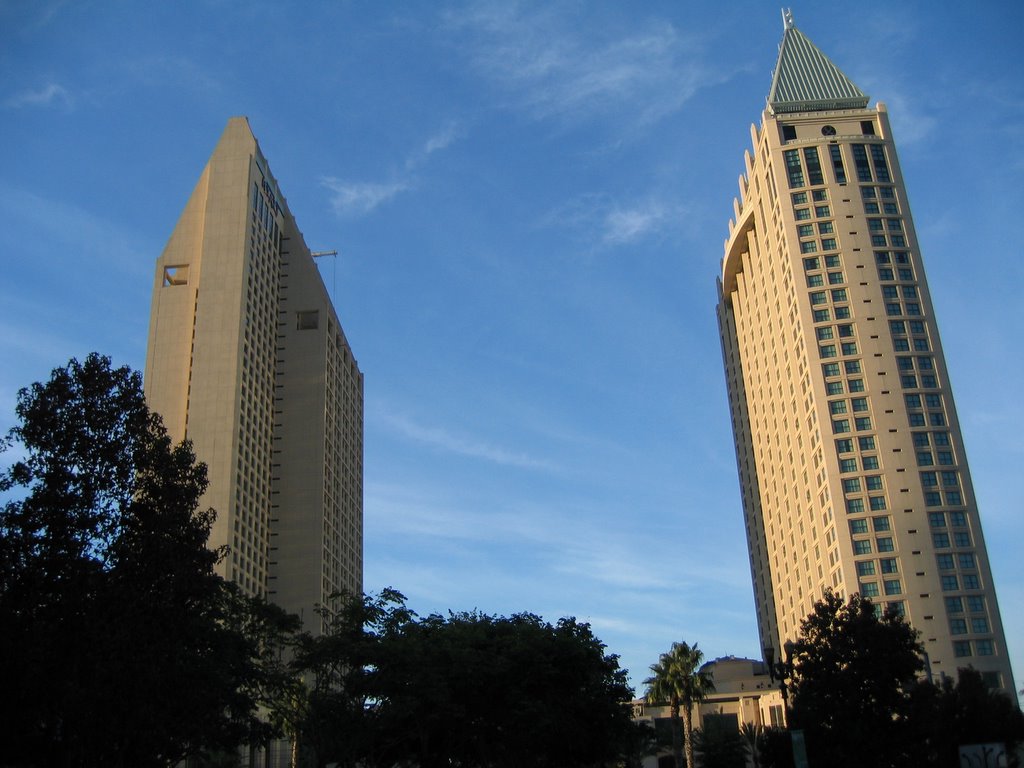
The flights from Toronto to Phoenix and then from Phoenix to San Diego were full of spectacular scenery, but the day was really only half-way through by the time I took the shuttle bus to W San Diego and got settled into my hotel room. The Manchester Grand Hyatt, where the Windows Connections conference is actually located, is about a 20-minute walk from my hotel, so, despite my initial worries about safety, I did the walk and got registered.


The conference material is incredibly well done, with a CD of all the slide presentations as well as a 600-page book for the Windows Connections sessions and another similarly sized book for the Exchange Connections conference. It’s been a long time since I attended a conference like this, and I have to admit that the organizers have done a spectacular job.

The opening keynote addresses from Perry Clarke of Microsoft and Mark Minasi was, however, a very mixed bag. Yes, I was getting very tired by the time the keynotes started, but Perry’s presentation on the future of Exchange (specifically Exchange 12) was not, in my view, very well done at all. The Elizabeth Ballroom was packed with over 500 IT types (I’d say about 90% male, as usual), there were 3 large screens and the sound system was fine, but Perry’s presentation lacked coherence and he seemed bereft of any energy that night.

Mark Minasi was another story entirely. He is a very gifted public speaker who knows how to blend laughter and insight. His presentation was on the future of Microsoft operating systems. Mark was able to articulate for me the inchoate feelings that had been developing for me about Vista, SQL Server 2005, Internet Explorer 7.0, Vista and Vista Server. As you might expect, it’s a good news/bad news scenario.

But the best sarcasm was held for Windows Server 2003 R2, the incremental update for the server operating system that Microsoft is expecting SMBs to pay for instead of providing it free of charge to existing customers (there is a group exception for those paying for Software Assurance, something which only makes sense for large customers). The only truly useful feature of R2, in Mark’s opinion, is the new printer management console.


Even Vista seems mainly about flash and the “beautiful” (Microsoft’s new adjective to replace “rich” and “crisp”) user interface. The good news on Vista is the direction Microsoft is taking on making it possible to administer operating systems through the GUI, from scripts (through MONAD) and then to automatically create GPOs from either the user interface or the scripts. This is useful stuff.

Anyway, so much for the first day. Now, let’s see what happens today.

Monday, October 31, 2005

Goodbye, Bob.


A friend has died. Bob Andrews was instrumental in introducing me to my wife. He was a good friend and an usher at our wedding. Bob and I sang and travelled together in a gospel band called Highway for a number of years in the 1970s. I also sang at Bob’s first wedding to Leeanne Andrews.

I remember Bob as a bundle of energy, someone who had tremendous gifts as a public speaker, an enthusiastic member of our gospel group who led most of the onstage performance and our usual choice for delivering a homily to our audience. His tenor voice was clear, high, and dramatic.

Although I haven’t seen Bob in a long while, I will always treasure those years when he, I, Joyce and Carol would head out in our cars and vans to visit small churches in much of south-western Ontario. We had a common vision, lots of youthful energy, a strong desire to serve other people, and quite a bit of shared talent. Carol was the musical genius who arranged all our music. Joyce was the incredible soprano voice who took the lead with most of our singing. Bob was the mastermind and MC who facilitated our plans and tours. I was there to sing, play bass, speak occasionally, and provide the other male voice for balance. We also had Sharon, Doug, and Cindy joining us once in a while when their schedule would allow.

Now, sadly, Bob, Carol, and Cindy have died, leaving the rest of us with full and happy memories of a simpler and happy time together.

Bob was fifty-five years old. He leaves three children, his wife, his ex-wife, and many, many friends behind. Thanks, Bob, for all the good times. I will remember you fondly.

Saturday, October 29, 2005

Windows Connections 2005


This week is the Windows Connections Conference in San Diego. It will be the first such conference that I will be able to attend, so my expectations are mixed. Conferences are almost always a great way to network and establish important business relationships. The training aspect of this particular conference is also very important to me since I am a “lone wolf” where I work. On the other hand, it’s very difficult to digest so many sessions in such a short period of time. At least the conference proceedings will be available on CD (Microsoft Exchange Connections Conference is happening concurrently and the proceedings of that conference can be purchased separately).

It seems that events like this have been happening either annually or twice annually since 2000. Although the presence of Microsoft will be significant, the conference speakers do not all hail from Redmond.

Monday night will begin with a keynote address from Mark Minasi of MR&D about Windows Server R2, Longhorn and Beyond. My plan is to blog as many sessions as possible.

Saturday, October 22, 2005

EinsteinFest: Howard, Mike and Us


PI=(H+M)*S

This morning’s EinsteinFest presentation by Howard Burton, the Executive Director of Waterloo’s Perimeter Institute of Theoretical Physics had the grandiose title of First Principles: Building an Einstein Factory. The title was just a tad grandiose, or as Howard put it, ludicrous. Still, in one of the best tongue-in-cheek, good-natured satirical lectures I’ve seen in a very long while, PI’s ED did a superb job of explaining the origins and plans for the Perimeter Institute.

This was the only lecture I’ve attended during the entire festival in which Michael Duschenes, Director of Programming for the Perimeter Institute didn’t introduce the speaker or control the Q&A. In what were only partially masked references to conversations Howard and Michael must have had about obvious deficiencies of presenters and their lectures during the festival, the Executive Director structured his presentation in a parody of what one might expect in the most anal of Toastmasters meetings. He actually had slides for End of the Beginning, End of the Middle, and End of the End. In addition, in yet another burlesque of academic testing, Howard evaluated the Perimeter Institute thus far on how Einstein might have scored achievement of major goals for the organization – 82%.

Despite the comic relief, I should quickly add that Howard is a remarkably able communicator and, from what I have heard, an ideal person to be leading PI. With him at the helm, and with Mike Lazaridis and other RIM contributors financing the endowment of the organization, the future looks very bright. But everyone seems to agree that Howard and Mike together are only the start. The trajectory of PI will depend more fully on how well the S-factor multiplies their efforts. In other words, the sociological factors (including political support at provincial and federal levels, support and advice from the scientific advisory council, and general community enthusiasm for science and the foundational questions of theoretical physics) are what will make or break PI.

If there is indeed to be another Einstein manufactured by PI, the consensus seems to be that he or she is as likely to come from the community supporting PI as from the post doctoral researchers, visiting scholars, or graduate students thinking inside the facility. Good luck to PI and thanks for a grand festival!

Tuesday, October 18, 2005

EinsteinFest: The Relativity of Pacifism


On December 14th, 1930, Einstein delivered an extemporaneous speech in New York’s Ritz Carleton Hotel under the auspices of the New History Society and translated by the pacifist Rosika Schwimmer (she spoke nine languages; she was denied American citizenship because she refused to swear that she would bear arms in time of war; she was also involved in forming the Campaign for World Government):

“When those who are bound together by pacifist ideals hold a meeting they are usually consorting only with their own kind. They are like sheep huddled together while wolves wait outside. I believe that pacifist speakers face this difficulty: they ordinarily reach only their own group, people who are pacifists any how and hardly need to be convinced. The sheep's voice does not reach beyond this circle and is, therefore ineffectual. That is the real weakness of the pacifist movement.”

It was in the course of this speech that Einstein enunciated his two percent solution:

“In countries where compulsory service does not exist, true pacifists must publicly declare in time of peace that they will not take up arms under any circumstances. This, too, is an effective method of war resistance. I earnestly urge you to try to convince people all over the world of the justice of this position. The timid may say, "What is the use? We shall be sent to prison." To them I would reply: Even if only two percent of those assigned to perform military service should announce their refusal to fight, as well as urge means other than war of settling international disputes, governments would be powerless, they would not dare send such a large number of people to jail.”

A year later, this time at the California Institute of Technology, Einstein reiterated his position:

“I am not only a pacifist but a militant pacifist. I am willing to fight for peace. Nothing will end war unless the peoples themselves refuse to go to war.”

Sunday afternoon, David Rowe delivered another lecture at EinsteinFest entitled Einstein’s Political Priorities: World Government in which we learned about how the great scientific genius held to pacifism for his entire life, but changed tactics when times demanded a compromise. His pacifism was firmly rooted in what he called “objective realities”. By 1933, Einstein’s militant pacifism needed refinement in the face of the militarist threat of the Nazis. Force would be required to stop them.

In 1938, Einstein wrote Roosevelt to warn him of progress being made in Germany towards the development of an atomic bomb, presumably in the hopes that the United States would beat Germany in the race. Even so, he wrote Roosevelt again in 1945 advising the President not to use the bomb against Japan. That letter was found unopened on Roosevelt’s desk at the time of his death. Then, when Truman used the bomb, Einstein said, “If I had known they were going to do this, I would have become a shoemaker.”

After the war, we see yet another shift in his continued adherence to pacifism. World government was the only way Einstein could see to end wars.

Monday, October 17, 2005

EinsteinFest: The Outer Limits


One of Einstein’s closest friends was Kurt Gödel, the logician who worked alongside Einstein at Princeton’s Institute for Advanced Studies from 1940 to 1955, the year Einstein died. In his EinsteinFest lecture yesterday afternoon, John Dawson provided a comparison and contrast between the two men (Companion Stars: Einstein and Gödel at the Institute for Advanced Study).

Gödel is much less well known that Einstein, unless you work in mathematics or philosophy. But his Incompleteness Theorem, along with Heisenberg’s Uncertainty Principle and Einstein’s work in Relativity Theory have changed they way we look at the universe, from the quantum level to the origins of the universe to, in Gödel’s case, the confidence we have in systems of thought. The Incompleteness Theorem states that within any branch of mathematics, there will always be some propositions that cannot be proven either true or false given the rules and axioms of that branch itself. Those same propositions might be provable one way or the other outside that branch, but then you are faced with a new set of propositions whose truth or falsity cannot be proved within that system.

This impacts the field of artificial intelligence. Some have argued that we will never be able to create a computer that is more intelligent that the human brain simply because of Gödel’s Incompleteness Theorem. In other words, computers operate according to a set of axioms given to it. The computer, it is argued, cannot discover new truths outside that set of axioms, even though that is precisely how the human brain operates; that is, by opening itself to a broader, newer set of axioms.

Another metaphorical analogue suggests that humanity will never be able to fully understand our own minds or brains (see Douglas Hofstadter’s Gödel, Escher, Bach: An Eternal Golden Braid). Just as we cannot see our faces with our own eyes, we will never be able to mirror completely our symbolic structures of thought. Why? We can never truly stand outside ourselves which is the prerequisite to do so.

Whether or not the speculations about Artificial Intelligence prove founded, the philosophical implications of the work of one of Einstein’s colleagues may be with us for as long as we speak about Relativity Theory.

Sunday, October 16, 2005

EinsteintFest: The Ethical Universe


The Cambridge Dictionary of Philosophy says that ethics is the philosophical study of morality. But the word ethics also sometimes substitutes for the moral principles of an individual, group, or culture. In that second sense, ethics and ethical questions are one way to look at structuring our own biography. For me, for instance, there have been key questions (and answers) that mark stages in my life. Questions about the rights of women, questions about ecology, questions about animal rights, and questions about the rights of homosexuals have been key issues in my life. At a very personal level, these questions have been preoccupations at different points in my life. Ethical questions have also structured the way I analyze historical periods and personalities. They have framed my universe.

Given the little I know about the life of Einstein, this was true for him as well. Yes, the scientific research and breakthroughs are one way to set boundaries to periods of his life. But another way to look at his life concerns ethical and political issues, one of the key questions being the treatment of Jews.

According to Robert Schulman’s lecture this morning at EinsteinFest, Einstein Recovers Judaism and Discovers Politics, Einstein’s recovery of an appreciation for his Jewishness (cultural Judaism) led directly to his political involvement in later life. Until 1919, when Einstein was thrust into international stardom, he cared little for Judaism (there was a brief boyhood fling with religious Judaism). He considered himself part of the international community of scientists, someone who was “unaffiliated” with any specific religion, except when required to pretend that he had a religious background (Kaiser Franz Josef had declared that no atheist was to hold any position in the empire’s civil service).

This all changed after 1919. His “moratorium as a Jew” ended with his high public profile and his discovery of anti-Semitism, especially against eastern European Jews in Germany. He embraced cultural Zionism and focused much of his political involvement from 1919 to 1948, when the state of Israel was created, on fighting both Gentile and Jewish anti-Semitism (the latter was the worst possible form of anti-Semitism in Einstein’s eyes).

Einstein compromised his strategies, but never his principles. After the Nazis seized power in Germany in 1933, he set aside his pacifism temporarily because of the fascist threat. Again, the more I learn about him, the more inspired I am by his example.

Saturday, October 15, 2005

EinsteinFest: Modernity and Music


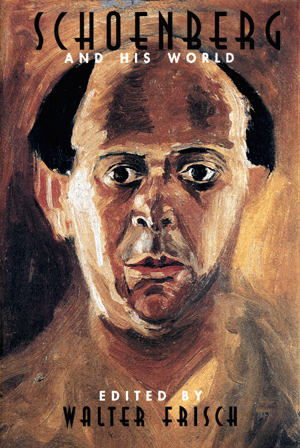
Today has been one of the best days for me at EinsteinFest at Waterloo’s Perimeter Institute of Theoretical Physics. My wife and I capped it off with a lecture by Walter Frisch – From Romanticism to Modernism: Music in Einstein’s World. Here’s the way you do public lectures for the educated generalist – good lecture, appropriate slides for the video element, and an excellent choice of audio clips to illustrate your points. We got to hear excerpts from Schoenberg, Mahler, Bartók, Debussy, Ravel, and Stravinsky (and many others).

Once again, I left the lecture with that wonderful sense of worlds of opportunity and learning available and beckoning me to enter the open door. That feeling is hard to articulate, but it’s one of the natural highs that I heartily recommend to everyone.

Frisch is a modest presenter. He didn’t make any dramatic claims for these “men of music” as revolutionaries. In fact, each was firmly rooted in the classical traditions and motifs of the romantic period of the 19th century, even though each contributed to the modernist music of the 20th century. The operatic selections were especially goose-bump inducing.

And as I write this review, I sit in my study with both my sons at their computers and all three of us listening to Pink Floyd. Who’d have thought my 16-year-old would be the one to introduce me to a band of my generation! Science, music, and the intergenerational dialogue – hard to beat.

EinsteinFest: Fickle Fame


Some historians of the 20th century believe the modern age began November, 1919 when the popular press announced that Albert Einstein had overturned Isaac Newton (as reported by David Rowe in his lecture this afternoon Einstein’s Rise to Fame at EinsteinFest) . The American journalist by the name of Crouch (a golf expert) who was given the job of explaining to the New York Times audiences what the fuss in Britain was all about, reported that Einstein was writing A Book For 12 Wise Men that would explain his theory of general relativity. “’No more in all the world could comprehend it,’ said Einstein when his daring publishers accepted it.”

Well, there was no such book from Einstein. The journalist made that up. Most of the physicists and astronomers to whom the news was published understood exactly what Einstein had proven. It was simply that gravity could bend starlight. Arthur Eddington’s photographic crews off the coast of Africa (Principe Island in the Gulf of Guinea) and Brazil had confirmed with experimental data from observations made of a total eclipse on May 29th, 1919 that Einstein’s predictions were correct. What they actually observed was something equivalent to the diameter of a light bulb measured from 12 kilometres away!

Whatever the degree of minute detail, what happened next was clear. Einstein was immediately vaulted into the stratosphere in the popular press, in expert circles, and even in political debate. Within a few years, Einstein’s face was one of the most recognizable worldwide.

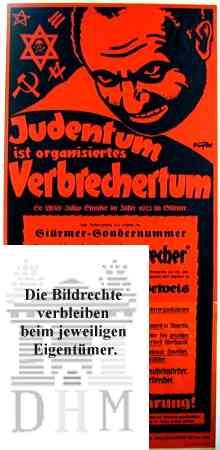
But as David Rowe explained, central European Anti-Semitism and nationalist extremism led very quickly to linking Einstein and relativity with all that was supposedly wrong with the world. On the one hand, Einstein was the “new Copernicus”. On the other hand, he was merely a Boshevik-sympathizing Zionist whose scientific madness threatened the German character and national zeal. In fact, in 1922 Einstein left Germany for a tour of Japan after the murder of his friend Walther Rathenau and a warning delivered to him that he was likely to be killed by former members of the Freikorps.

Rowe’s lecture also illustrated how the fame that attended Einstein for the remainder of his life continued to be idiotic at both extremes. Einstein is reputed to have said “With fame, I become more and more stupid, which of course is a very common phenomenon.”

EinsteinFest: “Beware of Rotten Compromises”


At what point does compromise betray moral depravity?

Whenever I watch a video or read a book about Anti-Semitism or the Second World War, I wonder about what I would have done in 1930s Germany. Watching Schlindler’s List is only one example of a morality play about compromise played out on the big screen. Reading about the life of Dietrich Bonhoeffer also reminds me that there are times when compromise is worst solution possible. Making compromises with totalitarian, racism regimes doesn’t seem possible, but I wonder if I would have had the clarity and strength of conviction if I lived at that time.

Robert Schulman’s lecture this morning at EinsteinFest (“Beware of Rotten Compromises”- The Moral Foundations of Einstein’s Politics) reminded me of the critical dimensions of the moral dilemma in another context, this time in the United States in the 1940s. Einstein and Oppenheimer both faced similar compromises regarding building and deploying an atomic bomb. Einstein had made an attempt to warn the President in 1938 that Germany was probably well on the way to designing an atomic bomb. Whether or not that meant he wanted the United States to build and actually use the bomb before Germany is open to speculation. If he hadn’t been considered a security risk, if his liberal leanings were not obvious, and if his expertise was just oriented just a little bit more towards “practical” applications, what would he have done? Instead, the decision about compromise fell to Robert Oppenheimer.

It is clear Einstein always felt that Oppenheimer had made rotten compromises, that he had sublimated his autonomy and moral discretion in the service of authority. Ironically, those same authorities, under the witch hunt of the House Un-American Activities Committee and Joseph McCarthy, virtually destroyed Oppenheimer’s career.

The Hiroshima bomb developed under Oppenheimer’s direction (called Fatman) was about the size of a Volkswagen Bug and, to that point in history, was the most expensive pound-for-pound device ever manufactured. Without Einstein’s “miracle year” in which he demonstrated the tremendous power available in small amounts of matter, it is unlikely that there would have been a Manhattan Project or a Fatman bomb during the Second World War. I don’t think Einstein compromised his moral foundations in any way by his work on special relativity. With Oppenheimer, the situation is more difficult. He later opposed development of a hydrogen bomb when he was chair of the U.S. Atomic Energy Commission. Maybe that was part of a belated attempt to rectify an earlier rotten compromise.

From my vantage point, Oppenheimer lacked the fortitude and independence of spirit which gave Einstein courage to remain a pacifist. But that judgement doesn’t help me ascertain whose example I would follow under similar conditions. Whether it be 1930s Germany where I would be faced with Anti-Semitism or 1940s United States where I could be faced with building a bomb to kill hundreds of thousands of people, I am not sure what I would do. But I will remember Einstein’s famous aphorism if and when I have tough moral decisions to make.

Friday, October 14, 2005

EinsteinFest: Without a Home


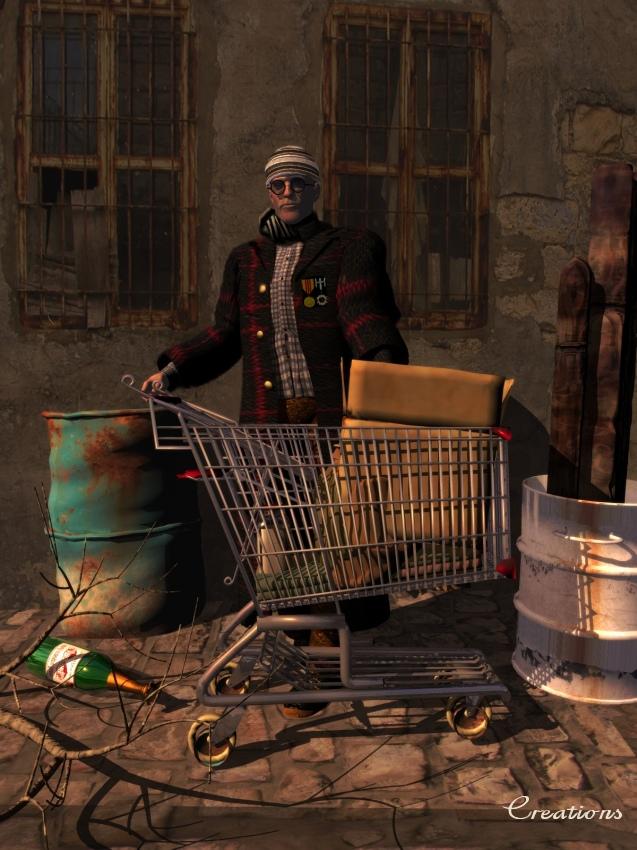
Homeless. Probably the first thought that springs to mind is of those who wander the streets of our cities, sometimes pushing a grocery cart, sometimes asking for spare change to buy a coffee, sometimes frightening us, not so much by their appearance but by the thought that with a little bad luck the face we see in front of us could be our own.

As we learned tonight at Stanley Corngold’s lecture 1905 – A Literary Response to Modernity at EinsteinFest, many of the literary figures of the time felt homeless. Thomas Mann, Franz Kafka, Rainer Maria Rilke, and Robert Musil were indicative of that sense of being “without a home” in the face of Central European urbanization. Although each literary figure used slightly different imagery for the experience, there was a commonality which we can discern 100 years later. “We are never at home in our interpreted worlds,” Rilke would say.

Even though it would be anachronistic to use the phrase “existential angst” to describe the homelessness of those responding to modernity in 1905, I can’t help but feel some disdain for both those claiming homelessness in the face of modernity and for our own post-modern critics, like Corngold, who seem to take a puerile pleasure in repeating the claim of the turn-of-the-century literati that not only are they “without a home” but that the scientists of the same period were merely engaging in “high-level bookkeeping”. Maybe I’m being unfair to those famous writers, not to mention contemporary critics like Corngold and others. Maybe, but this is my blog after all!

Still, I’m reminded by the presence of those who have no place to call home other than the cityscape where they wander, as well as by some of the saints and sages throughout history, that there is the accident of homelessness and the choice of homelessness. Francis of Assisi and the historical Jesus both demonstrated a choice, even a mission, of intentional homelessness which by the very fact of their steadfast adherence challenged the power structures of their time. Forget the institutions which canonized and deified them after their death. The point still remains that their example, far more than the petty peeves of poets and pundits, sheds far more light on homelessness and humanity.

EinsteinFest: What Does 2000 Look Like?


As we learned Thursday evening at David Rowe’s lecture Probing the Geometry of Space – Mathematics circa 1900 at EinsteinFest, one of the keenest debates of the period was between those we call intuitionists and formalists. If I understood correctly, the intuitionists believed that the symbols of mathematics are not merely human mental constructs, but derive from experiential data. The number 251, for example, is not something that we can recognize by virtue of having an experience of seeing two groups, one of 250 and one of 251 respectively, and thereby always recognizing the difference. This is true, on the other hand, when we see a group of 3, 4, or 5. We automatically recognize what 3, 4 or 5 looks like. These logically primitive associations then become, in the language of intuitionism, the basis upon which we construct symbols like 250 or 251. We don’t understand larger numbers intuitively, merely symbolically, unlike small numbers.

Obviously, I am no mathematician! But it occurred to me when listening to the lecture that, earlier in the week, I had an experience which dramatically illustrated how numbers intuitively mean very little to the common person unless dramatized in some way. When you link to the following dramatization, I would ask you to think not only about what 2000 looks like, but whether or not the binary implications of those who designed the presentation are justified.

What does 2000 look like? http://theunitedamerican.blogs.com/Movies/2000A/2000.html

Wednesday, October 12, 2005

EinsteinFest: Philosophy, Honey, and Stars


“Is not all of philosophy as if written in honey? It looks wonderful when one contemplates it, but when one looks again it is all gone. Only mush remains.” – Albert Einstein, as quoted by Abraham Pais in Subtle is the Lord - : The Science and the Life of Albert Einstein. Oxford University Press, New York, 1982, p. 318.

Tonight’s lecture at the Perimeter Institute’s EinsteinFest was by Ray Monk, professor at the University of Southhampton. It was entitled “1905: The Philosophical Context”. Monk presented to a full house at the Mike Lazaridis Theatre of Ideas audience his view of the philosophical landscape in 1905.

In one of his casual remarks, Monk indicated that for every festival, conference or colloquium celebrating Einstein’s miracle year of 1905 there was likely a history or philosophy conference somewhere else in the world celebrating Bertrand Russell’s “On Denoting” canonical paper of 1905, a paper foundational to Analytic Philosophy of the 20th century.

It’s humbling attending a lecture like this. Even though my undergraduate degree was in history and philosophy, my focus was on ancient and medieval studies. Nineteenth and 20th-century philosophy was not my specialty. If I were to return to such studies, I would have to start all over again acquainting myself with scholars such as were mentioned this evening – Goedel, Russell, Frege, Poincaré, Husserl, and so on.

Philosophy is really not that different from science and mathematics in this regard. If Einstein had been right about his estimation of philosophy, then the years between 1905 and 2005 (or even between my graduation and today) would not make that much of a difference in grasping the essential aspects of the discipline. But Einstein was wrong, at least in part, in his estimation of philosophy. Yes, as Monk admits, the landscape of philosophy of 1905 looks very different from today, but it is not mush after all. The body of knowledge has changed dramatically as have the stars in the firmament of philosophy.

Sunday, October 09, 2005

EinsteinFest: Hookless, Horseless, Wireless


Why did it take longer to develop an industrial-strength zipper than the airplane? Robert Friedel’s lecture “New Technologies and Inventions of Space and Time” at EinsteinFest this morning asked that question in addition to presenting a plethora of new technologies from the turn of the 20th century.

If we think we are in a time of rapid technological change, then the situation was as tumultuous and fascinating in 1905. After all, there was the automobile, electric lights, massive maritime ships, flying machines, the wireless telegraph, moving pictures, and yes, the zipper. And yet all of these technologies are part of the fabric of 2005, at least in industrialized countries. We have come to accept them as commonplace.

But in our more curious moments, perhaps we do marvel just a little bit at how pressing a switch fills a room with light, or how lifting our eyes to a blue sky we are almost certain to see jet planes flying overhead, or how, when the mood strikes, we can grab some popcorn cooked in a bag in a microwave in a couple of minutes, put a shiny disk into a DVD player and watch a movie celebrating the pioneers who walked on the moon 36 years ago. Perhaps the X-ray from the dentist’s office of a cavity from too much popcorn and not enough flossing still amazes us. It’s less likely, but just maybe once in a while, we think about how unbelievably cool it is to get into a four-wheeled vehicle powered by the internal combustion engine, turn on the ignition, and drive a 100 miles in air conditioned or heated comfort with music from our MP3 player, downloaded from our computer, and now being piped through 6 separate speakers …awesome!

Personally, I think Thanksgiving should be as much about science and technology as it is about our natural world, wonderful as that is. Right now, as our family prepares to go out for our Thanksgiving meal, I’m feeling very thankful for the bounties of both nature and technology.

Saturday, October 08, 2005

EinsteinFest: Aviation, Engineering and Reminiscences


Back when I worked at Waterloo’s Seagram Museum from 1983 to 1988, I had the good fortune to make a trip with my wife to the Finger Lakes in New York. At that time, Taylor Wines was part of the Seagram stable, so we were able to stay at a chalet in the middle of one of the vineyards overlooking Keuka Lake near Hammondsport, N.Y. The scenery was spectacular and the wine wasn’t too bad either.

One of the reasons we made the trip was to learn more about the history of the vineyards and to examine the collections in the wine museums in the region. We also wanted to see collections at the Corning Museum of Glass and the Rockwell Museum of Western Art. The entire trip was one of our best vacations ever.

One of the surprises in visiting the Finger Lakes Wine Region was the Glenn H. Curtiss Museum in downtown Hammondsport. A good part of that museum deals with the early history of aviation, the topic of tonight’s EinsteinFest lecture by Peter Jakab from the Smithsonian Institution, the curator responsible for the successful The Wright Brothers: the Invention of the Aerial Age exhibition.

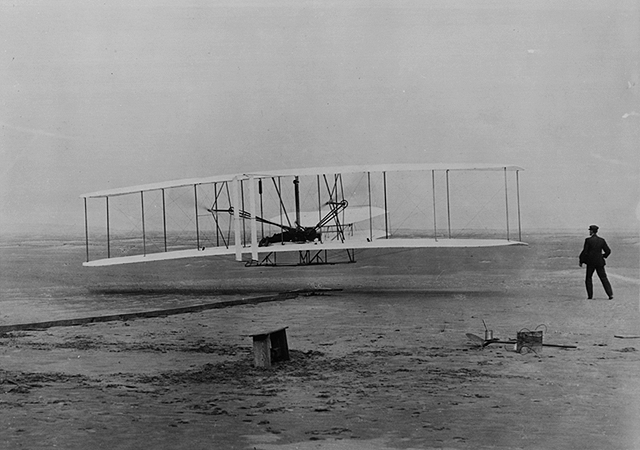
The lecture and slides were both quite good. Jakab did an excellent job of explaining to a non-specialist audience why the Wright Brothers made such an impact with their experiments in aviation. Unlike most engineers investigating the possibility of powered flight, the Wright Brothers knew they had to understand aeronautics, propulsion, and control – all three, not just one or the other. Their experiments finally led to an event almost exactly 100 years ago today in which they flew their experimental aircraft for a full 40 minutes, including turns and a passenger. Yes, the first flight was in Kitty Hawk in 1903, but the proof of their engineering was in October of 1905 in Huffman Prairie where they flew 24.5 miles.

So, what about Glenn H. Curtiss? He quickly went on to become the leading producer of aircraft in the United States before World War 1. But it was the Wright Brothers who set the engineering foundation for the aviation and aeronautics industries of the 20th and 21st centuries with their pioneering efforts.

Friday, October 07, 2005

Waterloo Region - Roots of Greatness


If you had an extra $150 million kicking around, what would you do? Mike Lazaridis, founder of Research in Motion, looked towards the future and the health of the community in which he lives. He donated $100 million to found the Perimeter Institute and another $50 million to drive development of the University of Waterloo’s Institute for Quantum Computing. In the Kitchener-Waterloo Record’s Technology Spotlight 2005, yesterday’s lead article for the supplement highlighted the way Lararidis’s donation is helping make Waterloo Region one of the world’s foremost leaders and centres for science and technology.

Today, my extended family and I had a e-group discussion about the best place to live in the world. We talked about polls (Vancouver won that round), crime (the region of Waterloo has one of the lowest murder rates in Canada), scenic beauty, etc. Nobody, by the way, talked about Bavarian Festivals (aka Oktoberfest) as a criterion for community greatness. Some even spoke about the virtual inevitability of great cities having extreme wealth and extreme poverty.

But as I read the Technology Spotlight and thought of what makes my part of the world such a great place to live, it occurred to me that we need to give more credit to science and technology as factors in determining greatness. How, for instance, do you rate a donation of $150 million of a wealthy benefactor like Lararidis to the future of science and technology in his community? How do you weigh the value of a festival like EinsteinFest? I’m not sure, but I’m becoming convinced that the benefits are truly substantial.

Thursday, October 06, 2005

Making IT Happen


This afternoon, I was at the Paramount Theatre on Richmond St. in Toronto for the Microsoft TechNet Innovations Tour 2005.

This was truly innovative for the Canadian TechNet team. We got the spiel on new technologies like Windows Vista (confident, clear, and connected) and cool new toys in mobile computing ( Rick Claus sported a really neat hardware beta version iPAQ combination cell phone, digital camera, digital video recorder and Pocket PC with the most recent Microsoft Windows Mobile 5.0 operating system).

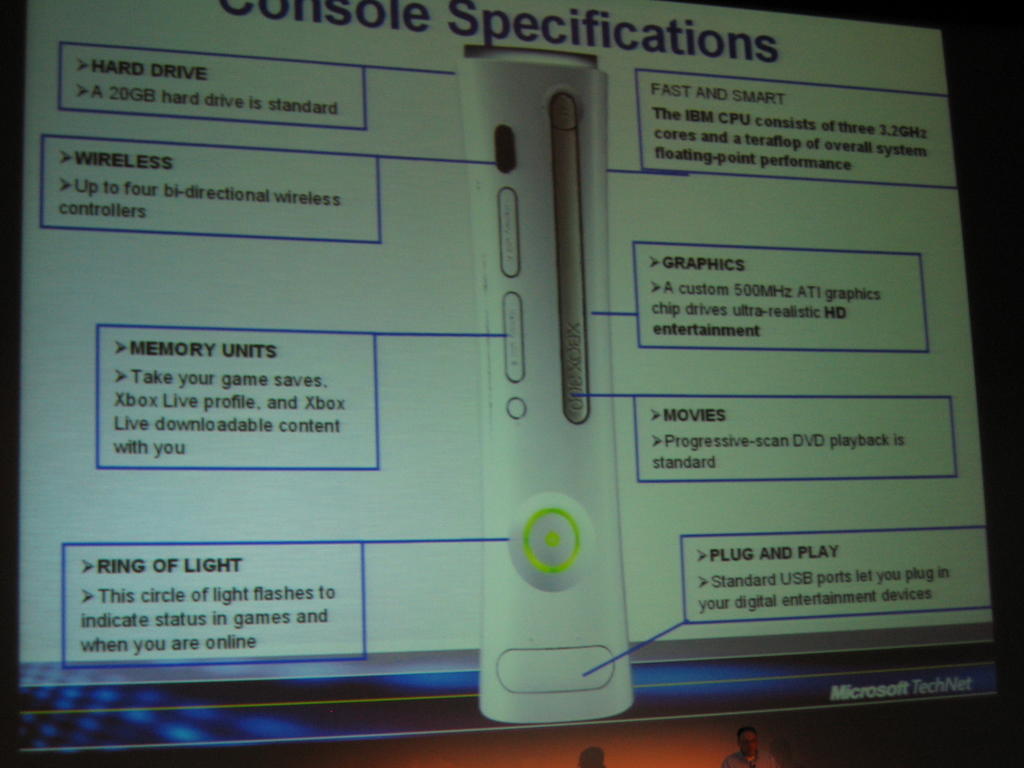
But there was also time for fun. Get this. Popcorn and a soft drink. A free viewing of Tim Burton’s Corpse Bride (I have to disagree with my son who liked it, but thought that Nightmare Before Christmas was still the better flick). Previews of the forthcoming Xbox 360 and a whole suite of trailers of games developed for the new platform.

I tell ya, Microsoft puts on a good show!

What are the take homes? For an IT Manager with a perspective on what’s possible, Vista is something we’ll look at in about two year’s time. In mobile computing, RPC over HTTPS is the biggest technology I want to research and investigate. I’d really like to have that running by the time I attend the Windows Connections conference in San Diego. XBox 360? My boys and I will love it, but I don’t see it in my office ;>)

Wednesday, October 05, 2005

EinsteinFest: Bombs and Duds


The lecture I had most eagerly anticipated at EinsteinFest turned out to be a dud. Although I’m sure Sonu Shamdasani is a gifted and meticulous historian of science, the lecture itself was tedious, lacking anything in the way of flare or excitement. The slides chosen to accompany the lecture, for example, were nothing more than antique photographs of psychologists from the turn of the 20th century…men in beards.

But David Bodanis’s book E = mc2 continues to fascinate and educate. I’ve just finished reading about the contribution of Lise Meitner to the splitting of the atom in 1938. She was a truly remarkable woman, someone who rose above the politics and racism of her era. If the anti-Semitic Nazis had been even slightly less ideological about their hatred of Jews, it is highly likely that she would have been the one to lead Germany to the first atomic bomb along with Otto Hahn. The lack of gratitude for Meitner’s thirty years of work and moral turpitude of Hahn, her former collaborator at the Kaiser Wilhelm Institute for Chemistry, were also contributing factors to the failure of Germany to make nuclear fission into a weapon before America.

Over the years, Meitner eventually received some recognition for her role in taking the implications of Einstein’s equation E = mc2 into nuclear physics.

Tuesday, October 04, 2005

San Diego Bound


Windows Connections 2005! I can hardly wait.

It’s only been a little over thirteen months on the job as an Information Technology Manager at the local manufacturing company where I work, but during that time, I’ve come to realize that IT Pros are every bit as isolated in small- and medium-sized businesses as are developers in similar situations. Webcasts, Microsoft TechNet events, and occasional meetings with our network services consultant are the only occasions when I get to have conversations with other IT Pros or even be in the same room with people who share the same interests and, to some extent at least, expertise.

My brother is an IT Manager, so we can commiserate occasionally too. Still, having an opportunity to be with technical gurus at Microsoft, Hewlett Packard, and Intel as well as networking with other IT Pros is just exactly what I need at this stage in my career.

Another local IT consultant and I are in the process of founding a Windows Server User Group to serve the IT Pros in the Guelph, Kitchener, Waterloo and Cambridge area. Windows Connections should allow us to make contact with potential speakers and others who have gone down this road before.

EinsteinFest: Babel, Einstein, and Web 2.0


I’m totally psyched about tonight’s lecture at EinsteinFest – Approaching Babel: Psychology as a “new science” in 1905! Sonu Shamdasani, from University College London (an expert on Carl Jung) will be reviewing how those studying psychology at the turn of the century were committed to making psychology a science in the same way that chemistry and physics were regarded. If they succeeded, then the scientific revolution would be complete.

Before judging psychologists from the turn of the 20th century too harshly for their arrogance and presumption, perhaps we should pause to appreciate how inflated and egotistical are our own times. I’m not saying everyone attending the immanent Web 2.0 Conference in San Francisco is an egotist (there might be a few kicking around, though), but the media hype and marketing nonsense we’ve seen in the past year or so about the Web 2.0 phenomenon is very similar to the dot.com fiasco – bluster, bravado, wild claims, followed by a huge letdown.

Babel (Genesis 11:1-9) is an excellent metaphor for what must be a basic human trait. I’m as guilty as the next guy of hyperbole when it comes to talking about something that I find exciting and believe will impact the world in a positive way.

But we should probably distinguish between optimism, hope and positive anticipation from exaggeration, marketing hyperbole and …well, yes… bullshit. Martin Seligman’s work on something he calls learned optimism appears essential to a mature, useful, positive approach to all life’s endeavours. I hope the Web 2.0 conference falls into the latter category. Certainly dot.com and the claims of turn-on-the-century psychologists do not.

Sunday, October 02, 2005

EinsteinFest: Witnessing Atoms


Friedrich Durrenmatt once said: “Einstein used to speak of God so often that I almost looked upon him as a disguised theologian.” (see Einstein and God by Thomas Torrance).

This morning I attended my second lecture of EinsteinFest at the Perimeter Institute. John Rigden from Washington University in St. Louis (hey, Jason!) spoke about the April/May papers of Einstein in 1905 under the title “Witnessing Atoms”. These papers proved to the skeptics that atoms did indeed exist (believe it or not, there were many scientists in 1905 who did not believe in either atoms or molecules).

What I found most fascinating about the lecture was the way Rigden began his review with references to the way Einstein spoke about “searching for the thoughts of God”. Einstein also spoke with extreme confidence about his discoveries, so much so that when asked how he would respond if other physicists doubted his theories, he replied, “Then I would feel sorry for God, because my theories are true.”

I love that sense of confidence. Perhaps it derives from the sense of certainty when your own thought experiments lead to answers to ultimate concerns (to borrow from Tillich). For what it’s worth, I’ve felt that same sense of certainty a few times in my life, once fairly recently. That sense of confidence and certainty leads to courage of conviction and a willingness to swim against the prevailing currents.

In the April/May papers published by Einstein about the dissolving of sugar molecules in water and the motion of a pollen particle in water, he demonstrated with absolute certainty that both phenomena could be explained by the same principles…Brownian motion. Brownian motion, in turn, could be explained by the statistical probabilities of atoms colliding with one another. The only difference between a sugar molecule and a grain of pollen was size.

In demonstrating atomism, Einstein effectively brought 19th-century thermodynamics and mechanics together; they had been considered separate and thought incompatible previously.

Rigden’s lecture didn’t hold together very well at this point. Perhaps his book does a better job of explaining Einstein’s genius in witnessing atoms. In any case, today’s and last night’s lecture led me to the Toronto Star’s Ideas section for Sunday, October 2nd which starts a three-part series on Einstein. It also led me and my son to Chapters to purchase two books: 1) David Bodanis’s E=mc2: A Biography of the World’s Most Famous Equation and 2) Michio Kaku’s Einstein’s Cosmos: How Einstein’s vision Transformed Our Understanding of Space and Time.

This is going to be an intellectually stimulating few weeks at the Perimeter Institute.

Moblog, anyone?

Google's Blogger now offers the ability to blog on the go - commonly called moblog. This is a fantastic way for people with Pocket PCs or mobile phones to add entries to their blog. This entry was sent from my Toshiba e830 Pocket PC (hyperlinks added later from my notebook).

Blogger Mobile FAQ
    

Fun with Flickr

There are lots of sites out there for sharing photos with family and friends. I’ve studiously avoided most of them simply because I don’t want to have to manage a different utility for everyone who wants to show me some photographs that I’ll probably only view once and then forget. Yeah, a tad cynical, I know. But what is missing in most of these photo-share sites is any sense of interaction.

That’s all changed with Flickr. There are the standard features that let you title and describe your photographs and group them together into photosets. But there are also the interactive and organizational features that I’ve missed elsewhere, such as tags and comments and the ability for the user to view photos by most “favorited”, most comments, and most “interesting”. In addition, bloggers can send photos to their blog. One of the truly cool features is the ability to notate individual photographs with tags and comments. But Flickr’s implementation lets you scroll and tag specific areas of the photograph. The user then moves their pointing device around the photograph to find the “hotspots” with comments and tags.

When you invite friends or family members to view your photo sets, the invitation automatically gives your contact the ability to have their own account or simply to see and post comments on your photos.

Saturday, October 01, 2005

EinsteinFest: Einstein's Big Idea


TV=mc2. Yes, the Perimeter Institute lectures and special events for the four-week-long EinsteinFest running in Waterloo (September 30th to October 23rd) have begun.

Our first lecture was this evening with Evan Hadingham who presented an introduction to a 35-minute series of clips from the forthcoming PBS Nova special to be aired on Tuesday, October 11th, 2005, from 8:00 pm to 10:00 pm ET called Einstein’s Big Idea.

In a community known world-wide for Oktoberfest, an unbridled celebration of beer, polka, and pretzels, it’s a welcomed relief to have an alternative of substance to take us through the crazy season. That’s not to say I won’t have any pretzels or beer in the next month. The leaves are changing color after all; surely that’s a good enough reason to drink beer! But I can guarantee you won’t find me doing the polka or the chicken dance.

Not everyone can make the trip to Waterloo for EinsteinFest, nor is it likely that everyone can catch the PBS special a week from this coming Tuesday, but Hadingham informed us that the special is based on a book which most people can order online. It’s by historian David Bodanis and is entitled, oddly enough, E = mc2: A Biography of the World’s Most Famous Equation.

Blogging and the Good Life

It’s been a little over one week now since attending the Microsoft webcast “Introduction to Blogging for the IT Professional”. During that time, I’ve added the NewsBreak mobile aggregator to my Toshiba e830 Pocket PC, installed the Blogger for Word add-on, and installed the NewsGator add-in for Microsoft Outlook for my Dell Inspiron 9300 notebook computer. Well, yet another new world opening up before my eyes!

I just love life these days! My job is great, my family is well and happy, and I’m learning new technologies and meeting cool people. A large part of my sense of wellbeing right now comes from aligning my passion with what I’m paid to do.  I’m an IT manager for a local manufacturing company, working four days a week, every Wednesday off to deal with my own Artifax Applications business and personal matters. I am constantly being exposed to new information and communications technology. There are even fewer pet peeves to deal with these days.

And so blogging technology joins the list of things expanding what Stephen Covey calls my “Circle of Knowledge” (see The 8th Habit).  The humbling thing about that expansion, of course, is that my ignorance also expands (or shall we say my awareness of my ignorance, something NLP’ers call my conscious incompetence).

Wednesday, September 21, 2005

Introduction to Blogging for the IT Professional - Worthwhile IT Security Resources

As I write, I am engaged in a Microsoft TechNet webcast "Introduction to Blogging for the IT Professional" (September 21st, 2005). One of the first polls presented to the audience concerned how often the listener does blog entries - unfortunately, my answer was that my blog is feeling somewhat neglected. So, here's to a new start with a new direction! Yes, I am an IT professional and yes, I do write when the mood strikes. Maybe it's time to combine those aspects of who I am and what I do.

In my professional life and since I last added a blog entry, IT security issues have assumed an ever growing profile. My paperback, hardcover and e-book library on IT security is now the largest single category for information technology. The webcasts devoted to security keep piling up, and the complexity of the subject keeps expanding. But every so often as I wade through the material, I come across someone who not only has something to say, but knows how to communicate that “something” in such as way to retain my interest. Believe me, that experience is rare in technical writing and presentations.

One of my new favorite authors in the field is Ed Skoudis, the author of Malware: Fighting Malicious Code. It was only last Friday that I learned of the book from another Microsoft webcast “Defense in Depth Against Malicious Software (Part 1 of 3): Malicious Software Defense and Recovery” by Kai Axford. Kai is himself a very enthusiastic webcast presenter, not exactly what you might expect from a Microsoft employee. That same day, not only did he respond to my email to him about his plans for a graduate degree in information assurance, but he pointed me to the ISBN for Skoudis’s book. I ordered the book, it arrived yesterday, and already I am glued to the book, taking it with me everywhere I go…yes, just as you expected!

So, this is the new direction; namely, writing about IT Security issues and resources, but making recommendations to like-minded individuals for only best-of-breed writers and communicators.

Stay tuned!

Sunday, April 10, 2005

Living the Christian Life


A friend asked me to write something about what living the Christian life means. The request came just a couple days before the funeral of John Paul II, a time when the media eulogized the Pope and felt compelled to limit critical commentary on his legacy. My thoughts are not about institutional Christianity and the legacy of pontiffs. Instead, they are a personal estimation of what the historic Jesus (as opposed to the Christ of Christianity) would recommend to those who follow The Way.
  • keep an open table (share food and fellowship with anyone who wishes to do so)

  • make forgiveness reciprocal (forgive freely, the only provision being that the forgiven person also forgive freely)

  • heal the sick (do all we can to ease pain and suffering)

  • condemn the public practice of piety (religious posturing is hypocritical)

  • deal directly with the divine (we have  an "unbrokered" relationship with God; consequently, the priesthood and clergy is unnecessary and sometimes contrary to a personal, living relationship with the Father of all)

  • refuse to acknowledge privileges and entitlements in God's kingdom (we are fundamentally equal before God)

  • consider that all reward and punishment is intrinsic (doing good is its own reward; doing evil is its own punishment; there is no need for additional reward and punishment)

  • live in the resurrection by glimpsing the divine in everyday life (the resurrection is not about apostolic authority, but about each of us following Jesus and personally glimpsing the same kingdom of God he saw in the ordinary things of life, such as eating, drinking, walking, talking and engaging with nature)

  • tell stories that subvert authority (parables and aphorisms dignify the one who hears because the listener has to be fully engaged in interpretation and application; in addition, the stories we tell are meant to challenge tradition and what is accepted as normative)

  • work to achieve God’s realm here on earth (what we believe is not as important as what we do; what we do should, in some way, bring heaven down-to-earth)


That’s ten things. It’s a mixture of summaries from people I respect and thoughts of my own. I’ve avoided the cliché and the injunctions that all religions espouse.

To me, the genius of the historic Jesus is that his life and mission are beyond institutions. They shatter any attempt to capture once-and-for-all how humanity must visualize and communicate with the divine. If living a Christian life is about following Jesus, then it must be a way of living beyond borders, boundaries and commandments as was the case in his life. Institutions may come and go; in fact, they must come and go. The truth of the kingdom is always glimpsed anew each and every day; it is always evolving and growing.
    

Monday, March 21, 2005

Persistent Vegetative Thinking

White House spokesman, Scott McClellan says "We ought to err on the side of life in a case like this."

The case to which he refers is the one about the severely brain damaged Terri Schiavo, the woman whose husband is struggling to be granted the right to allow her to die.

Despite the fact that most medical authorities and 10 court rulings have already determined that she is in a "persistent vegetative state" and incapable of even the most rudimentary human functioning, Congress voted on Sunday 203-58 (and at an estimated cost of between 4 and 5 million dollars) to interfere and grant an emergency injunction to Ms. Schiavo's parents to reinsert a feeding tube.

Even the Vatican felt obliged to offer an opinion in support of what Republicans and others euphemistically call the "culture of life".

I can understand disagreement and ambivalence on this issue. Certainly when it came to my own grandmother, I had mixed feelings about using extraordinary means to prolong her life.

But what really boggles my mind is the cognitive dissonance of a country whose politicians are quite willing to interfere with the courts and the woman's next of kin at a cost of millions of dollars, but who cannot do anything significant about 45 million Americans who have no health insurance. The United States appears to be a country of grand gestures and extravagance with little sense of proportionality.

How many people do you think have died in the United States because of the failure of its government to provide even elementary healthcare to ALL its citizens?

Sunday, March 13, 2005

Dresden - So It Goes

I have been reading Slaughterhouse-Five by Kurt Vonnegut recently. It is available from Rosetta Books in MS Reader format (http://www.rosettabooks.com/). Some of you may remember the movie of the same name from 1972.

Needless to say, this first-time reading of the novel is making a major impression, especially coming as it does on the 60th anniversary of the Allied fire bombing of the German city of Dresden on 13-14 of February 1945.

As I am reading the novel, I keep wondering, "Why do we hear so little about one of the worst war crimes of the 20th century?" "Why is it that nobody talks about the totally needless holocaust of innocents perpetrated by up to 1,200 American and British bombers on a city declared a safe zone by the Red Cross and to which hundreds of thousands of people were fleeing from the atrocities of the Russians in eastern Europe?" In fact, if you did happen to read about the anniversary in Dresden at all, what you got was the genuflecting of German leaders decrying the neo-Nazis in Dresden and loudly proclaiming how the lives lost in the Jewish holocaust can never be compared to the loss of life in Dresden. It's all more than a little sickening.

Every year at this time, we celebrate/commemorate Easter and the death and resurrection of Jesus. Some people even see crosses in pine trees as a sign that God would have us remember the sacrifice of God's Son at this time of year. I guess there's nothing wrong with that. But I have to wonder. Would it not also be useful to remember how we obliterated an entire city with no military value whatsoever? But that won't happen, will it? As Billy Pilgrim would say in Slaughterhouse-Five, "So it goes."

Wednesday, February 16, 2005

Transactional Distance

I've been thinking about the intrinsic limitations of e-mail recently as a form of communication. Part of what got me thinking was reading Malcolm Gladwell's book Blink (http://www.gladwell.com - see the Rapid Cognition blog entry). That, in turn, got me thinking about neuro-linguistic programming (NLP) and reading parts of my books on the subject. This led to noticing just how easily friends and colleagues misinterpret e-mail communication. I am, no doubt, susceptible to the same process which, in NLP terms, is called filtering; namely, deleting, distorting, and generalizing the messages received by the senses in creating my subjective experiences. Again, as they say in NLP, "the map is not the territory"; or, "we all create our own experiences."

Filtering will happen automically, no matter what the senses perceive. One would think, therefore, that the more sensory information, the better. If I can see it, can hear it, can smell it, can taste it, and can feel it...well, that should be better than merely seeing it. Certainly in the case of e-mail, one can make a strong case that the limitations of e-mail as a form of communication are owing to the lack of non-verbal information, to what some distance-education theorists call "transactional distance." In e-mail, we can't hear the tone of voice; we can't see the accompanying body language; we can't feel the blood pressure of our correspondent rising, and so on. We are, by virtue of depending on the written word alone, transactionally distant from the person with whom we are trying to communicate.

In e-mail, emoticons have been a valiant attempt to diminish the distance between correspondents. Even better, VOIP (voice over internet protocol) allows communication over the Internet in real-time by using headphones and microphones just like a telephone conversation. Webcams also help by providing a measure of real-time "body language".

All of this brings me back to rapid cognition once again. Part of Gladwell's message in Blink was that sometimes rapid cognition benefits from limiting the sources of information. Sometimes, it seems that we make better decisions when we have less information. ER doctors dealing with possible heart attack victims do a better job of diagnosis when they don't do a full patient history, but instead focus on just four specific pieces of information about heart health. Classical music auditions are more equitable when the musicians are "screened" from the "eyes" of those auditing their performance. There are many more examples in Gladwell's book.

So, why doesn't e-mail benefit us by providing less information? Probably because we often get the wrong information provided. When e-mail deals with issues with emotional side effects (most of the time, I guess), we don't get the information we need. The context, in other words, is wrong. The transactional distance has been increased. On the other hand, when dealing with issues less emotionally explosive, e-mail is perfectly suitable to the task at hand, precisely because it limits exposure to irrelevant contexts. In those situations, it is only distracting to hear a voice or to see a person's image in a webcam.

So, if all of this is true, here's my homework: prepare a series of questions, a kind of checklist, to help me determine when e-mail will work and when it encourages misinformation. I'll let you know how it goes.

Saturday, February 12, 2005

Blink: Rapid Cognition

Today, my wife and I attended a University of Waterloo alumni event held at CIGI (Centre for International Governance Innovation) in which Malcolm Gladwell spoke to the roughly 400 persons attending about his newest book Blink: The Power of Thinking Without Thinking. He chose to use a story from his book about Abbie Conant, a trombonist who was hired by the ultra-conservative Munich Philharmonic Orchestra in 1980 after winning a "screened" audition in the Deutsches Museum in Munich. Gladwell used the story to summarize lessons learned in writing his book and to emphasize to the attentive audience how incredibly important are the decisions made in the "blink" of an eye.

Afterwards, he entertained questions from the audience. Although I didn't ask any questions, there were many that occurred to me. For example, one of the lessons of the book is that rapid cognition needs to be taken seriously, not just by psychologists, but by anyone interested in how we make decisions. Furthermore, he argues that if we can control the environment in which rapid cognition takes place, then we can control rapid cognition itself. So, one of the issues for anyone interested in making better decisions or in helping others to make better decisions is to understand and identify when decisions are best made using rapid cognition.

For me, as an information technology manager, I have often been curious about how our decision making either seems to require more information or becomes confused by too much information. Gladwell states unequivocally that situations involving slow, deliberative analysis benefit from careful analysis and gathering of as much information as possible. But in those situations where rapid decision-making occurs, too much information is worse than too little information. Clearly then, in order to manage information and improve decision-making, we need to be identify what kind of decision needs to be made and whether it would benefit from rapid cognition. But how to we do that?

Some situations are fairly obvious. Life-or-death situations in war or policing or emergency medical care benefit from rapid-cognition-type decisions. But in everyday life, it is not so clear cut as to when we should limit information or gather more information. In addition, it seems that Gladwell's research demonstrates that controlling the environment for rapid cognition requires the input of experts who have already done extensive, painstaking, research and then applied the expertise gained to determine what information is extraneous and what is essential during a rapid cognition event. Although Gladwell didn't speculate on how this occurs, in my view it's almost as if the human mind automatically and naturally limits information when a quick decision needs to be made. Sometimes that natural limiting capacity results in good decisions, sometimes in bad decisions.

Gladwell's book, then, is really just a teaser. It is important in confirming our intuition that not all decisions benefit from more information. It is a significant reminder that we all make incredibly important decisions everyday in the blink of an eye anyway, so why not take such events seriously. But it begs for a follow up about application. His concluding chapter really doesn't deliver more than another story, another illustration.

Conant was hired, even though she was a woman and women were not believed to be capable of the level of musicianship required in orchestras. But she then suffered through fifteen years of sabotage and disbelief in the Munich Orchestra about her obviously superior abilities. Screened auditions did dramatically change the composition of orchestras throughout the world by bringing in many more women and people of non-European, white, male origins. And it does illustrate wonderfully well how limiting information and controlling the environment in which rapid decision-making occurs can change the world for the better. Yet, it demands very serious study of everyday life and the application of the lessons of Blink. I hope Gladwell does so, otherwise people like me might have to take the initiative ourselves!

Note: I won the door prize of a University of Waterloo rugby shirt (Barbarian - very cool!). My fellow chorister, Mark Haslett, introduced Malcolm Gladwell to the audience.